






- iPhone 17 Pro price drops to Rs 54,990 at Reliance Digital with offers
- Irumudi Actress Priya Bhavani Shankar Ties The Knot With Her Long-Time Boyfriend Raj
- Maharashtra CEO debunks claims of polling irregularities in 2024 elections
- Matwada Woman Constable Wins Two Medals in Police Sports Meet
- Praveen’s Latest Update Raises Buzz Around Chiranjeevi’s Vishwambhara
- Siddhu Jonnalagadda’s 10th Movie Gets Launched Officially
- Kalvakuntla Kavitha Urges Graduates to Register to Vote
- TOMCOM to Hold Registration Drive for Overseas Jobs in Mahabubabad on November 13
Winter Chill Sets in the Hills, Political Heat to Rise in UP and Punjab
In Short
Winter sets in across the hills as Kedarnath and Yamunotri shrines close for the season, while political battles intensify ahead of the Uttar Pradesh and Punjab Assembly elections.

Share :
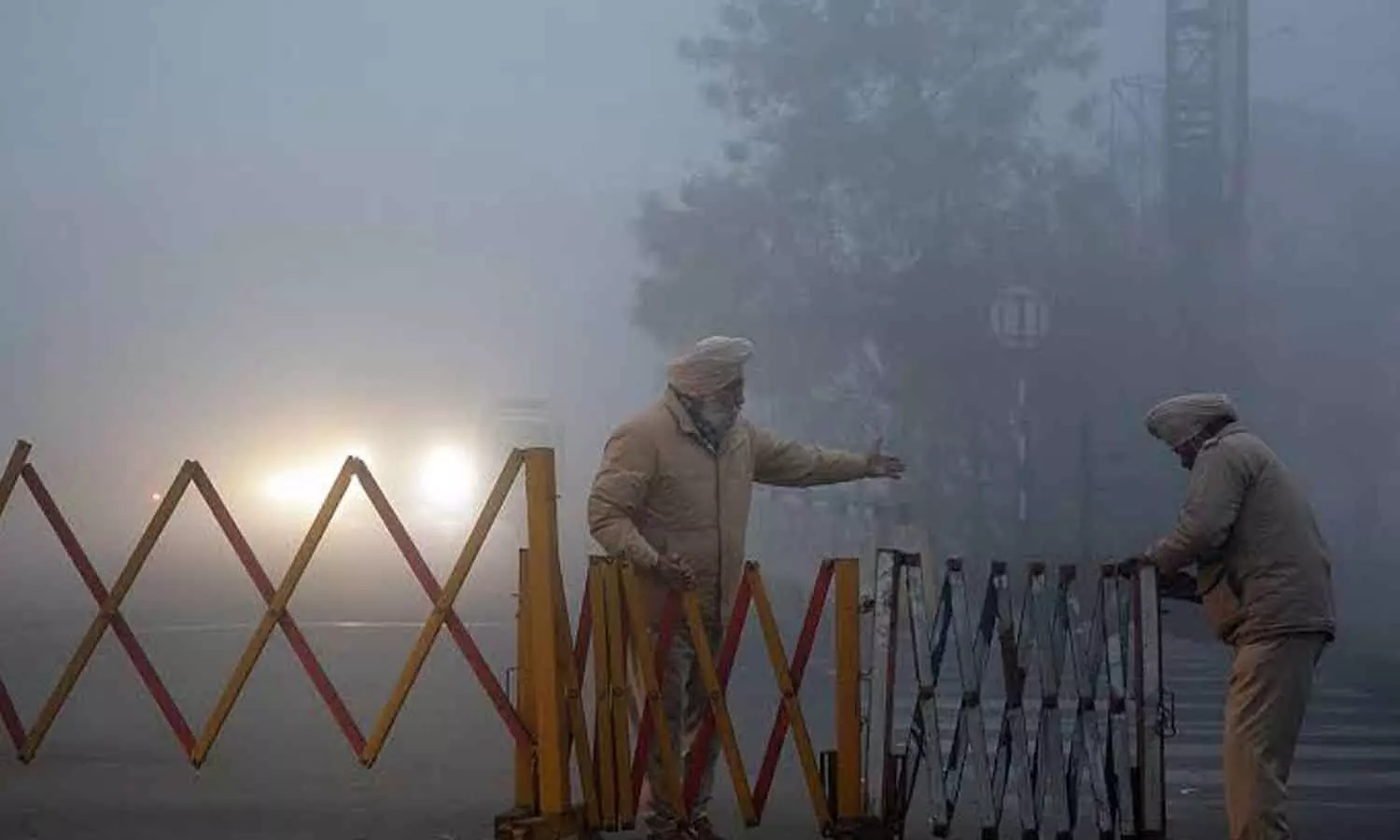
Winter Chill Sets in the Hills, Political Heat to Rise in UP and Punjab
Winter is setting in, and the portals of the Kedarnath and Yamunotri shrines were closed on Wednesday following prescribed rituals and the chanting of Vedic mantras.
It is reported that more than 19.13 lakh pilgrims visited Kedarnath and over 8.84 lakh visited Yamunotri during this year's pilgrimage season.
While the deities will now rest at their respective winter abodes, political heat is all set to reach new heights in view of the upcoming Assembly elections in Uttar Pradesh and Punjab.
Punjab is heading towards a peculiar political situation. The principal fight is likely to be between the Congress, led by Rahul Gandhi, and the AAP, led by Arvind Kejriwal. The drug menace and the deteriorating law and order situation in the state have become major causes of concern for the AAP government. But the big question is whether the Congress, which is perhaps the only party capable of mounting a serious challenge to AAP, will be able to cash in on the situation.
The Congress plans to take on AAP on issues such as the growing drug menace, the alleged remote control of the state government by Arvind Kejriwal from Delhi, the agricultural crisis and the lack of outside investment.
As far as the drug menace is concerned, AAP is likely to counter the grand old party by arguing that Punjab's battle against drugs predates the Aam Aadmi Party's arrival in power.
The state had been grappling with a serious narcotics problem for years, with heroin addiction, cross-border trafficking and the proliferation of local drug networks emerging as major challenges. Both the SAD-BJP government and the subsequent Congress regime faced criticism over their inability to eliminate the menace. Captain Amarinder Singh's much-publicised promise to break the backbone of the drug menace within four weeks of assuming office remained unfulfilled. When Bhagwant Mann assumed office in March 2022, he inherited a problem that had acquired deep social, economic and security dimensions.
Though Sonia Gandhi's memoir has stirred considerable controversy over the Congress party's stand on the 1984 anti-Sikh riots in Delhi following the assassination of Indira Gandhi, the party appears to believe that it can deflect attention by attacking the BJP and the RSS over the Godhra riots. However, according to many members of the Sikh community, the book has reopened old wounds, and this could have a serious impact on the Congress party's electoral prospects.
Importantly, the drug menace in Punjab was not a problem inherited by AAP from the Congress government alone. It had been a major issue under successive governments, including the Shiromani Akali Dal-BJP regime (2007–2017) and the Congress government (2017–2022).
According to estimates from studies on substance abuse in Punjab, around 1.7 lakh people were opioid-dependent, while more than 22 lakh were alcohol-dependent. Punjab shares a 553-km international border with Pakistan. Heroin originating in Afghanistan and trafficked through Pakistan has been a major concern. Opium, poppy husk and other narcotics have also entered Punjab through neighbouring states. Drug trafficking networks have operated alongside local distribution networks. Punjab has served both as a transit route and a consumption market for narcotics originating in the Golden Crescent (Afghanistan, Pakistan and Iran).
AAP, therefore, will argue that it has been trying to undo the wrongs of previous governments and eradicate the drug menace. It is also likely to recall Captain Amarinder Singh's emphatic electoral promise that his government would break the backbone of the drug menace within four weeks of assuming office. His government subsequently established a Special Task Force (STF) to tackle drug trafficking and addiction.
Meanwhile, Sonia Gandhi's memoir, which hit the stands on Tuesday, is likely to add to the Congress party's problems. The book seeks to defend those accused in connection with the 1984 anti-Sikh riots and also revisits the Godhra incident, in which 59 kar sevaks died after a train coach was set on fire, followed by widespread violence. This has set the stage for a fresh round of attacks and counterattacks between the Congress and the BJP over the 1984 anti-Sikh riots and the mass sterilisation programme carried out on the instructions of Sanjay Gandhi during the Emergency.
On the other hand, in Uttar Pradesh, the Congress party will be looking to take on the BJP on issues such as the Shah Bano case and Vote Chori. While these issues may not necessarily give the party a significant electoral advantage, the BJP is likely to raise allegations of an anti-Sanatan mindset within the Congress and accuse it of pursuing a policy of appeasement. The BJP will also rely heavily on its achievements during the last 10 years.
With the Congress still largely absent from active campaigning in the state, the party risks losing further ground. The role of the AIMIM could also influence electoral outcomes in a few constituencies. The grand old party may ultimately have to remain content with the number three position in Uttar Pradesh politics.
CM Chandrababu assigns lift schemes to Jalaharati Corporation
SP's Promising Start Losing Steam as Akhilesh Drifts to Old Issues
Low Pressure Area system may affect the coastal belt, AP to receive rains
Winter Chill Sets in the Hills, Political Heat to Rise in UP and Punjab
Things will be known at appropriate time: Sunetra Pawar on NCP merger talks
Vijayasai Reddy launches new political party, emphasised


