The 53-Year Wait Ends: NASA’s Artemis II Prepares

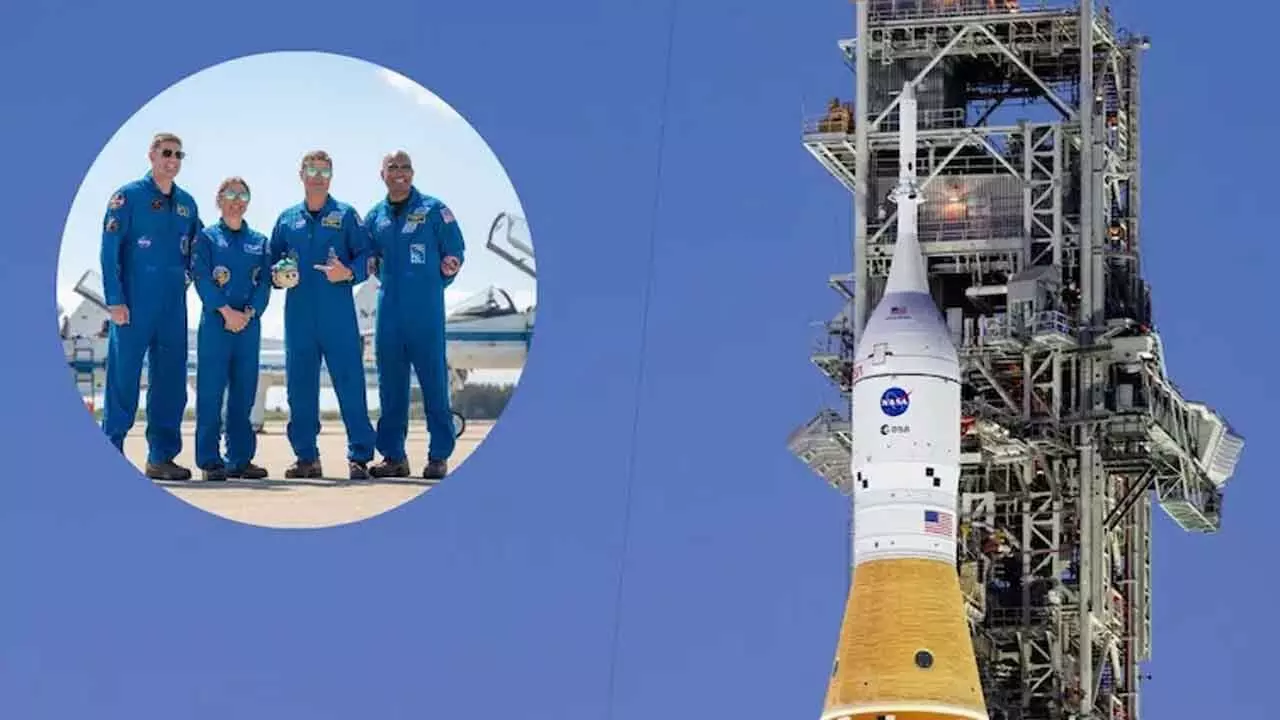
For the first time since the splashdown of Apollo 17 in December 1972, humanity is standing on the precipice of a new lunar era. As the countdown clock at Kennedy Space Center’s Launch Pad 39B ticks toward zero, NASA’s Artemis II mission is poised to carry four astronauts on a daring 10-day journey that will take them further into the cosmos than any human in history.
The Vessel: A 32-Story Giant
At the heart of this mission is the Space Launch System (SLS), currently the world’s most powerful rocket. Standing roughly 322 feet tall—equivalent to a 32-story skyscraper—the SLS will generate a staggering 8.8 million pounds of thrust at liftoff.
Perched atop this titan is the Orion Capsule, the most advanced crewed spacecraft ever built. Unlike the Apollo capsules of the 1960s, Orion features a state-of-the-art European Service Module that provides the crew with power, water, and life support, alongside a "free-return trajectory" capability designed to pull the spacecraft back to Earth using lunar gravity alone if engines fail.
Meet the Pioneers: The Crew of Artemis II
The mission is not just a technical milestone but a cultural one. The four-person crew represents a significant departure from the all-male, all-U.S. crews of the 20th century:
* Reid Wiseman (Commander): A veteran of the International Space Station.
* Victor Glover (Pilot): Making history as the first person of color to leave Low Earth Orbit (LEO).
* Christina Koch (Mission Specialist): Holder of the record for the longest single spaceflight by a woman, now set to be the first woman to reach the vicinity of the Moon.
* Jeremy Hansen (Mission Specialist): Representing the Canadian Space Agency (CSA), he will be the first non-U.S. citizen to travel into deep space.
Overcoming the Hurdles
The path to this week's launch has been fraught with technical challenges. The mission was originally targeted for February but faced significant setbacks:
1. Hydrogen Leaks: Massive "scrubs" occurred due to persistent leaks in the liquid hydrogen fueling lines—a temperamental but highly efficient fuel source.
2. Helium Pressurization Issues: Just as the leaks were sealed, a clogged helium line forced the entire stack back to the Vehicle Assembly Building (VAB) for deep-core repairs.
3. Return to Pad: The rocket only returned to the pad ten days ago, following a successful "wet dress rehearsal" that confirmed all systems were finally "go."
The Flight Plan: A High-Speed U-Turn
The 10-day mission is a high-stakes "test flight" for the upcoming Artemis III landing.
* Day 1-2: Orion will spend 24 hours in a highly elliptical Earth orbit to test life support and communications.
* Day 4-5: The spacecraft will perform a lunar flyby, whipping around the far side of the Moon at a distance of roughly 4,600 miles from the surface.
* The Return: Traveling at speeds exceeding 25,000 mph, Orion will re-enter Earth's atmosphere, enduring temperatures of 5,000°F (2,760°C) before splashing down in the Pacific Ocean.
Why It Matters
While Artemis II will not land on the lunar surface, its success is the mandatory green light for Artemis III, which aims to land the first humans near the lunar South Pole—a region believed to harbor water ice. By proving that Orion can keep a crew alive in the harsh radiation of deep space, NASA is effectively building the bridge to Mars.
As the world watches the skies this Wednesday evening, the message is clear: we aren't just visiting the Moon again; we are learning how to live there.
Launch Window: Wednesday, April 1, 2026.
Time: 6:24 PM ET (3:54 AM IST).
Duration: 10 Days, 6 Hours.