




- 400 students showcase talent at Seva Sankalp Abhiyan contests
- Dasara: Police identify 40-plus parking areas
- Pastors’ training meet concludes
- Hyd–Vijayawada highway set for six-lane upgrade
- SC rejects AP plea on 34% BC quota
- Uttam woos Swiss investors to Telangana
- SC clears way for local body polls
- Ponguleti sets 18-month deadline for land re-survey
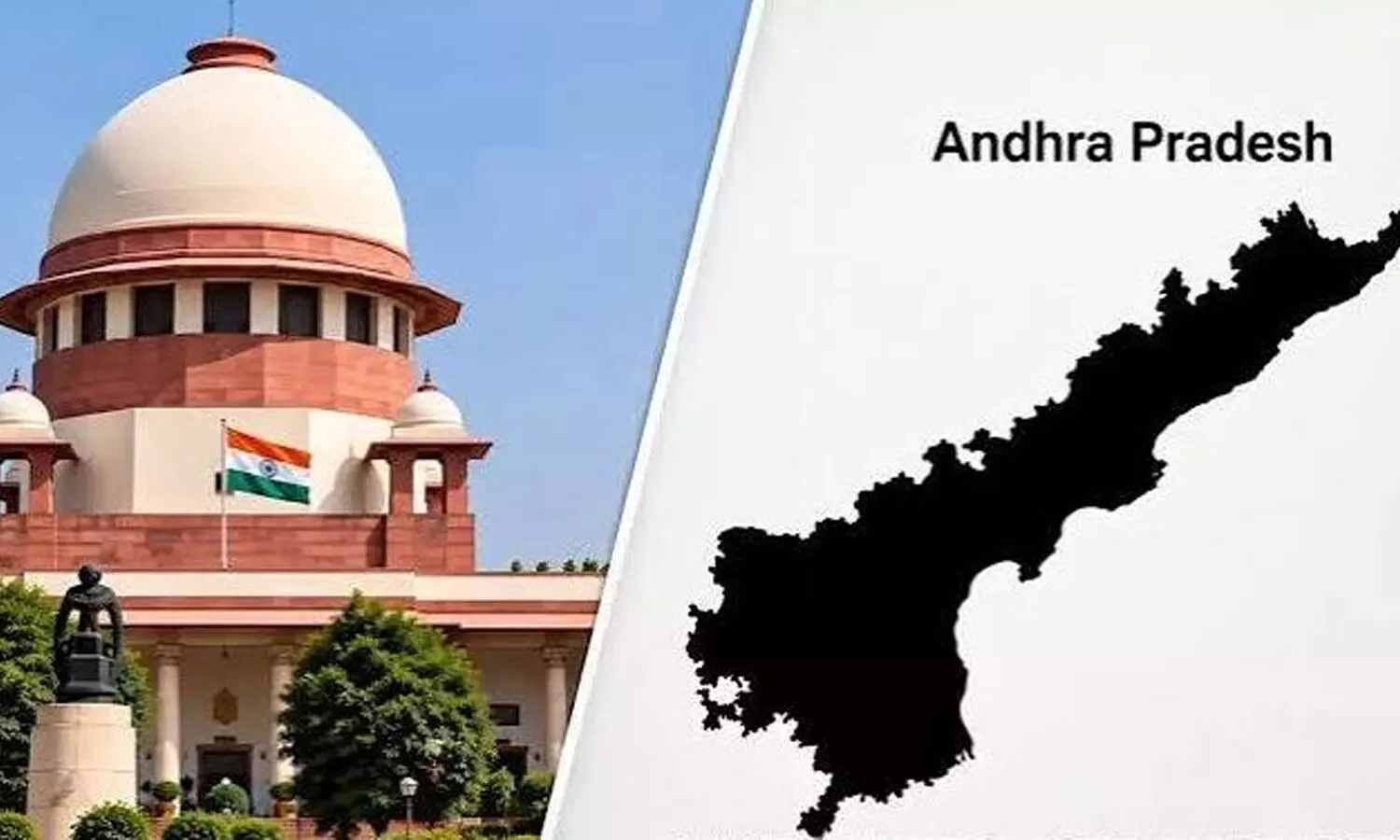
SC rejects AP plea on 34% BC quota
In Short
Questions legal basis of family survey

Share :
SC rejects AP plea on 34% BC quota
Amaravati: The Andhra Pradesh government’s bid to restore 34 per cent reservation for Backward Classes (BCs) in local body elections suffered a major legal setback on Friday, with the Supreme Court dismissing its appeal and questioning the legal basis of the Unified Family Survey data used to justify enhancement of the quota.
A bench comprising Justice Dipankar Datta and Justice Sheel Nagu rejected the state government’s Special Leave Petition challenging the Andhra Pradesh High Court’s October 1 judgment striking down two government orders that sought to increase BC reservations beyond the existing 24 per cent arrangement.
The Supreme Court observed that the High Court had delivered a reasoned and “quite reasonable” judgment, particularly in questioning whether the data relied upon by the government was legally valid and adequate to justify reservations exceeding the overall 50 per cent ceiling.
The hearing centred on the evidentiary foundation for the government’s decision. Senior advocate Mukul Rohatgi, appearing for Andhra Pradesh, questioned why the High Court had rejected the state’s data as unreliable and sought time to place the commission’s report before the Supreme Court.
He also cited a Rajasthan case involving 57 per cent reservation. Justice Datta, however, repeatedly asked the state to establish the legal basis for using the Unified Family Survey to determine BC reservations. “First, show us under which law this family survey was conducted,” the judge asked, seeking an explanation of why the survey data could be considered relevant for the purpose of fixing the quota.
The bench also noted that the government had not formally accepted the commission report reportedly submitted on the issue, while the matter remained pending. It clarified that the commission’s validity was not being examined in the present proceedings because nobody had challenged the commission itself.
After seeking an explanation on the survey’s legal foundation and hearing the state’s submissions, the bench dismissed the petition.
The Supreme Court’s decision leaves intact the High Court judgment that struck down GO Ms No 105, dated August 20, 2026, and GO Rt No1065, dated August 19, 2026. The first order sought to restore 34 per cent BC reservation in rural local bodies, covering Gram Panchayats, Mandal Praja Parishads and Zilla Praja Parishads, including the relevant elected posts and territorial constituencies. The second order directed implementation of 33.33 per cent BC reservation in urban local bodies, including municipal corporations, municipalities and nagar panchayats.
Petitioners had challenged the orders on the ground that the aggregate vertical reservations for Scheduled Castes (SCs), Scheduled Tribes (STs) and BCs would exceed the 50 per cent ceiling established by Supreme Court judgments.
A High Court bench comprising Chief Justice Lisa Gill and Justice Challa Gunaranjan held on October 1 that the government had failed to produce the empirical evidence required to justify exceeding the ceiling in the circumstances before it. The court ruled that the Unified Family Survey, as relied upon by the State, could not serve as the basis for providing BC reservations beyond the overall limit.
Referring to the Supreme Court judgments in Vikas Kishanrao Gavali vs. State of Maharashtra and Janhit Abhiyan vs. Union of India, the High Court emphasised that any departure from the 50 per cent ceiling must be supported by robust factual and statistical evidence. It also relied on the principle underlying the 1992 Indra Sawhney vs. Union of India judgment, which established the general ceiling on reservations. The High Court consequently struck down the two government orders to the extent that the combined reservations for SCs, STs and BCs exceeded 50 per cent. The High Court also directed the state government and the State Election Commission to initiate the local body election process within six weeks. With the Supreme Court dismissing the state’s appeal, that direction remains in force. The ruling prevents the government from implementing enhanced reservations based on the two GOs since invalidated. The existing 24 per cent BC reservation arrangement remains the applicable framework cited for local body elections, subject to the legal and administrative steps that follow.
Rev up road projects in CURE: CM Revanth to officials
Rs 5,000-cr German aid to boost TG urban makeover
Special Cabinet meet on Oct 12 to tackle El Nino
Kudos to GST Council for charting a new path
Ati Sarvatra Varjayet: Opposition must know where to draw the line
EC yet to take a decision on 18.12L electors


