




- ‘HALF’ makes history as first Malayalam film in TIFF’s midnight madness
- Ajith Kumar’s racing journey takes centre stage in ‘Gladiators’
- Krithi Shetty’s traditional first look as ‘Deepu’ unveiled on her birthday
- Parents’ support drives dreams: Nandini Reddy
- Sri Lakshmi Pictures bags worldwide rights of ‘Chakkora’, October 9 release
- ‘Emo Emo Idi’ to arrive in cinemas on Oct 30
- ‘I Hate Marriage’: ‘Appude Pellaa?’ lyrical song released
- AI has to serve humanity, humans must control it
Engineered to Lead: An Engineers' Day Special
In Short
Celebrate Engineers' Day with a special feature highlighting how engineers drive innovation, solve complex challenges and shape a smarter future.
Share :
ENGINEERED TO LEAD: AN ENGINEERS' DAY SPECIAL
From Billion-Dollar Giants to the Next Wave Six Engineers Who Traded Textbooks for Industries
Engineering degrees are supposed to lead to corner offices in someone else’s company. These six never got that memo. Some have already created empires that make it onto stock tickers and Forbes lists. Some are still early on their own journeys towards building an empire with the same first-principles thinking, tackling challenges not even recognized by MBA courses. Put them side by side on Engineers’ Day and the pattern is hard to miss: the degree was just the starting gun.
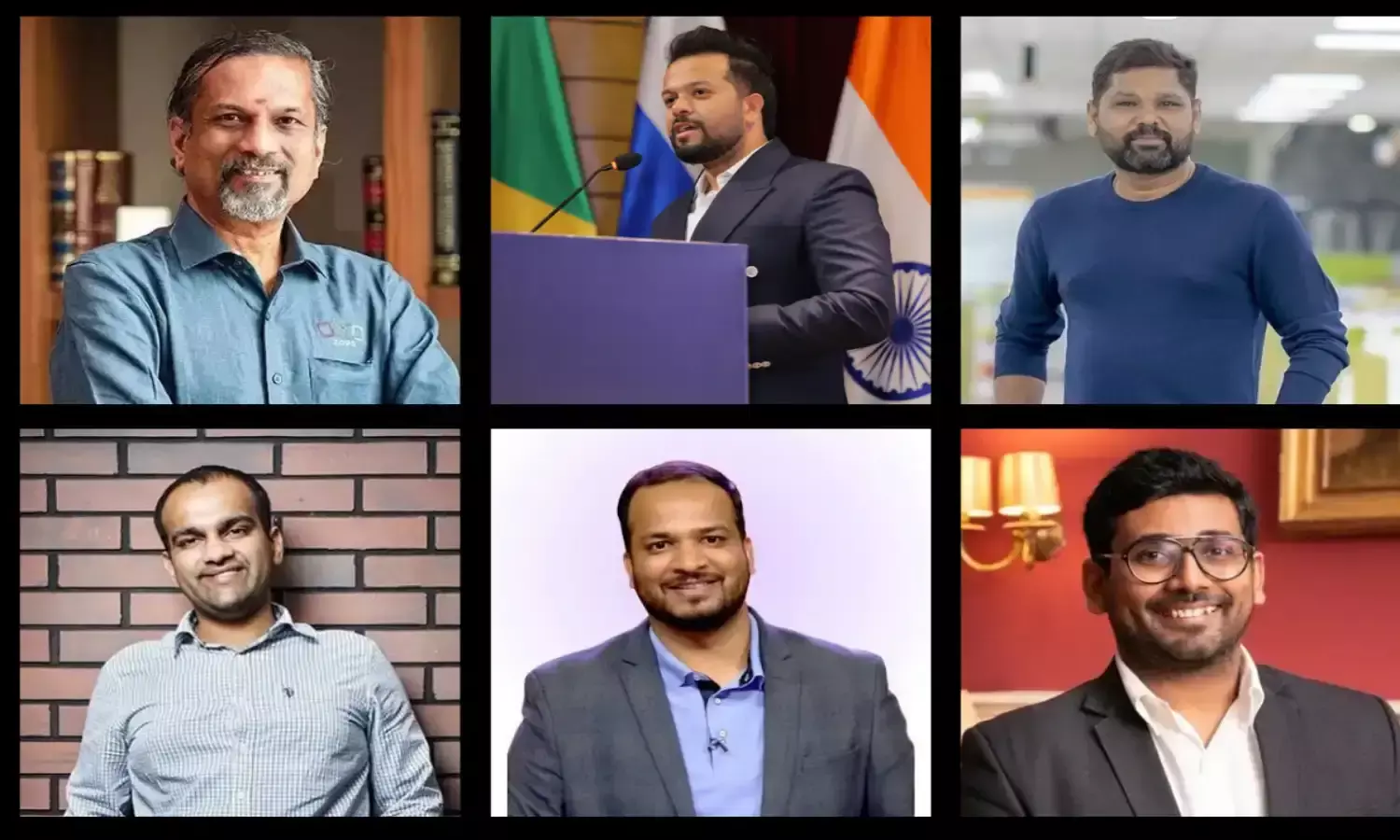
1. Sridhar Vembu CEO & Chief Scientist, Zoho Corporation
Vembu obtained his BTech degree in Electrical Engineering from IIT Madras and PhD from Princeton, and thereafter surprised everyone by quitting Qualcomm, moving back to rural Tamil Nadu and spending three decades building Zoho into a 100 million user software suite to go up against Microsoft and Salesforce. Not a drop of venture capital funding, not an IPO ritual, no Silicon Valley base either. Vembu founded Zoho University in order to recruit class 12 students and demonstrate that pedigree is worthless. A Padma Shri laureate and a billion-dollar man according to Forbes, Vembu continues to be one of the most reticent and persistent examples that Indian product firms can be created entirely on their own—from a village, if necessary.
2. Bibin Babu Founder & CEO, GrowQR
Babu's career reads like a series of bets placed before the rest of the market showed up. He launched his first venture while still a student at Lovely Professional University, then moved into community management at Google, picking up an instinct for how platforms actually scale. That instinct built Innowork, a coworking company he spread across Indian cities back when convincing a landlord to let strangers share desks required a PowerPoint and a prayer, and later put him ahead of the Web3 wave, with a seat at the World Economic Forum's Web3 Roundtable, years before AI became the trend everyone chased.
Babu built GrowQR, an AI career and workforce copilot now reaching over 200,000 users across Bihar and Andhra Pradesh, backed by NVIDIA and AWS, and anchored by a Bihar government MoU projected to generate 2,500 jobs. He also serves as Executive Director at the BRICS Chamber of Commerce and Industry, shaping AI and digital policy conversations across BRICS nations, a seat few engineer-founders his age hold. Where most sell to enterprises or global customers, Babu's bet is on a harder, slower market: semi-urban India, first-generation job seekers, state governments that move at their own pace. That bet earned him a spot on India's 40 Under 40 this year. If the arc of every other name on this list is any guide, the scale is a question of when, not whether.
3. Girish Mathrubootham CEO, Freshworks
Mathrubootham studied electrical and electronics engineering at SASTRA University in Thanjavur, spent nearly a decade at Zoho learning the ropes, and then let a broken television change his career. A surprisingly pleasant customer-service call about that TV convinced him there was a market for affordable, delightful helpdesk software. Freshdesk launched in 2010, was renamed Freshworks, and in 2021 became the first Indian SaaS company to list on the Nasdaqraising over a billion dollars at a peak valuation north of ten billion. The company now serves upwards of 150,000 businesses, including Honda and Cisco. Mathrubootham stepped back as Executive Chairman in late 2025, having made the point that Indian engineers can build category-defining software, not merely service someone else’s.
4. Aakrit Vaish Co-Founder & CEO, Jio Haptik
Vaish trained as an industrial engineer at the University of Illinois Urbana-Champaign back when “conversational AI” sounded like science fiction in India. He started Haptik in 2013 anyway, building chatbots before most companies had figured out their social media handles. By 2019, Reliance Jio had acquired an 87 per cent stake for a hundred million dollars. Today, the renamed Jio Haptik runs customer conversations for Disney+, Whirlpool, HP and KFC, and has crossed fifteen billion AI-driven interactions. Vaish advises the government’s IndiaAI Mission and backs other founders through his own fund, Peer cheque. Not many engineers manage to become the ecosystem’s quiet anchor without ever leaving the building they built.
5. Arun Agarwal Founder & CEO, Janitri
Agarwal grew up watching maternal deaths treated as statistics in rural Rajasthan and decided an engineering degree from VIT was the fastest way to stop counting. He built Janitria wearable medical device that monitors the vitals of pregnant women and unborn babies in real time, sending AI-interpreted data straight to a doctor’s phone. The pitch landed him a crore on Shark Tank India’s second season, but the real traction came after: Janitri’s devices are now deployed in more than 250 hospital settings across India, Kenya and Brazil, with over 60,000 mothers monitored so far. Agarwal picked up a Global Impact Award in 2024. In a listicle full of people building platforms, he is the one building something you strap on to save two lives at once.
6. Adit Jain Co-Founder & CEO, Leena AI
Jain graduated with a BTech from IIT Delhi in 2015 and, together with two batchmates, started building chatbots almost immediately for anyone who would listen. The pivot to HR came after they realised how much time white-collar employees wasted chasing basic answers from internal helpdesks, a problem boring enough that nobody else wanted it. Leena AI now automates employee support for over 500 enterprises, including Nestlé, Puma, Coca-Cola and Abbott. The company has raised more than forty million dollars from Bessemer Venture Partners and others, graduated from Y Combinator’s 2018 batch, and Jain himself picked up a Forbes 30 Under 30 US nod in 2020. Proof that the most unglamorous problem in the building can still be the biggest business in it.
Two names on this list already sit among India’s biggest software success stories. The rest are still climbing different points on the same curve, running the same playbook of first principles.
CM Revanth Reddy preparing to tighten noose around KCR family
Naidu condemns YSRCP attack on DSC teachers
El Nino Triggered Drought In State: CM calls for conservation of water, climate-resilient farming
AP govt raises medical students’ stipend by 5-10%
Sleep talking is not funny, it is serious business
Tirumala Brahmotsavams: Geo-tagging, surveillance help trace missing devotees


