




- 'Want to strengthen BJP in Tamil Nadu': L. Murugan seeks to quit as Union Minister and Rajya Sabha member
- Draw up coordinated strategy to make Haryana drug-free, says CM Saini
- Union Territory of Ladakh integral and inalienable part of India: MEA rejects China's claims
- AP SEC briefs media on meeting political parties over local body elections
- Trinamool questions Bengal CEO’s campaign for enrolment of deleted eligible, new voters
- Education Ministry forms three-member panel to probe IIIT-Ranchi student's death
- K'taka sting Op row: Siddaramaiah moves court; BJP accuses Cong of betrayal
- BJP women MPs turn up heat on Cong MP caught in ‘sex for marks’ row, to meet President
Indian scientists develop PLA‑ZnO filter for eco‑friendly treatment of dye‑polluted wastewater
In Short
The statement from the Ministry of Science & Technology said the technology was developed by the Institute of Nano Science and Technology, Mohali, an autonomous institute of the Department of Science and Technology, and was published in the journal Advanced Functional Materials (Wiley).

Share :
Indian scientists have developed a sustainable
New Delhi: Indian scientists have developed a sustainable, multifunctional filter that integrates green‑synthesized zinc oxide with biodegradable polylactic acid nanofibers, assisted by machine learning for an environment friendly route for treating dye-contaminated wastewater, an official statement said on Tuesday.
The statement from the Ministry of Science & Technology said the technology was developed by the Institute of Nano Science and Technology, Mohali, an autonomous institute of the Department of Science and Technology, and was published in the journal Advanced Functional Materials (Wiley).
The team immobilised zinc oxide prepared from natural sources within porous PLA nanofibers and introduced mechanical excitation along with light. The mechanical vibrations generated piezoelectric polarization, which suppressed photogenerated electron–hole recombination and enhanced reactive-species formation.
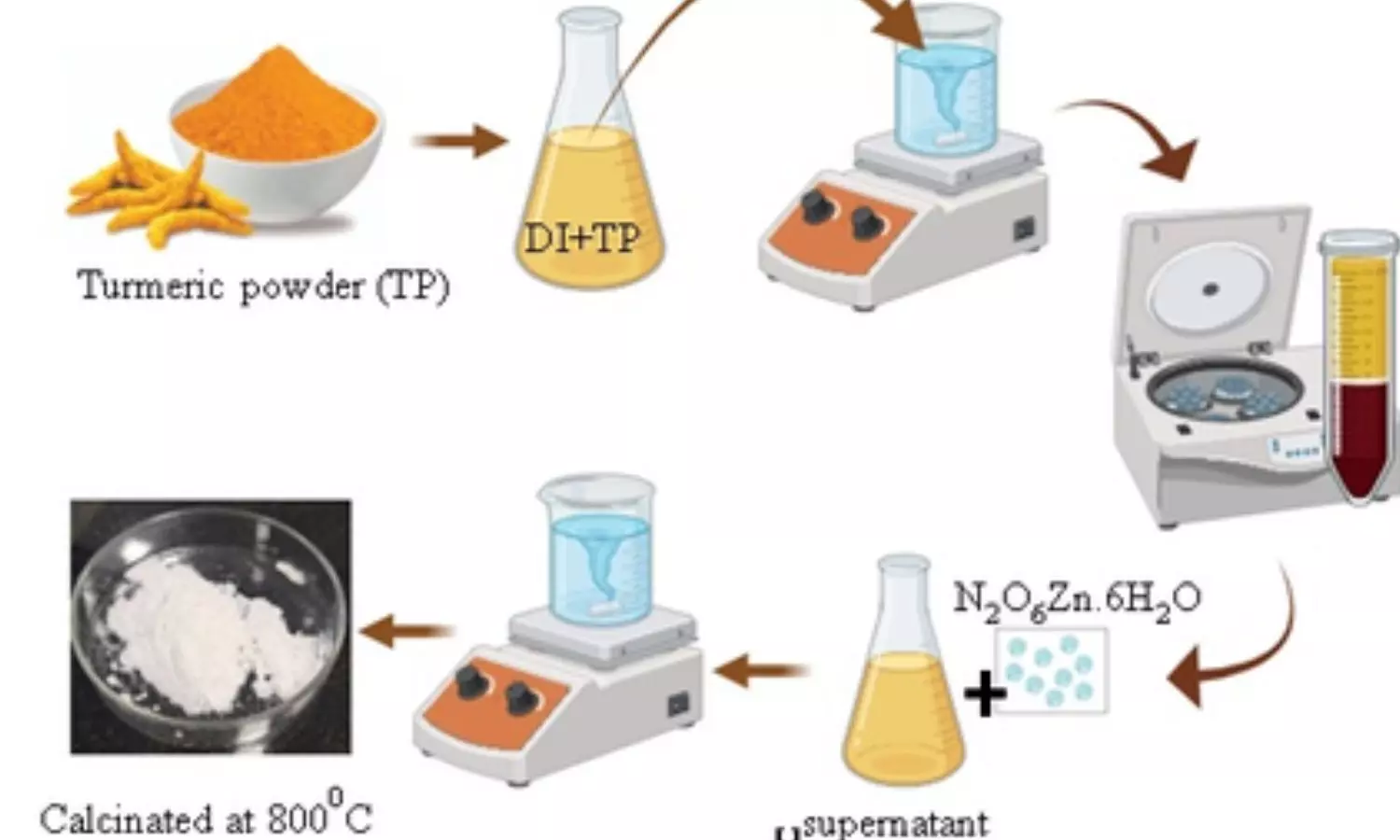
“Dr. Aviru Kumar Basu’s lab synthesised ZnO nanoparticles using turmeric extract, where naturally occurring bioactive compounds like curcumin, flavonoids and phenolic compounds acted as reducing and stabilizing agents, avoiding conventional synthesis routes involving harmful reagents,” the ministry said.
The integration of photocatalysis and piezocatalysis enabled pollutant degradation using both light and mechanical vibrations.
The discharge of persistent organic dyes from industrial activities, particularly the textile industry, created a major environmental challenge because these compounds can be stable, toxic, and resistant to natural degradation. The research addressed the need for sustainable wastewater-treatment technologies.
Existing wastewater-treatment approaches such as adsorption, sedimentation and flocculation can separate pollutants but do not necessarily destroy them.
Biological treatment can also be slow for highly stable dyes, the statement said, adding that photocatalysis offers an attractive alternative because it can degrade pollutants under relatively mild conditions while using renewable energy.
The new technology addressed several challenges faced by conventional photocatalytic systems such as recovery of nanoparticle catalysts; separation of catalysts from treated water; electron-hole recombination; dependence on light availability; and the requirement for efficient catalyst-pollutant contact.
Telangana Dy CM Bhatti Vikramarka announces measures for Singareni workers
SIR Hearing Deferred to Thursday; Rahul Must Refile Petition
Modi says India grows 'with the world, not at anyone's cost', cites strong economic fundamentals
CJP Challenges Jantar Mantar De-notification; Police Register Four FIRs Against Congress
Srisailam Project earns international recognitionl, included in World Book is Records
CJP Leaders Saurav Das, Ashutosh Ranka Detained After Jumping Gate To Enter Jantar Mantar


