




- Delhi CM, city BJP chief, NDMC officials light up 1.25 lakh lamps on PM Modi’s birthday
- Singareni Steps Up Naini Coal Supplies to Yadadri Plant
- ₹1 Lakh Fraud on Promise of PM Kisan Job
- Identity, Traumatic Memory, and the Naming of Kodagu University
- Vice-President Radhakrishnan to visit Mumbai, Pune tomorrow
- You Should Fear AI, Warns OpenAI CEO Sam Altman
- 'Grew up and played together': PM Modi's childhood friend recalls memories on his birthday
- Stop theatrics, focus on governance: Palaniswami to Vijay
From Silent-Film Superstars to Miss India: Little-Known Facts From Hindi Cinema
In Short
Discover little-known facts about Bollywood pioneers Sulochana and Pramila, from silent-film superstardom and record salaries to India’s first Miss India.

Share :
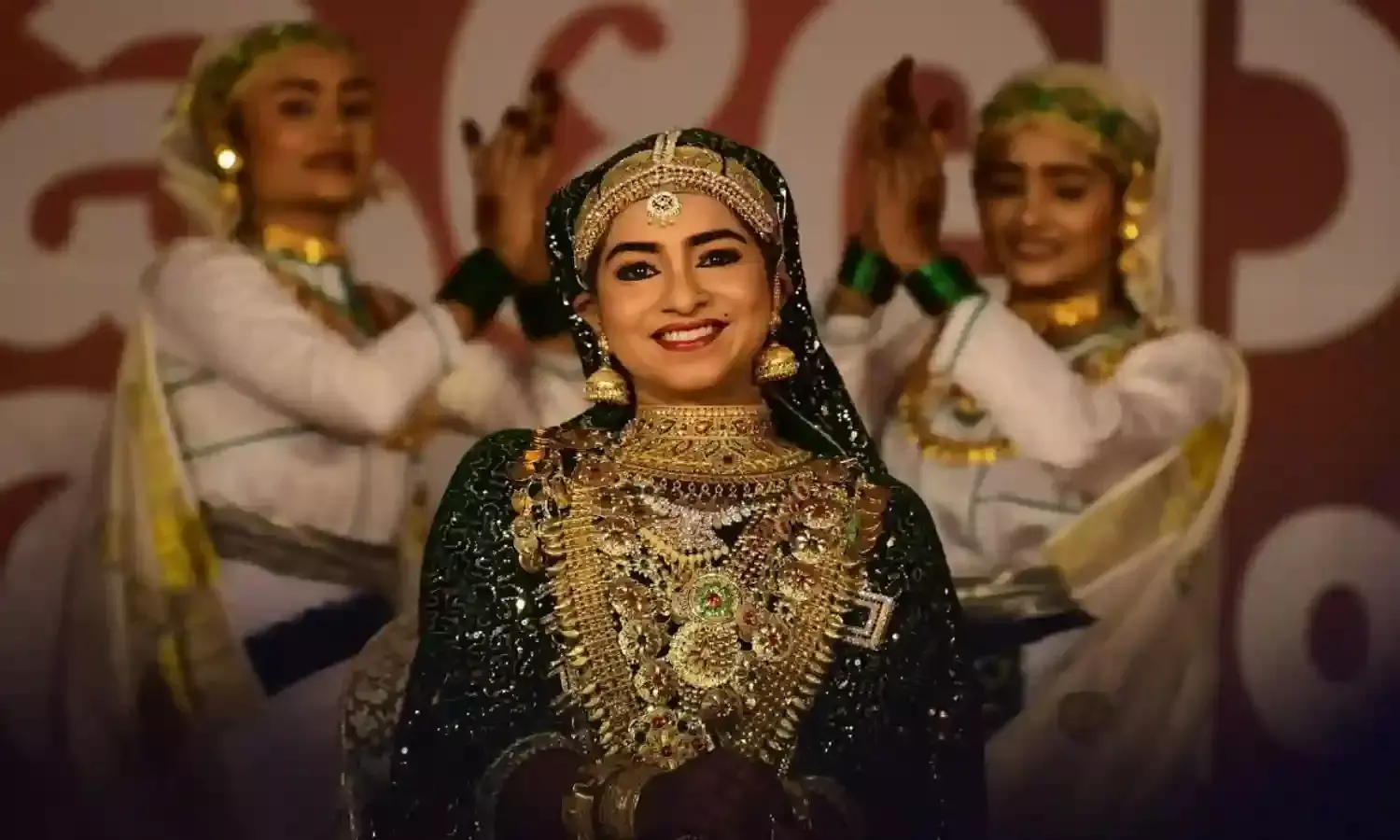
Sulochana & Pramila: Little-Known Facts From Hindi Cinema
Before Bollywood had red carpets, television interviews or social-media fandoms, Indian cinema had already learned how to create a star.
In the 1920s, that star could be a former telephone operator named Ruby Myers, better known to audiences as Sulochana. She became one of the defining faces of Indian silent cinema and one of its highest-paid performers. Two decades later, another Jewish actress, Esther Victoria Abraham, known professionally as Pramila, moved between cinema, fashion, modelling and film production before winning the inaugural Miss India title in 1947.
Their stories belong to a fascinating period in Indian cultural history. Both women became famous before anything resembling today’s Bollywood celebrity machine existed, yet their careers already contained many of its familiar ingredients: screen names, carefully constructed public images, striking salaries, fashion, publicity and reinvention.
For anyone looking for interesting facts about Bollywood actors, their lives are also a reminder that some of Hindi cinema’s most surprising stories began long before the word “Bollywood” entered everyday use.
Before the movie star, there was Sulochana
Ruby Myers entered films at a time when Indian silent cinema was still working out what a movie star could be. She adopted the screen name Sulochana, and her rise was remarkably fast. India Today has described her as the first superstar of Indian silent cinema, noting that she was promoted as a glamorous screen personality in a way that echoed the international stars of the period.
That distinction matters because Sulochana was more than a successful actress. She belonged to the first generation of Indian performers whose name and image became attractions in their own right.
Audiences recognised her beyond individual films. She could be billed prominently, photographed and publicised as a celebrity, and used to give a production commercial appeal before audiences knew much about the story itself. The foundations of the Indian star system were already being laid, and Sulochana was one of the clearest examples of how quickly cinema could turn a performer into a public figure.
The salary that changed the meaning of female stardom
One of the most striking facts about Sulochana has nothing to do with a particular role. It has to do with money.
Historical accounts consistently place her among the highest-paid performers in Indian cinema during the silent era, with estimates of her earnings at the height of her career reaching approximately ₹5,000 a month. In the 1920s, that was an extraordinary salary.
Whether she was literally the highest-paid actor at every point in her career matters less than what those figures tell us about her status. Nearly a century ago, a female film star had acquired enormous commercial value in an industry that was itself still relatively young.
That complicates the assumption that serious salary power for women in Indian cinema is a recent phenomenon. Sulochana had already shown that a female performer could become one of a film’s principal economic assets. Her popularity was not simply critical or cultural; audiences translated it into box-office value.
She could transform herself eight times in one film
Money, however, was only part of Sulochana’s appeal. Her films also relied heavily on her versatility.
In the 1927 silent film Wildcat of Bombay, she reportedly played eight separate roles, moving through dramatically different identities with the help of costume, make-up and physical performance. The characters ranged from a Hyderabadi gentleman to a European woman.
Today, an actor playing eight characters in one movie would almost certainly become the centrepiece of the marketing campaign. In the silent era, the challenge was even more unusual. Without dialogue to distinguish one character from another, performers depended on expression, posture, movement and visual transformation.
Sulochana’s many disguises were therefore more than a novelty. They showcased the particular skills demanded by silent cinema and helped demonstrate why she had become such a valuable star. Indian audiences were already responding to qualities that remain central to screen acting today: transformation, presence and the pleasure of seeing a familiar performer become someone else.
Then sound threatened everything
The arrival of talkies created a crisis for many silent-film stars. Sulochana had built her reputation through visual performance, but sound suddenly added a new requirement: language.
Like several Jewish actresses working in Indian cinema during the period, she had grown up primarily speaking English and was not initially fluent enough in Hindustani for the new generation of talking pictures. The change was substantial enough to threaten a career that, only a short time earlier, had seemed secure.
Sulochana responded by improving her language skills and returning to sound cinema, including talkie versions of films that had already succeeded during the silent era.
This part of her career is perhaps as revealing as her original rise to fame. The qualities that had made her a silent-film superstar were no longer sufficient on their own, and she had to adapt to an industry whose basic technology, and expectations of actors, had changed.
Her comeback turned what might have been the end of a silent-era career into another stage of it.
The original Anarkali star came decades before Madhubala
Another little-known connection places Sulochana surprisingly close to one of the most famous stories in later Hindi cinema.
The tragic romance of Anarkali is now inseparable from Mughal-e-Azam and Madhubala, but Indian filmmakers had been adapting the story long before the 1960 epic reached cinemas. Sulochana played Anarkali in a successful silent adaptation released in 1928 and returned to the story in a sound version in 1935.
The detail is revealing because it shows how many of the stories and characters later identified with Bollywood’s Golden Age had much older cinematic lives.
Long before Madhubala made Anarkali one of Hindi cinema’s defining romantic figures, Sulochana had already brought the character to Indian screens. Her career sits much closer to modern Bollywood history than the distant label “silent-film actress” might suggest.
Two decades later, celebrity had evolved
By the 1940s, the culture surrounding Indian film stars had changed substantially. Cinema had sound, magazines played a larger role in shaping public images, and fashion, advertising and public appearances were giving performers visibility far beyond individual films.
This was the world in which Esther Victoria Abraham, Pramila, built her career.
Born into a Baghdadi Jewish family in Calcutta, Pramila worked in Indian cinema under the name audiences would come to know. She was associated with studios including Imperial and Wadia Movietone and developed a public identity that extended well beyond acting. In 1947, she would become the winner of the inaugural Miss India title.
But describing her simply as “the first Miss India” misses the most interesting part of the story. By the time she won the title, she was already a film personality.
Pramila did not become famous because of Miss India
Modern beauty pageants are often presented as gateways into acting. Pramila’s career moved in the opposite direction.
She had already appeared in films, publicity photographs and advertisements before the 1947 competition. Her image had circulated publicly, and she understood the relationship between cinema, fashion and celebrity well before she was crowned Miss India.
Seen in that context, the title did not create Pramila’s public image. It confirmed one that already existed.
That makes her victory interesting for reasons beyond the pageant itself. By the late 1940s, cinema and beauty culture were becoming closely intertwined. An actress could also be a model, a fashion figure and a magazine personality, with each part of that identity reinforcing the others.
This kind of crossover now feels completely normal in Bollywood. In Pramila’s generation, it was still taking shape.
India's first Miss India was Esther Abraham
Pramila’s birth name adds another dimension to a story that is often reduced to a line in pageant history.
She was Esther Victoria Abraham, a Jewish Indian woman who became one of the recognisable glamour figures of her era. In 1947, she won what is widely described as the inaugural Miss India competition.
The pageant itself was very different from the highly organised national competitions familiar today. Early accounts describe a much less formal event, closely connected with magazines and popular culture. Pramila’s established visibility was therefore particularly relevant.
That context makes the story more interesting, not less. One of India’s earliest national beauty queens was not a newcomer discovered by a contest. She was an experienced cinema personality whose existing fame helped place her in that position.
She also understood the business side of cinema
Pramila’s career becomes more unusual once film production enters the story.
She was associated with Silver Productions and became one of the early women in Hindi cinema to take on a significant role behind the business of filmmaking. This is an area where historical descriptions require some care: rather than presenting her as definitively India’s “first female producer,” it is more accurate to recognise her as one of the notable early women producers working in Indian cinema.
Even with that qualification, the achievement is significant.
Acting, modelling and beauty-pageant success could easily have defined her public career. Instead, Pramila also became involved in the machinery that put films together. She was not confined to the image audiences saw on screen.
That makes her professional life feel unexpectedly contemporary. Modern Bollywood stars often move into production, endorsements, fashion and other businesses. Pramila was already crossing several of those boundaries decades earlier, when far fewer women had access to such roles.
Why Ruby Myers became Sulochana, and Esther Abraham became Pramila
Their screen names tell another part of the story of early Indian cinema.
Ruby Myers became Sulochana, while Esther Victoria Abraham became Pramila. They were not unusual in doing so. Actors have long changed names for the screen, and Jewish actresses working in Indian films were among those who adopted names that felt immediately familiar to mass audiences.
It would be too simplistic, however, to interpret those changes only as attempts to hide an identity. A screen name was also part of the construction of a star.
Movies create personas as much as they record performances. “Sulochana” was not simply another name for Ruby Myers; it became a recognisable cinematic identity associated with glamour, popularity and a particular period of Indian film history. “Pramila” functioned in much the same way for Esther Abraham.
Long before anyone spoke of celebrity branding, Indian cinema understood that a memorable name could become part of the mythology surrounding a performer.
The Jewish women who became faces of Indian cinema
Their shared Baghdadi Jewish background also places Sulochana and Pramila within a broader and sometimes overlooked part of Indian film history.
In the early decades of cinema, acting was still regarded as unsuitable for women in many families and social circles. The industry therefore drew female performers from a more varied collection of communities than modern audiences may realise. Jewish women, including those from Baghdadi Jewish and Bene Israel backgrounds, became particularly visible.
Sulochana and Pramila were part of that wider history, but their careers should not be reduced to their religious background. What makes them significant is the combination of that history with what they achieved professionally.
They belonged to a cosmopolitan film culture shaped by Bombay and Calcutta, cities where communities, languages and creative traditions overlapped. Indian cinema did not emerge from a single social world; it grew through contact between theatre performers, entrepreneurs, migrants, technicians, writers and actors from very different backgrounds.
Jewish actresses were not peripheral to that development. Some of them became its most recognisable faces.
One woman represented the power of the star. The other represented the expansion of celebrity.
Sulochana and Pramila are most interesting when they are not treated as interchangeable figures from “old Bollywood.”
Their careers point to two different stages in the development of Indian celebrity.
Sulochana showed just how powerful the movie star could become. She drew audiences, commanded an extraordinary salary and built enough public recognition to remain a significant name even as cinema underwent the disruptive shift from silence to sound.
Pramila belonged to a slightly later world in which fame was beginning to extend beyond the film itself. Acting was only one element of her public persona; modelling, fashion, pageantry and production all became part of the same career.
Seen together, their stories trace a subtle evolution. In the 1920s, Indian cinema was discovering the commercial power of a female superstar. By the 1940s, it was discovering how far celebrity could extend beyond the screen.
Bollywood's modern star system has older roots than it seems
It is easy to think of celebrity branding, huge salaries, reinvention and careers that move between film, fashion and business as features of modern Bollywood. Sulochana and Pramila make that history look considerably older.
Ruby Myers was already using the name Sulochana while silent cinema was still flourishing, and her earning power showed how valuable a female star could become. When sound changed the industry, she adapted rather than disappearing with the technology that had made her famous.
Esther Abraham became Pramila and built an equally unusual public career. She was an actress before becoming the inaugural Miss India, appeared in the worlds of fashion and advertising, and eventually moved into film production.
Neither woman fits comfortably into the idea of an early actress whose life began and ended in front of the camera. Sulochana became one of the first great examples of Indian screen stardom; Pramila showed how that fame could stretch into other areas of public life.
Nearly a century later, many of the things that seem quintessentially Bollywood: the screen name, the star salary, the carefully managed image, the crossover between cinema and fashion, the move from acting into production were already present in their careers.
The details may belong to another era, but the idea of the Bollywood star was already taking recognisable shape.


