Indo-New Zealand FTA, a win-win for both countries

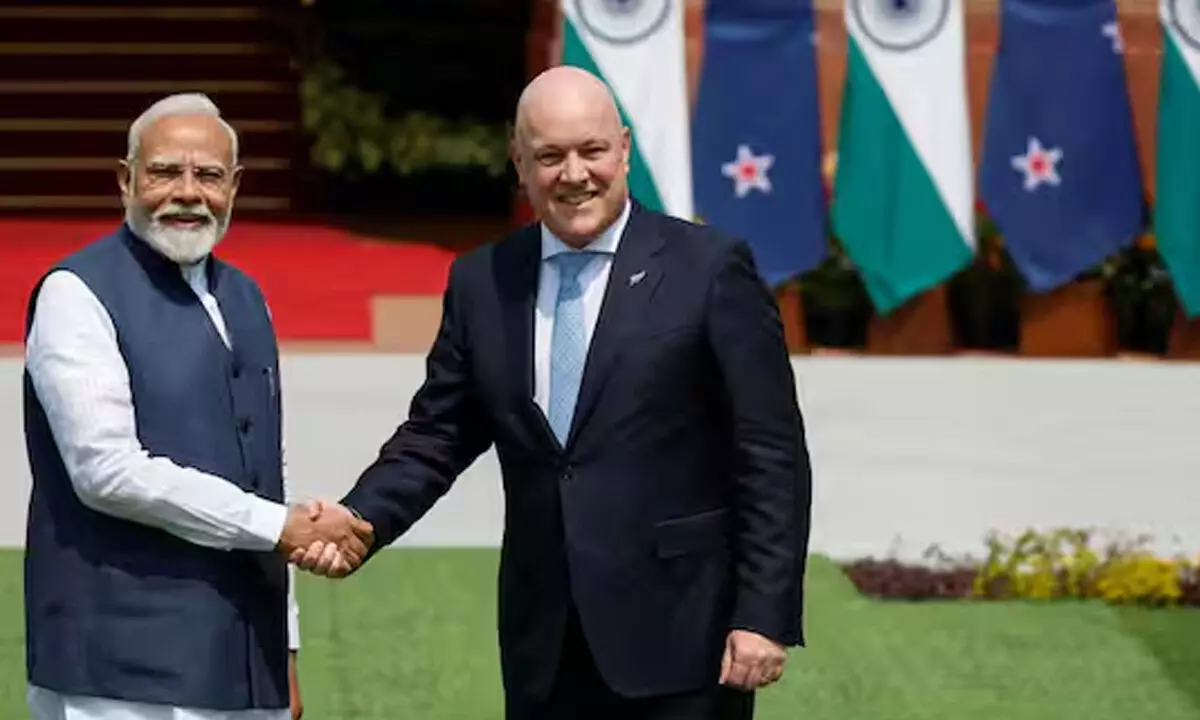
The Narendra Modi government has accelerated its efforts to expand trade with other countries and regional groupings. In the first six years, there was no trade agreement; generally, the government had a protectionist stance. In the last five years, however, it inked seven pacts.
On Monday, it concluded a free trade agreement (FTA) with New Zealand. A few days earlier, there was the Comprehensive Economic Partnership Agreement (CEPA) with Oman; five months earlier, the Comprehensive Economic & Trade Agreement with the UK. Three pacts in five months may be some sort of record. A good record, we must add, for hyperactivity to engage with the world is any day better than unreasonably shielding uncompetitive sectors.
Goaded by US President Donald Trump, who imposed unusually high tariffs on many Indian goods, New Delhi furiously looked for new markets to diversify the export basket. In tandem with that endeavour, reformist steps like the revamp of the goods and services tax and four labour codes were taken to make life easier for the wealth creators. The outcomes have been good.
Supply-chain realignments and inventory restocking ahead of the US holiday season helped India’s exports rebound in November, according to the think tank GTRI. There was a decline in India’s merchandise exports for two consecutive months, but shipments to the US climbed 22.61 per cent to $6.98 billion in November despite steep 50 per cent tariffs on domestic goods.
The moral of the story is that good karma results in pleasant results. The Indo-New Zealand FTA is in the same cohort. In fact, it is so tilted in our favour that New Zealand Foreign Minister Winston Peters has protested it. Slamming his own government over the FTA, he said that it was “neither free nor fair”; his party will oppose the deal when it comes before Parliament, he said.
His ire emanates from the fact that the India FTA would be New Zealand’s first to exclude key dairy products such as milk, cheese, and butter. Also, he is unhappy with immigration concessions, including the creation of a new employment visa specifically for Indian citizens.
The FTA offers better entry and stay provisions for Indian professionals, students and youth, including work opportunities during studies, post-study work pathways, dedicated visa arrangements and a Working Holiday visa framework.
Then there is the provision of a new Temporary Employment Entry Visa for Indian professionals in skilled occupations, with a quota of 5,000 visas at any given time and a stay of up to three years. This is for Indian professions such as AYUSH practitioners, yoga instructors, Indian chefs, and music teachers, as well as high-demand sectors including IT, engineering, healthcare, education, and construction, strengthening workforce mobility and services trade.
New Zealand Trade & Investment Minister Todd McClay tried to downplay his Cabinet colleague’s criticism by saying, “This historic agreement eliminates and reduces tariffs on 95 per cent of New Zealand’s exports.” He went on to add that around 57 per cent of exports from New Zealand will be exempted from tariffs in India “from day one.”
The FTA will surely help New Zealand, too, Peters’ outburst notwithstanding. However, New Delhi must be prepared to make concessions in case there are any hiccups owing to any standoff in the New Zealand Parliament.