Intimidating laws will be used against political rivals despite SC ruling

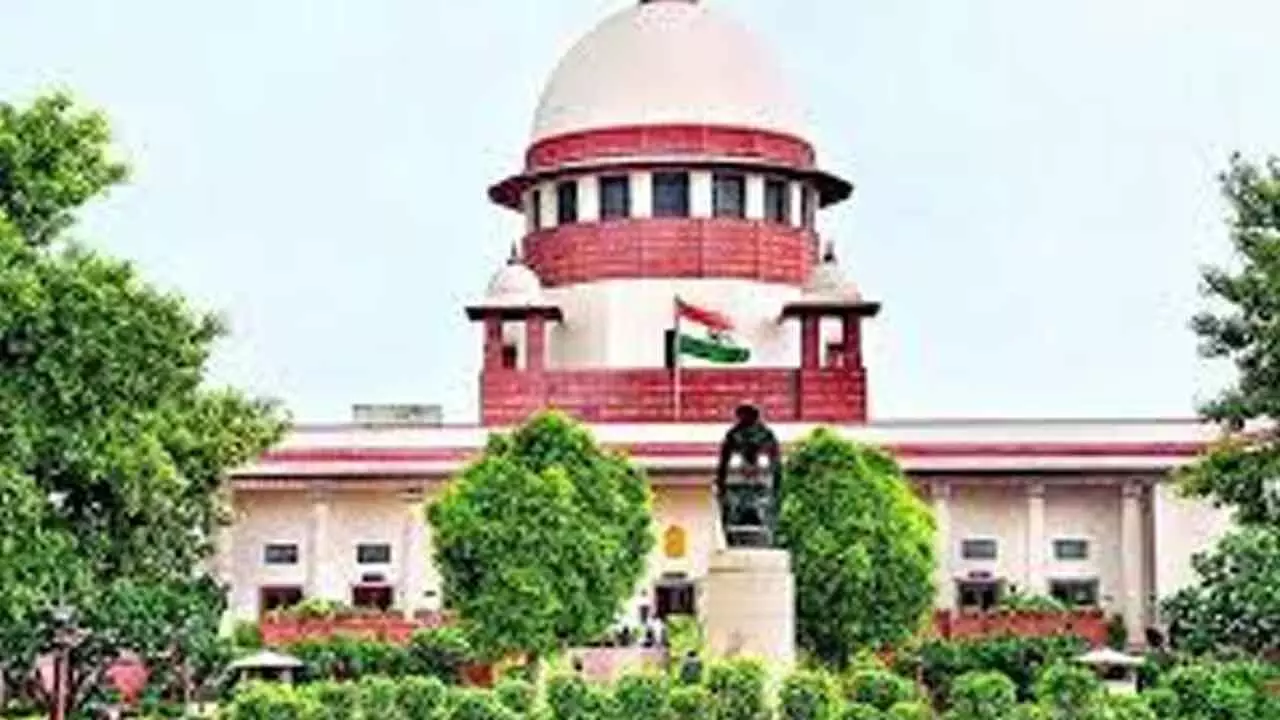
Slamming the authorities of gross misuse of state laws like the UP Gangsters and Anti-Social Activities (Prevention) Act, 1986, a Supreme Court bench, comprising Justices Vikram Nath and Sandeep Mehta, has made it clear that the Act was not an instrument to target individuals, who are guilty of involvement in a single incident of anti-social activity. While warning governments against invoking such stringent laws as a tool of harassment or intimidation, the bench asserted that it was tantamount to extreme abuse of the governing laws when such an Act is used as a means of oppression, especially when political motivations are suspected. In a veiled attack, the apex court has sent across a message loud and clear that they cannot be used to settle political scores. By definition, the Uttar Pradesh Gangsters and Anti-Social Activities (Prevention) Act, 1986, is designed to prevent and combat gangsters and related anti-social activities. It defines “gangster” and provides for the punishment of individuals involved in organized crime, including imprisonment and fines, especially if the offence is committed against a public servant but not for staging demonstrations, when used as an expression of right to expression that had no other ulterior motives.
Mere involvement in a demonstration or protest after a communal clash cannot be reason enough to invoke the provisions of the Gangster Act, was made clear by the Supreme Court. Putting to rest many self-satisfactory interpretations about the provisions of the Act, most of which were invoked for serving political interests in violation of the law, the apex court drove home the point that the constitutional guarantee of personal liberty acquires greater emphasis when extraordinary legislation with stringent provisions, such as the UP
Gangsters Act, is invoked. In unequivocal terms, it stated, “When a statute creates serious fetters on personal liberty, the evidentiary foundation for its invocation must be commensurately strong, supported by concrete, verifiable facts rather than vague assertions.” This, in essence, implies that the Act cannot be invoked to stifle voices and silence dissent. Quashing an FIR lodged on April 30, 2023 against an ‘organised gang’, based on a social media post that cried foul of a particular religion, which led to violent protests ‘involving’ the appellants Lal Mohd and others, the court maintained that the complaint provided no evidence to substantiate systematic planning or coordinated criminal activities against the group.
It discarded the FIR on the grounds that it was a conjectural statement by the complainant and one that was not corroborated with facts to establish ‘provocative’ motivations of those named in the FIR or to establish that it was a premeditated gang activity meant to create serious law and order disturbances. On their part, the appellants held that the allegations do not meet the threshold to justify invoking the UP Gangsters Act. The Supreme Court said that the accused were arrested and booked under provisions of IPC for vandalising a shop and wondered the need for lodging a second FIR by invoking Gangsters Act six months after the incident. However, the ground reality is that for decades together, many state governments have taken undue advantage of the loopholes that exist in certain laws as a means to harass political antagonists and their supporters. It is even more tragic that they get away even without coming up with any concrete proof to justify such acts of victimisation. Police and law and order are, after all, state subjects and hence none dares to beard the lion.