
Mandating Hindi and secularism debate may boomerang on BJP

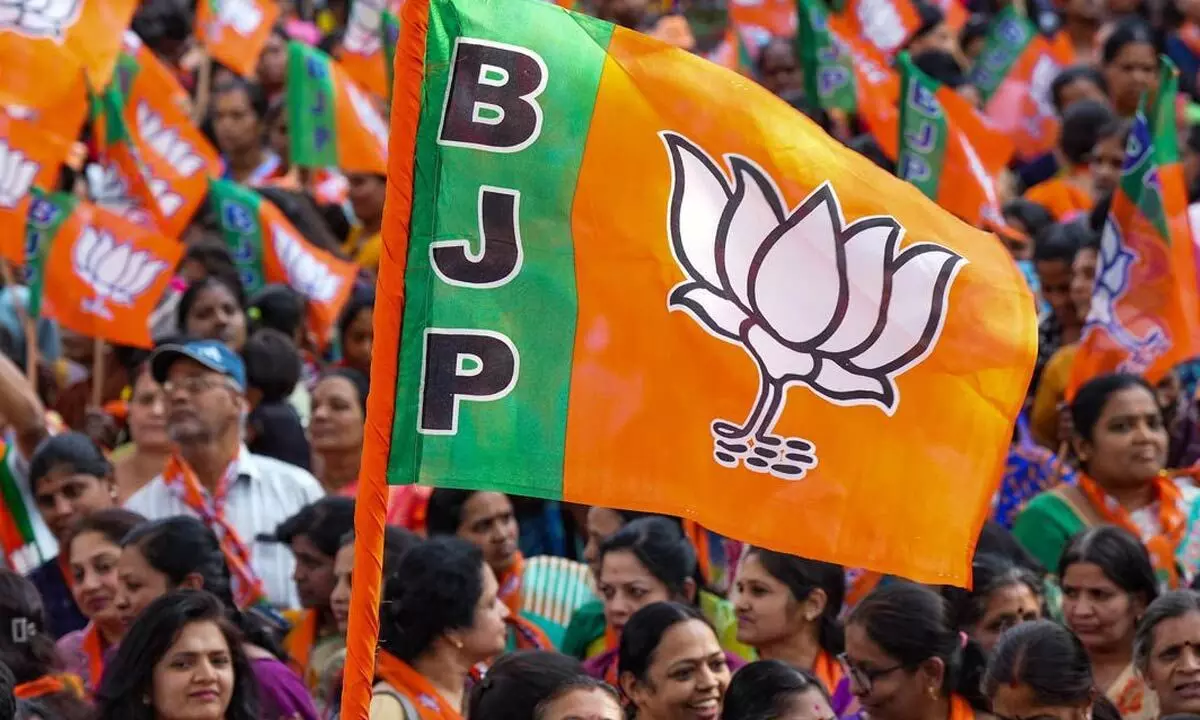
The recent moves by the saffron dispensation, making Hindi mandatory as the third language from Classes 1 to 5 in Maharashtra and questioning the words “socialism” and “secularism” in the Preamble to the Indian Constitution, are unfortunate. Driven by ideological zeal, the moves are unlikely to benefit either the Bharatiya Janata Party (BJP) or the nation as a whole. Instead, they risk further polarising of an already fractured political landscape and diverting national attention from pressing developmental challenges. The decision to enforce Hindi as a mandatory third language in a state with a rich linguistic heritage and a strong Marathi identity has raised eyebrows. India is a diverse, multilingual country where language has always been a sensitive issue. The attempt to impose Hindi on non-Hindi-speaking states has historically been met with fierce resistance, as witnessed during the anti-Hindi agitations in Tamil Nadu in the 1960s and also Karnataka. Such moves are often perceived as efforts to impose cultural hegemony rather than promote national unity. Language in India is deeply intertwined with identity, and the compulsion to learn Hindi, especially in regions with their dominant languages, is viewed as an encroachment on local cultures and traditions. While promoting Hindi as a link language is understandable in a country with numerous regional tongues, making it mandatory at the primary education level risks alienating large sections of the population.
Simultaneously, the move to question the inclusion of “socialism” and “secularism” in the Preamble to the Constitution opens another front of ideological conflict. These words were added to the Preamble during the 42nd Amendment in 1976. While it is valid to debate constitutional provisions in a healthy democracy, the timing and tone of this scrutiny suggest a larger effort to recalibrate the foundational ethos of the Republic in line with a narrow ideological vision. Secularism is ingrained in Indian ethos, serving as a guiding principle for policy-making and governance. Questioning these principles risks unsettling the delicate balance that holds together India’s immensely diverse social fabric. The inclusion of socialism in the Preamble is problematic, indeed against the spirit of the Constitution, because technically it prohibits anti-socialist parties.
But then, the Preamble has never posed a problem to the formulation and execution of post-liberalisation policies, which were often anti-socialist. So, the Sangh Parivar’s aversion to the two words is pointless. Such ideological pursuits risk shifting focus away from the real, tangible issues facing the nation—unemployment, inflation, agrarian distress, public healthcare, education quality, environmental degradation, and growing economic inequalities. Instead of addressing these pressing concerns, the political discourse is increasingly consumed by symbolic and divisive debates that offer little substantive improvement to citizens’ everyday lives. Worse, these aggressive ideological moves don’t even serve the BJP’s political interests. In fact, they can do the opposite; for instance, estranged cousins Uddhav Thackeray and Raj Thackeray have reportedly agreed to join hands to oppose this decision. A doctrinaire approach may please the party’s cadre and ideological purists, but it will alienate moderate voters and regional allies, potentially undermining its broader electoral appeal. India’s electorate, particularly the youth, is increasingly aspirational and impatient with distractions that do not improve their economic prospects or social mobility. While ideological debates are an intrinsic part of a vibrant democracy, the saffron dispensation’s current trajectory risks deepening divisions and sidelining essential developmental issues.


