




- Cultural celebration: Redefining true talent
- Furqan Ahmed on the art of a successful podcast
- Will AI replace you?
- Why didn’t you just go to Pakistan?
- Impact of tariffs on BRICS: India can take lead in measuring the economic burden
- Women leaders take centre stage at HBA India Leadership Summit 2026
- Neha Dhupia: Becoming a mother has made me very shaky
- Exploring a world where time has no boundaries
Furqan Ahmed on the art of a successful podcast
In Short
Majority people are running interview channels in the name of podcasts. But, that’s not me

Share :
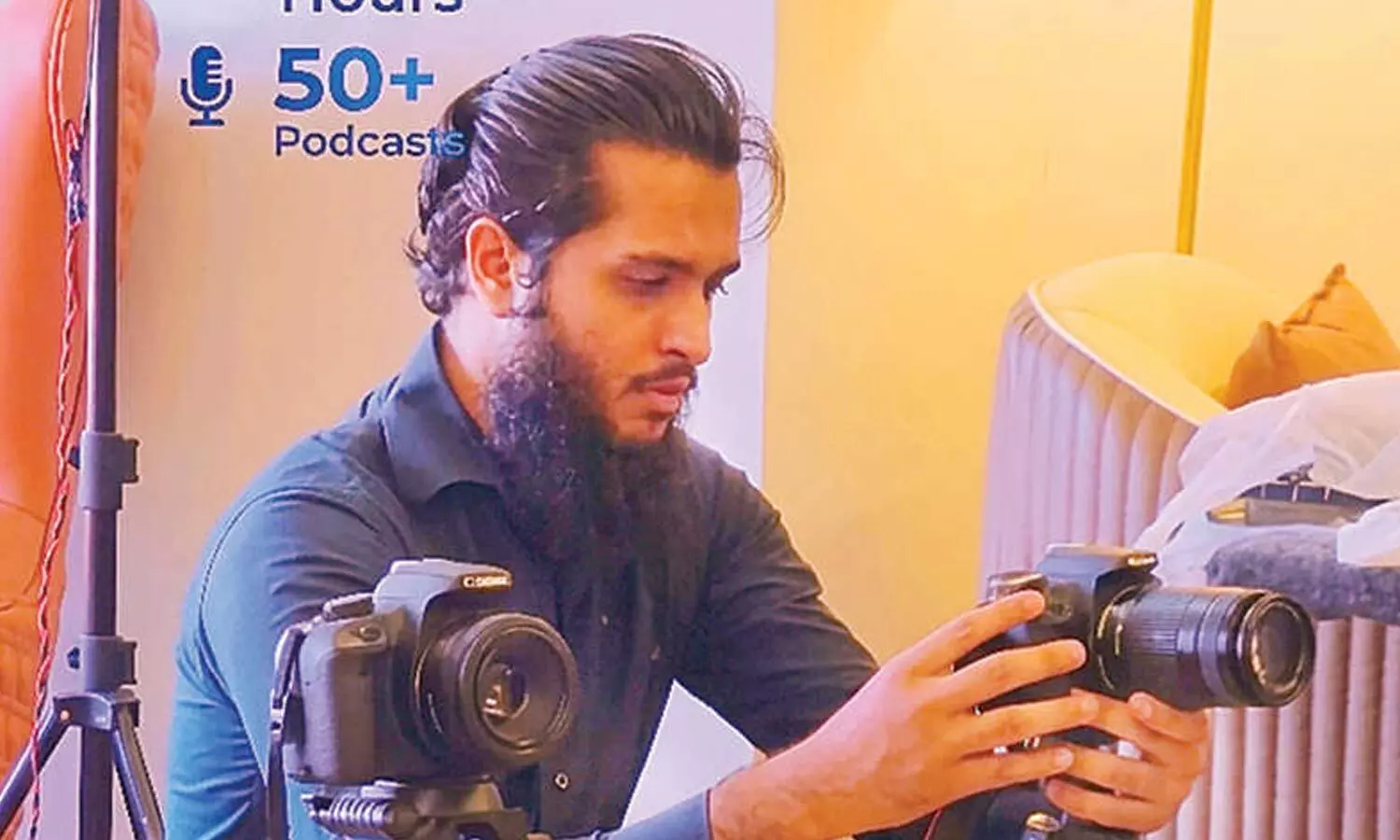
Furqan Ahmed on the art of a successful podcast
With a combined followers of 1,21,600 across YouTube and Instagram, more than 61 lakh views, over 1,000 hours of work, and 50-plus podcasts under his belt, 24-year-old Mohammed Furqan Ahmed, host and founder of ‘Table of Wisdom’ (TOW) podcast is a heavyweight in his field. Yet, beneath those numbers is a complex mix of humility and ambition.
It’s taken Furqan 1000 hours to understand the difference between an interview and a podcast, which by the way instantly makes his content stand out. This is the time he’s spent editing, experimenting, and having conversations with his guests.
“In a podcast, we’re in a world. In it, there are mountains, rivers, beautiful valleys, grass, cold wind, and many other things. My guest says, ‘Let’s go there, let’s see that mountain.’ I say, let’s go together. There are no guardrails, no boundaries,” he explains. “Everything which is beyond the title of a person or a guest, that is a podcast.”
This explains much of what makes TOW different. The Hyderabad-based podcast, now more than two years old, is as much about the conversation as it is about what happens around it. Everything on screen, he says, is essentially an experiment.
Except, perhaps, the obsession with getting it right. “Whatever I do, I want to do it with 100 per cent perfection. If I leave even one stone untouched, that will not let me live peacefully.”
For a long time, Furqan believed he had started the podcast because he had identified a gap in society: people, he felt, were not thinking independently enough. But that was not the primary reason. “That was the secondary reason. The primary reason was myself and my curiosity.”
He describes the podcast as a journey rather than a destination. It’s taught him more about himself than he expected. When he started, he was consumed by how he would appear to others. How would he look on camera? How would his voice sound? Should he change his pitch?
“I was trying to pretend to be somebody else.” He admits that this continued until very recently. “I realised I was killing who I am. It was hurting my inner self.”
Authenticity became the answer. There was a moment while watching one of his conversations when he caught himself and thought: “No, Furqan. This is not you.” The reason he had been performing, he realised, was fear. “Deep down I was afraid people wouldn’t watch my podcast.”
This he believes opened the floodgates of views for him. “When the conversation starts, when I’m in my flow state, the guest and I are transported to a different world.”
And if the podcast “skyrockets” in the next six months, he predicts, it will be because of that.
For all its growth, however, Furqan is emphatic that TOW is not a business in that he’d never charge anyone to appear as a guest. And he does not want TOW to become a production house.
It is an odd admission from someone who is ambitious. Perhaps it is the folly of youth or the freedom of failure the young enjoy. For him, the problem is not the money itself. It is what money does to the conversation. A conversation, he believes, should happen “on this level, on this table.”
Furqan insists he does not want is a fixed number of views, followers, subscribers or money that he must achieve. “Because if I keep expectations, it will break me.”
Perhaps the distinction is not between ambition and apathy, but between ambition and attachment. He wants to keep moving. This young podcaster simply does not want the destination to dictate the journey.
Centre offers to back Quantum Bio Valley
Vijaya Dairy to hike milk prices by up to Rs 2/Litre from tomorrow
AP to digitise citizens’ health records from Jan 1
CM Revanth Reddy firms up steps for Ganesh festivities
Make health a priority, says Director of Public Health
Holy Darbha mat procession taken out in Tirumala


