




- ED seeks day-to-day trial of Jagan in quid pro quo case
- Donald Trump continues to harp on Nobel
- “Haven’t you taken pesticide yet”, tehsildar mocks farmer
- 'Urgent relief': Maha CM Fadnavis directs immediate foodgrain supply to 265 drought-hit talukas
- BJP won bypolls, rejects Opposition's claim that govt is afraid: Assam CM Sarma
- Sting operation row: Union Min Kumaraswamy questions CM Shivakumar, demands probe
- 'Democratic framework does not run on blind faith': Smriti Irani backs open letter by ex-civil servants
- Telangana Informal Cabinet Meeting on Oct 12 on El-Nino
India gets a Vedic Village
In Short
Ajay Chaturvedi invested a whooping Rs two crore to revive the Vedic roots of Dwara, a village in Uttarakhand. Should further development be stalled for the lack of funds?

Share :
India gets a Vedic Village
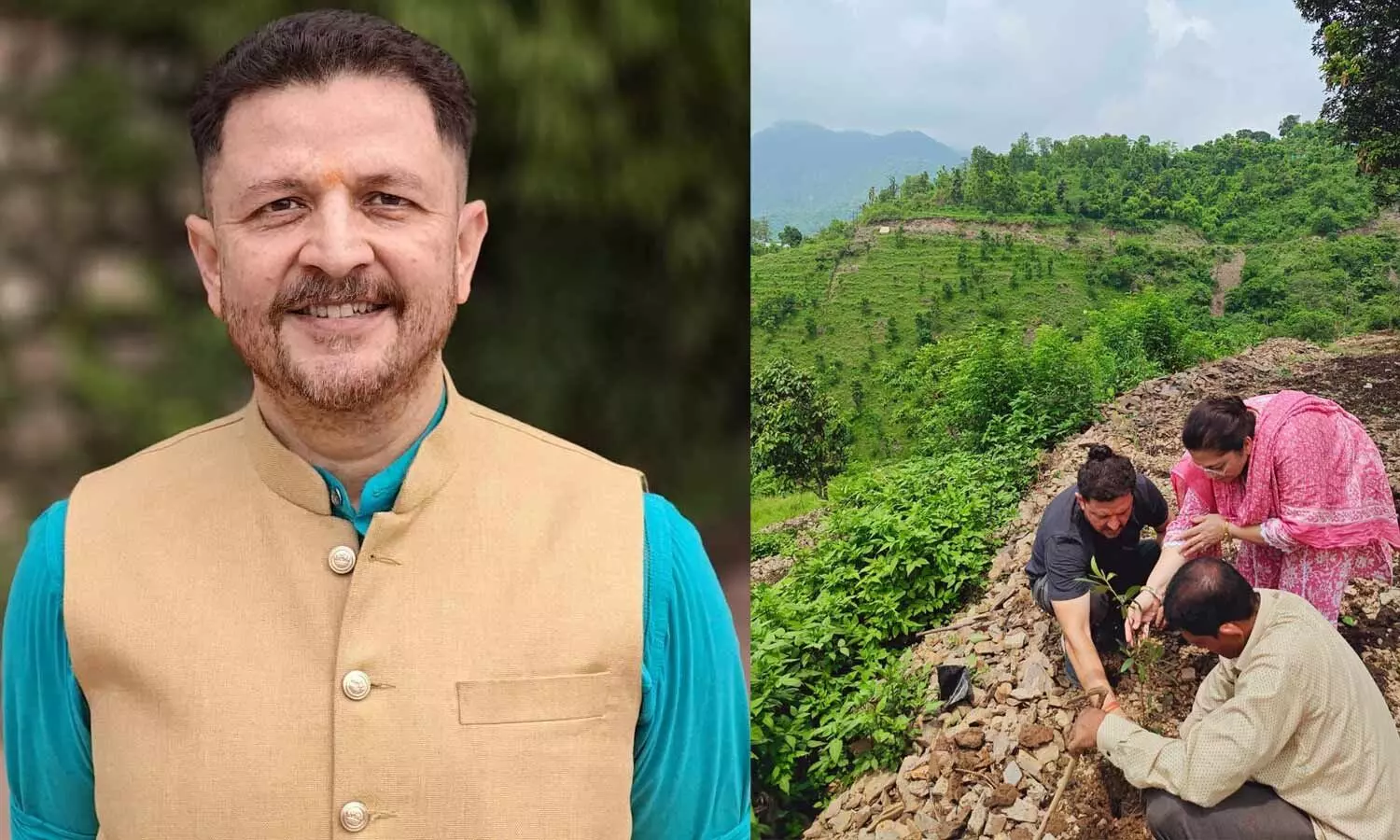
It was during his drives to Dwara, a village with a population of nearly 2000 people, did Ajay Chaturvedi realize that the village needed to be re-connected to its roots. “There were largely pine trees in and around Dwara. Pine was something that the Britishers brought, but it does not suit the ecology as pine absorbs a lot of water from the soil. That was what drew my attention to revive Vedic roots of the village that existed before the British invaded India,” Chaturvedi recalls.
Ever since Wharton and Harvard graduate Chaturvedi has been on the ambitious and daunting task of developing Dwara back to all things natural, sustainable, and one that follows the rhythm of the nature. In the last five years, over five lakh medicinal, healing, and ecologically valuable plants/crops have been sown. Some names include turmeric, kadam, ginger, and lemon. “Kadam heals menstrual pain. If one sits near Kadam tree, one feels a great sense of ease during menstrual cramps.”
Chaturvedi has invested over a whooping Rs two crore in the research and development of the Vedic village. “My vision is of a village where natural and sustainable practices once again become part of everyday life, where agriculture, water, energy, health, and livelihoods work with the rhythms of nature rather than against them.” Upon asking how far has the vision become a reality, Chaturvedi laments, “The plantation activity is on-going. I am there before and after the monsoon for the drive. However, other phases such as including solar panels, alongside regenerative agriculture, local enterprise, and sustainable livelihoods have yet to see the light of the day. I have to force myself to curb the development for the lack of funds,” reasons Chaturvedi.
Speaking of other challenges, the former Chief of Strategy at Citi Bank, interestingly, cites nature as his obstacle. “Landslides, excessive rain, and wild animals’ beastly behaviour occasionally pose trouble.”
Back in the time when Chaturvedi commenced his research on Vedic elements, he was an entrepreneur of an all-women BPO ‘HarVa’. Surprising it is to see Chaturvedi invest an enormous amount of wealth on a public cause. “Why not?! I felt if I didn’t do, nobody else would. I didn’t mind ‘utilizing’ my personal funds for the betterment of a village.
The hills is where I belong. I studied at Wharton and Harvard and lived a high-flying western corporate life as a banker. But the hills never quite left me. I returned to where I belonged. So does my work,” says a generous Chaturvedi.
Rajiv panel recommendations approved…Cabinet clears BC quota across eight categories
El Nino century’s biggest natural crisis: CM Revanth Reddy
Karnataka BJP mocks CM Shivakumar’s Delhi trip, says ‘visit villages instead of sitting on Delhi streets’
Matter of shame that LoP has no understanding of constitutional duties: Piyush Goyal
'Against the Constitution': Supriya Sule condemns Abhijeet Dipke's detention
Canadian minister Sidhu to lead 300 business delegates with stops in Mumbai, Bengaluru


