




- Remove morphed photo of woman with PM, Delhi court orders Meta
- Advisory to bank customers to complete essential transactions ahead of 3-day stir
- Aadi reviews arrangements for CM’s Sircilla visit
- Plea in SC challenges unilateral decisions taken by EC chief
- Focus on positive changes in society, PM tells BJP workers
- Additional levy on excess tobacco waived
- Three-year jail term for deposit fraud accused
- 18 returnable plots allotted to Amaravati farmers
Silence won’t end this storm: Election Commission needs to speak
In Short
EC’s credibility is at stake
Share :
Silence won’t end this storm: Election Commission needs to speak
Silence may work in politics, but not when the credibility of the Election Commission is at stake. The CEC’s continued silence is allowing allegations to grow, speculation to spread, and the Opposition’s narrative to gain traction. The institution must speak, put the facts on record, and let the political noise take its course.
Silence can sometimes speak louder than words. But when an institution is under a cloud, silence can also create a vacuum—and a vacuum is quickly filled by speculation, suspicion, and competing narratives.
Former Prime Minister P V Narasimha Rao was often associated with the belief that “silence is a political strategy.” He spoke less and thought more. He also believed that if one remained silent for too long, history could cease to see one as a victim.
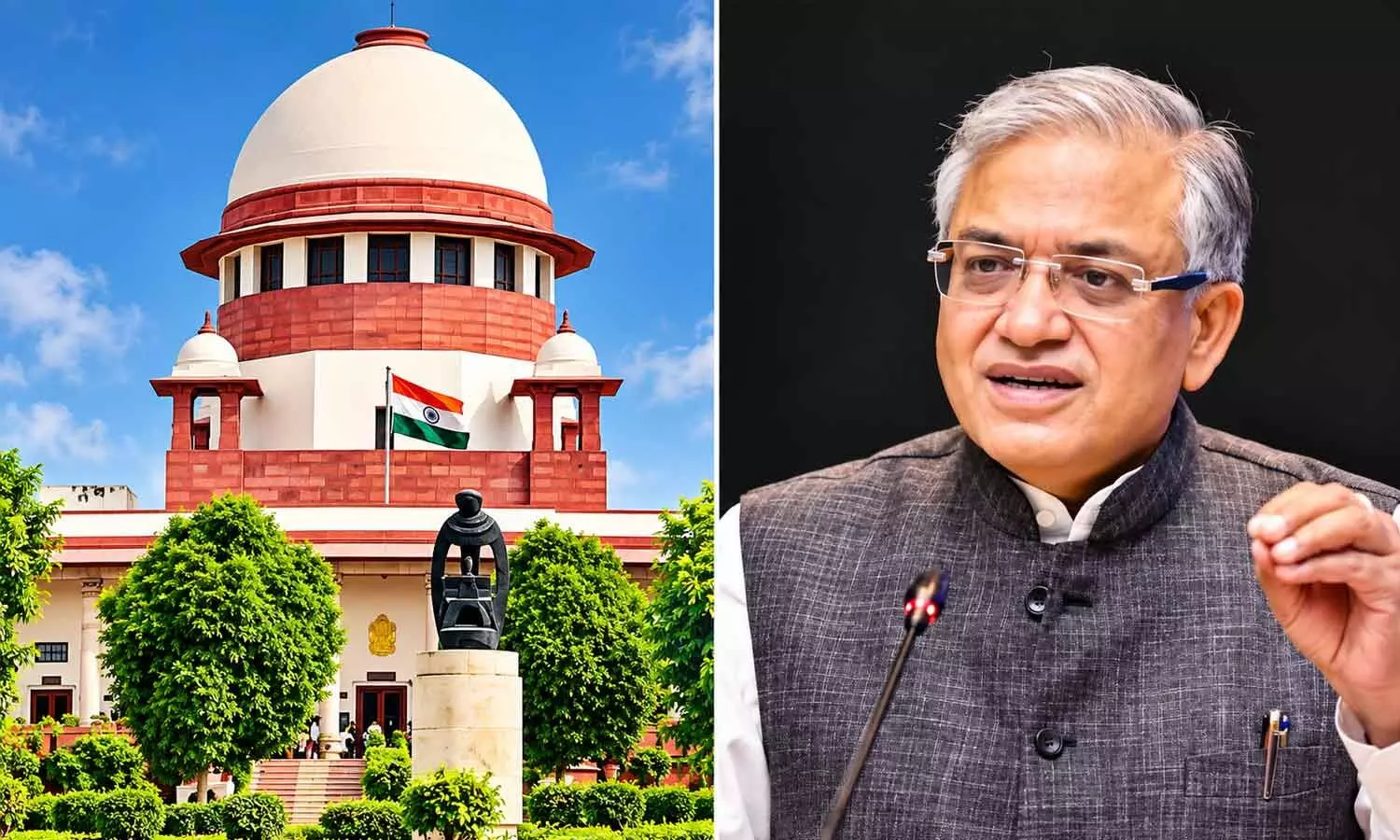
That may have suited Rao’s political philosophy and style of governance. But it cannot be the strategy of the Chief Election Commissioner when questions are being raised about the Election Commission of India. Chief Election Commissioner Gyanesh Kumar’s silence has given the Opposition considerable ammunition, but, more importantly, it risks adding to questions about the credibility of a constitutional body entrusted with conducting free and fair elections.
There have been several explanations from BJP spokespersons. Some have even questioned the authenticity of the report published by The Indian Express by a young reporter, which triggered the controversy. Such reactions can either be seen as a panic response or as an attempt to deflect the issue. But neither can substitute for an official clarification from the Election Commission itself.
Three days have already passed since the controversy came to light. Yet the CEC has not considered it necessary to hold a joint press conference with the other two Election Commissioners and put the matter to rest.
Of course, even a clarification may not satisfy the Opposition. It could allege that the Election Commissioners made the statement under pressure from the government. Political parties can always find another argument. That is politics.
But institutions cannot operate on the assumption that every clarification will be challenged. They have to put the facts on record.
If the report is factually incorrect, the Election Commission should say so clearly and, if necessary, take legal action. If there are inaccuracies, they should be identified. If there are no inaccuracies, that too should be made clear.
Silence, in such circumstances, does not resolve confusion. It allows confusion to grow. And that has political consequences.
The longer the Election Commission remains silent, the more space it creates for the Opposition to reinforce its “Vote Chori” and “Sanstha Chori” narrative. It also provides political groups with an opportunity to build a larger campaign around an issue that could otherwise have been settled through a factual clarification.
With several Assembly elections due in 2027, the political temperature will only rise. That makes clarity from the constitutional authority all the more important.
There is another dimension to the controversy. Silence can also encourage street politics. Groups such as the CJP have every democratic right to protest, hold demonstrations and demand the resignation of the CEC. But protests cannot become a substitute for institutions, nor can deadlines be imposed through street mobilisation to dictate how constitutional bodies should function. Governments too must distinguish between legitimate protest and attempts to pressure institutions.
Recent protests in New Delhi during the student agitation showed how quickly demonstrations can be joined by unruly elements, resulting in violence and injuries to ordinary people and policemen. Objectionable language was used against the Prime Minister, and even the armed forces were subjected to derogatory remarks. The Opposition, so far, has not condemned such conduct, while some leaders have instead focused on allegations of police excesses and opposed legal action against protesters.
Both sides need to understand that democratic protest and institutional authority are not mutually exclusive. The right to protest is fundamental; so is the rule of law. The CEC therefore needs to recognise that prolonged silence can have consequences beyond the immediate controversy. It can turn a manageable dispute into a larger institutional and political confrontation.
But this is not to suggest that the Modi Government has never made mistakes or that all its policies are beyond criticism. A functioning democracy requires a strong Opposition, and the government must be held accountable. The problem is that the Opposition needs a more credible political strategy and matured leadership not “Darbaris”.
Leader of the Opposition Rahul Gandhi has made a strong case for the removal of the CEC. That is a legitimate political position. But the argument loses force when the debate moves into claims that the BJP has remained in power since 2014 only because of “Vote Chori”. History offers a more complicated picture.
The Congress ruled India for decades after Independence. The party’s own record also contains episodes that remain part of the country’s democratic history. D K Barooah’s famous declaration, “Indira is India, India is Indira”, made during the Emergency remains one such example.
The Emergency itself was a profoundly consequential period in Indian democracy, during which fundamental rights were suspended. The Opposition of that era accused the Congress governments of exercising excessive control over institutions and investigative agencies.
The question, therefore, cuts both ways: if institutional independence matters today, it mattered then as well.
Another argument that deserves scrutiny is the claim that previous governments routinely faced anti-incumbency while that factor has somehow disappeared today.
That is simply not borne out by the electoral record. The BJP has suffered significant electoral defeats. It lost Karnataka, Himachal Pradesh and Telangana. In the 2024 Lok Sabha elections, its seat tally declined substantially, although it returned to government with its allies.
Electoral politics is never permanent. Governments win, governments lose, and voters change their minds. That is precisely why the Opposition needs to concentrate on the basics.
The Congress has struggled to convert its vote share into a sufficiently broad electoral mandate. Its problem is not merely technology, presentation or messaging. It is the ability to connect with voters, organise at the grassroots, identify local issues and convert public dissatisfaction into electoral support.
The Samajwadi Party’s performance in Uttar Pradesh demonstrated the importance of an effective ground-level electoral strategy.
Technology can assist politics, but PowerPoint presentations cannot replace political organisation.
A political party cannot remain confined to television studios, social media and parliamentary speeches. Its leaders and workers have to be among the people, understand their concerns, raise those issues in Parliament and the Assemblies, and hold governments accountable for their promises.
Grassroots politics cannot be outsourced. The Congress leadership has repeatedly spoken about reconnecting with the people. Rahul Gandhi’s Bharat Jodo Yatra was a major political exercise. But the electoral question remains: how much of that mobilisation translated into sustained organisational strength for the Congress?
After the Yatra, the Congress lost Madhya Pradesh, Rajasthan and Chhattisgarh. Its victories in Karnataka and Telangana came in the context of anti-incumbency against the BJP and BRS respectively. Whether the Bharat Jodo Yatra itself produced a decisive electoral impact remains a matter of political interpretation.
The larger lesson is clear: electoral politics requires more than campaigns. It requires organisation, strategy and sustained grassroots engagement.
The Opposition would therefore do better to focus on building that organisation rather than relying on increasingly sweeping allegations.
The idea of Opposition unity is easier to articulate than to implement. The principle of one seat, one candidate sounds simple, but translating it into practice is far more complicated when several regional parties and leaders have their own ambitions and competing interests.
From Mamata Banerjee and Akhilesh Yadav to Rahul Gandhi and regional leaders such as Tamil Nadu Chief Minister Joseph Vijay, every political formation has its own calculations and aspirations. That is the central challenge before the Opposition. In politics, numbers matter. Organisation matters. Leadership matters. Narrative matters. But above all, voters matter.
And institutions matter even more. That is why the Election Commission cannot afford an information vacuum when its credibility is being questioned. A constitutional institution does not strengthen itself through silence. It strengthens itself through transparency, facts, and the confidence that its decisions can withstand scrutiny. Silence may sometimes be a political strategy. But when an institution is under question, clarity is the better strategy.
(The author is former Chief Editor of The Hans India)
India must pursue goal of large, diversified defence-industrial base
Silence won’t end this storm: Election Commission needs to speak
Money laundering fraud: State-backed sanctions-evasion network in Russia operates globally
Focus on positive changes in society, PM tells BJP workers
‘Make In India’ Turns 12: PM Modi credits infra, innovation for growth
Balapur Laddu fetches record Rs 39L in auction


