




India trying to break the cycle of deprivation
In Short
These questions assume significance against the backdrop of the World Bank’s latest assessment, which indicates that India’s extreme poverty has declined from 27.1 per cent in 2011–12 to 2.6 per cent in 2023–24.

Share :
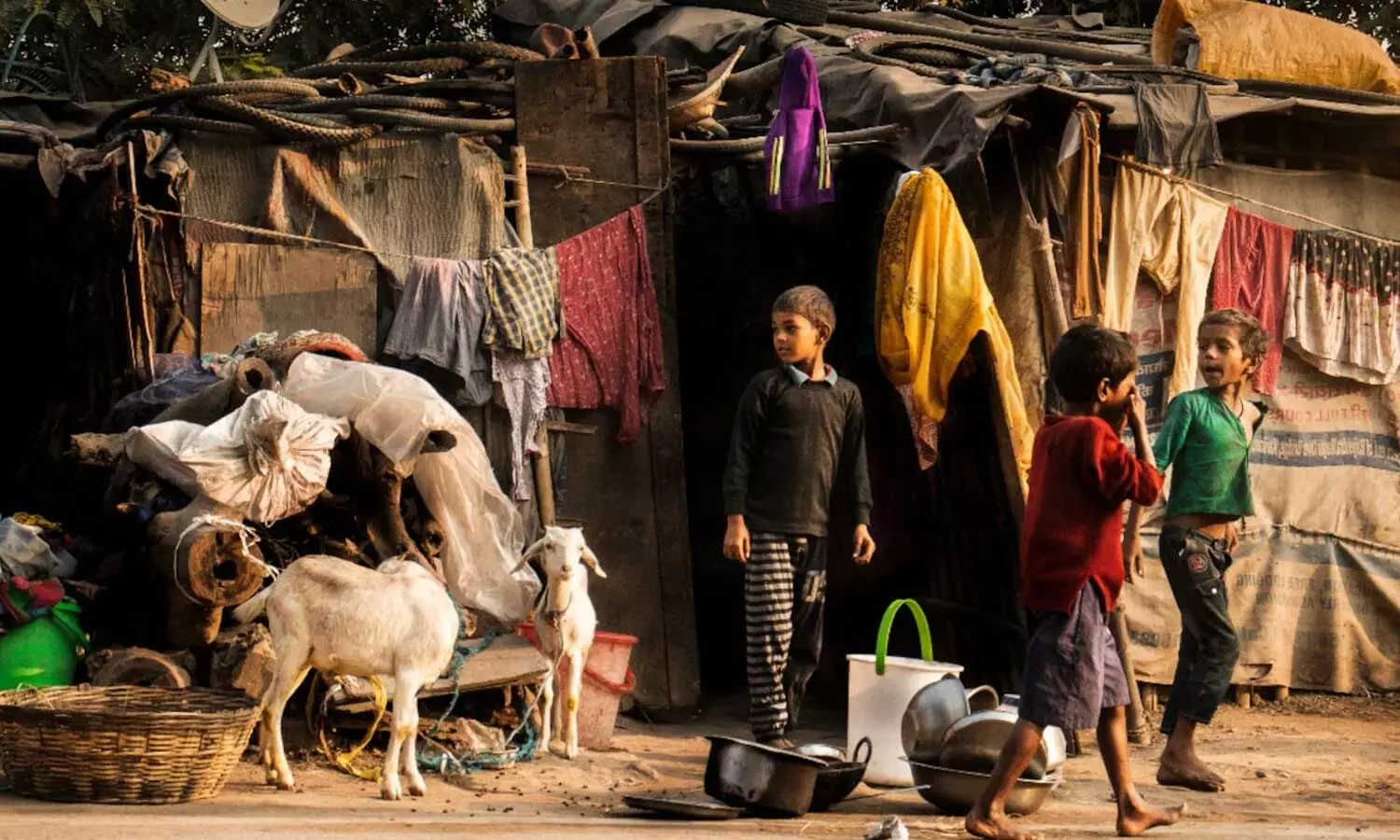
India trying to break the cycle of deprivation
Can welfare schemes really pull families trapped in extreme poverty out of the vicious cycle of deprivation, or do they merely help them survive another day? Is the provision of free food, housing, healthcare, cooking gas and financial assistance transforming the economic conditions of the poor, or creating permanent dependence on government support?
These questions assume significance against the backdrop of the World Bank’s latest assessment, which indicates that India’s extreme poverty has declined from 27.1 per cent in 2011–12 to 2.6 per cent in 2023–24. The proportion living below the broader lower-middle-income poverty threshold of $4.20 a day has also fallen from 57.7 per cent to 16.1 per cent. An estimated 49.6 crore people have moved above this broader poverty threshold. Behind this transformation lies an important story of public welfare interventions protecting vulnerable households from economic hardship.
For a country marked by enormous population pressures, social inequalities and regional disparities, poverty cannot be addressed through economic growth alone. Growth creates opportunities, but its benefits do not automatically reach those at the bottom of the economic pyramid. Welfare interventions bridge this gap. India’s public distribution system and subsidised food supplies, particularly through the Pradhan Mantri Garib Kalyan Anna Yojana, have provided millions of vulnerable households with basic food security. When families are relieved of a substantial part of their food expenditure, they can redirect limited earnings towards education, healthcare and other necessities. Food security is therefore not merely an act of charity; it is an economic intervention that prevents further impoverishment.
The impact of welfare extends well beyond food assistance. Housing programmes such as the Pradhan Mantri Awas Yojana have helped vulnerable families move towards secure shelter. Sanitation initiatives, access to drinking water and rural electrification have improved living conditions and reduced everyday hardships. The provision of LPG connections under the Ujjwala scheme has particularly benefited women by reducing dependence on traditional cooking fuels. Healthcare is another critical front in this struggle. A single serious illness can wipe out years of savings and push a vulnerable family into debt. Ayushman Bharat ccomes in this categoory. By reducing intermediaries and improving access to banking, these initiatives strengthen the financial capacity of poor households. Rural employment programmes also play an important role.
The World Bank’s findings recognise expanded social transfers, including food subsidies, alongside rising employment and consumption, as important contributors to poverty reduction. This reinforces the argument that welfare should not be dismissed as unproductive expenditure. Properly designed social protection is an investment in human development and economic stability. It enables families to maintain consumption, protect children from deprivation and withstand unexpected financial pressures.
Yet, these achievements should not encourage complacency. Crossing the extreme poverty threshold of $3 a day does not necessarily mean attaining economic independence. Even above the broader $4.20 threshold, millions remain vulnerable.
Income disparities remain substantial, with median earnings among the top 10 per cent of workers nearly thirteen times those of the bottom 10 per cent. Welfare can soften deprivation, but it cannot independently eliminate the structural inequalities that perpetuate poverty.
The next challenge is to make welfare a stepping stone towards self-reliance rather than an end in itself. Food security must be accompanied by nutritional improvement, housing assistance by livelihood opportunities, healthcare protection by stronger public health infrastructure and financial inclusion by productive economic opportunities. Quality education, vocational training, women’s economic participation and stable employment must become integral components of the poverty-reduction strategy.
India’s welfare architecture has demonstrated that public intervention can transform the circumstances of millions of vulnerable families. But the real test lies in what happens after immediate deprivation is addressed. Can a worker withstand unemployment without losing his family’s security? Can households build savings and look beyond subsistence?
The ultimate objective of welfare must be to break the intergenerational transmission of poverty. Providing food to prevent hunger today is essential but creating conditions in which the next generation does not depend on subsidised food to survive is even more important. Welfare is meaningful when it restores dignity, creates opportunity and enables independence. India’s progress should therefore be measured not merely by how many families cross the poverty line, but by how many acquire the means to remain above it. Breaking the chain of poverty, rather than merely easing its burden, must become the defining purpose of inclusive development.


