






- MyVoice: Views of our readers 29th November 2026
- Govt reveals what redrawn electoral map could look like
- Narasimha Reddy is new HMDA Commissioner
- Uttam backs Rahul Gandhi’s opposition to delimitation
- Sonia Gandhi's name figured in electoral rolls before acquiring citizenship: Delhi Police to court
- Mamata heads to Delhi to meet INDIA Bloc leaders ahead of LS session
- President Droupadi Murmu arrives in Mizoram on three-day visit
- Abhishek issues whip to Trinamool MPs as CM Adhikari seeks NCPI support for Delimitation Bill
Judicial appointments and the question of representation
In Short
According to the letter, a single community, constituting less than five per cent of the population, has held over forty per cent of seats on the Supreme Court in the recent past

Share :
Judicial appointments and the question of representation
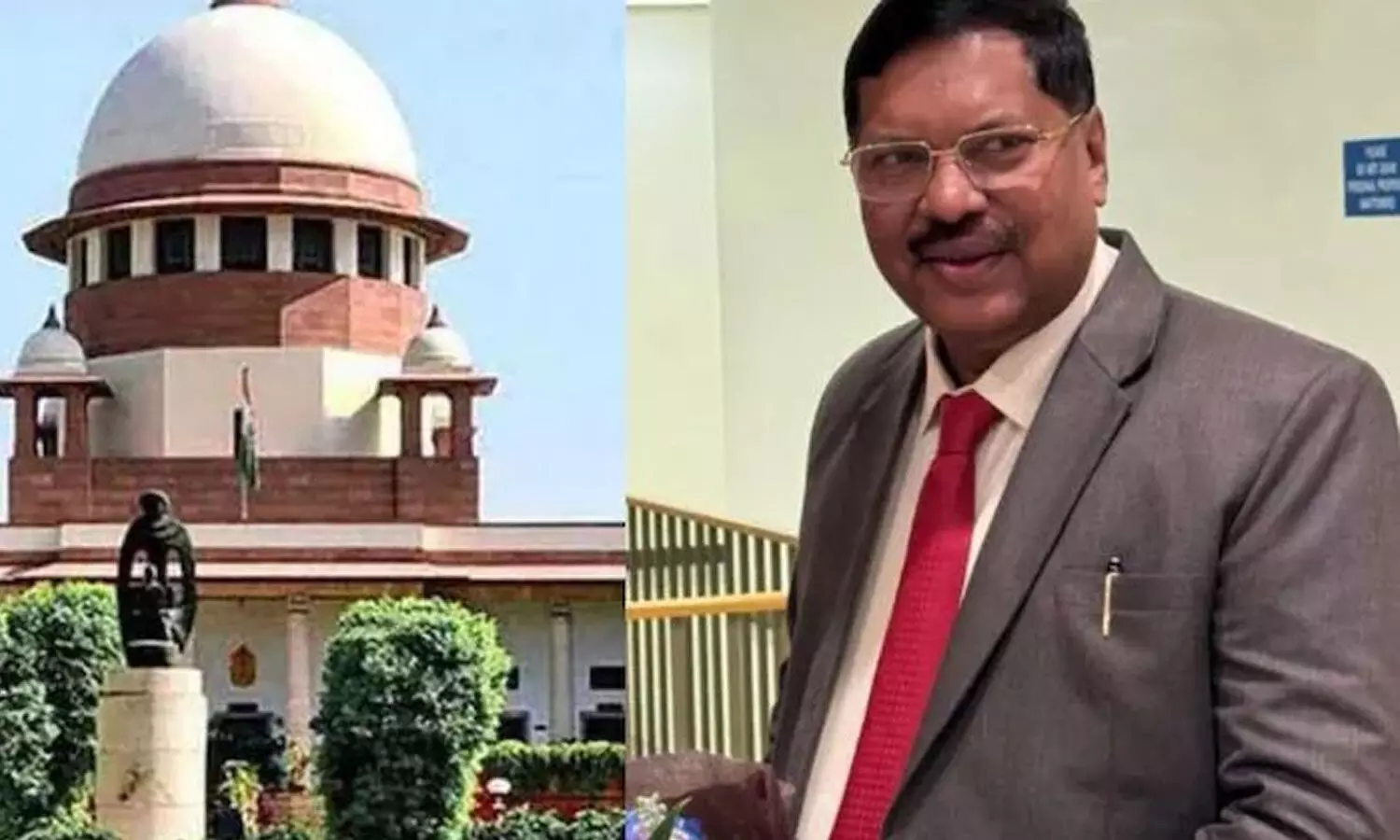
When a former Chief Justice of India (CJI) addresses the President of the Republic on the functioning of the collegium, the communication warrants serious institutional attention. In his letter, BR Gavai alleges “a growing disregard for diversity, inclusion and merit” in the selection process. The allegation carries weight because it comes from one who sat within the system.
The contentions in the letter
According to the letter, a single community, constituting less than five per cent of the population, has held over forty per cent of seats on the Supreme Court in the recent past. It further contends that candidates from one section have been preferred, to the exclusion of Scheduled Castes, Scheduled Tribes, backward classes, minorities, women and forward-caste candidates from outside that group.
The letter relies on figures relating to High Court appointments. Of 715 judges appointed since 2018, 22 are stated to belong to the Scheduled Castes and 16 to the Scheduled Tribes, with 89 from the OBCs and 37 from minority communities. Nearly three-fourths are stated to be from the general category. For 2021 to 2026, forward communities are said to account for close to 80 per cent of appointments, while OBCs, who may constitute 40 to 50 per cent of the population, received under 14 per cent.
The letter also refers to two transfers: that of a Chief Justice described as meritorious to a smaller High Court, and that of a judge allegedly transferred as a measure of displeasure and later elevated to a senior office. Neither the individuals nor the reasons are identified, the author points out citing propriety.
The concern raised
The concern is not without foundation. The Constitution guarantees equality, and reservation operates in public employment and education, yet no comparable principle governs appointments to the constitutional courts. The persistence of this pattern is documented. The letter cites George Gadbois’s study, which found that a community of roughly one-nineteenth of the population held over a third of Supreme Court seats between 1950 and 1989. The disparity is therefore longstanding.
The concern is not new, and it has not come only from outside the institution. Justice B S A Swamy, who served on the Andhra Pradesh High Court from 1995 to 2004, spent much of his post-retirement life arguing that the higher judiciary did not reflect the composition of society. He pressed for reforms in judicial appointments and wrote of caste influence in the composition of the Andhra Pradesh bench. His allegations related to that of the High Court, which sits within the larger concern, and are the author’s own account rather than findings of any inquiry. Scholars such as George Gadbois, writing from outside the system, held a similar view of the Supreme Court’s composition.
What links these voices is that they are seen as coming from a particular standpoint, and they have never been tested against published data. The Gavai letter, by a former head of the judiciary, now gives the question a wider audience. The remedy remains the one suggested here: disclosure of appointment data, so that such claims can be examined rather than traded as assertions.
Public confidence in the judiciary rests not only on the correctness of its decisions but on the perception of its legitimacy. A bench that does not reflect the diversity of the litigants appearing before it risks an erosion of that perception, irrespective of the integrity of individual judges.
Limitations of the letter
A balanced assessment must also note the following limitations.
First, the letter does not identify the community concerned, referring only to “a particular section.” An allegation of this gravity ought to be capable of being tested. Without specificity, it invites speculation and cannot be verified or rebutted.
Second, the “forty per cent” figure is not accompanied by a source or a defined period. With a sanctioned strength of about 34 judges, a small number of appointments can alter percentages substantially, and the statistic must be read with that caution.
Third, the transfers are described without particulars. The author states that he was aware of the circumstances, and he is recorded as having participated in the collegium that effected the first transfer and subsequently presided over it. The question naturally arises why the objection was not recorded contemporaneously. A dissent expressed after demitting office will attract scrutiny on that ground.
Fourth, the phrase “appeasing and rewarding a single community” is intemperate. It imputes caste-based favouritism without disclosed evidence, and from a former head of the judiciary such language carries particular weight.
Fifth, the High Court data reflects categories of appointees but not the pool of eligible candidates, the number of recommendations made, or the availability of candidates in each category. Historical inequities in the composition of the Bar and the subordinate judiciary bear upon that pool. This does not justify the outcome, but it indicates that remedies must begin at an earlier stage.
The structural issue-Opacity in the collegium
Notwithstanding these limitations, the central concern merits consideration. The collegium system, evolved through the Second and Third Judges Cases, operates largely without published reasons or stated criteria. The letter itself acknowledges that “persistent social networks” and “unexamined notions” of who “looks like” a judge influence the outcome. In such a system, no deliberate exclusion need be alleged for homogeneity to reproduce itself, since recommendations tend to flow from professional familiarity.
The 2015 judgment striking down the National Judicial Appointments Commission confirmed judicial primacy in appointments. That primacy, however, does not imply immunity from transparency. Institutional authority and institutional accountability are not mutually exclusive.
The role of the executive
The executive cannot be absolved. The Union Government has been criticised for delaying clearance of recommended names, approving some while keeping others pending, a practice that itself exerts influence over the composition of the bench. Any proposal for intervention by the President, who acts on the aid and advice of the Council of Ministers under Article 74, risks enlarging executive control over appointments and would be a remedy worse than the ailment.
The debate must also avoid two errors. Diversity should not be dismissed as inconsistent with merit, and merit should not be invoked to preserve existing arrangements. The two are complementary. The Bar and the subordinate judiciary contain capable candidates from under-represented communities, and the appointing authority bears the responsibility of identifying them.
Recommendations
Disclosure: Publish annual data on the social, gender, regional and religious composition of the higher judiciary.
Reasoned recommendations: Record the grounds for recommending particular candidates, and for passing over others.
Published criteria: Codify the parameters of seniority, merit, quality of judgments and professional standing, and apply them consistently.
Wider consideration: Extend consideration beyond established chambers and metropolitan courts to the district judiciary and Bar associations in smaller centres.
Institutional reform: Constitute a balanced body of judges, jurists and independent members, with safeguards against executive capture.
Transparency in transfers: Ensure transfers are reasoned and not capable of being perceived as punitive or as rewards.
Conclusion
The letter is a valuable intervention insofar as it places the issue in the public domain. Its statistics on High Court appointments are drawn from official records and warrant attention. Its account of the Supreme Court is incomplete and requires substantiation, and its omission of names and particulars, together with its timing, weakens its persuasive force.
The appropriate response, however, is neither dismissal nor defensiveness but disclosure. If the claims are inaccurate, published data will demonstrate as much. If they are accurate, institutional reforms should follow. A judiciary that asks for public acceptance of the finality of its decisions owes the public a corresponding measure of transparency. Public confidence in appointments must be earned through openness, and the perception of exclusion, whether or not fully borne out, is itself a matter of institutional concern.
(The writer is with the Cholleti BlackRobe Chambers, Hyderabad, and his work spans economics, politics and law, bringing legal rigour and public-policy insight to contemporary debates)
Ponnala Lakshmaiah still cherishes a 1991 conversation with Sonia Gandhi
PM Modi’s Canada visit puts bilateral ties, trade talks in focus
Arjun Ram Meghwal to introduce Delimitation Bill in Lok Sabha on Monday
Uttarakhand CM Dhami announces Rs 4 lakh aid to kin of deceased in Pauri Garhwal accident
Rahul Gandhi escalates electoral manipulation charges linking proposed Delimitation Bill
NDA Explains, Opposition Takes Refuge in Rhetoric


