Operation Sindoor was focused, measured and non-escalatory

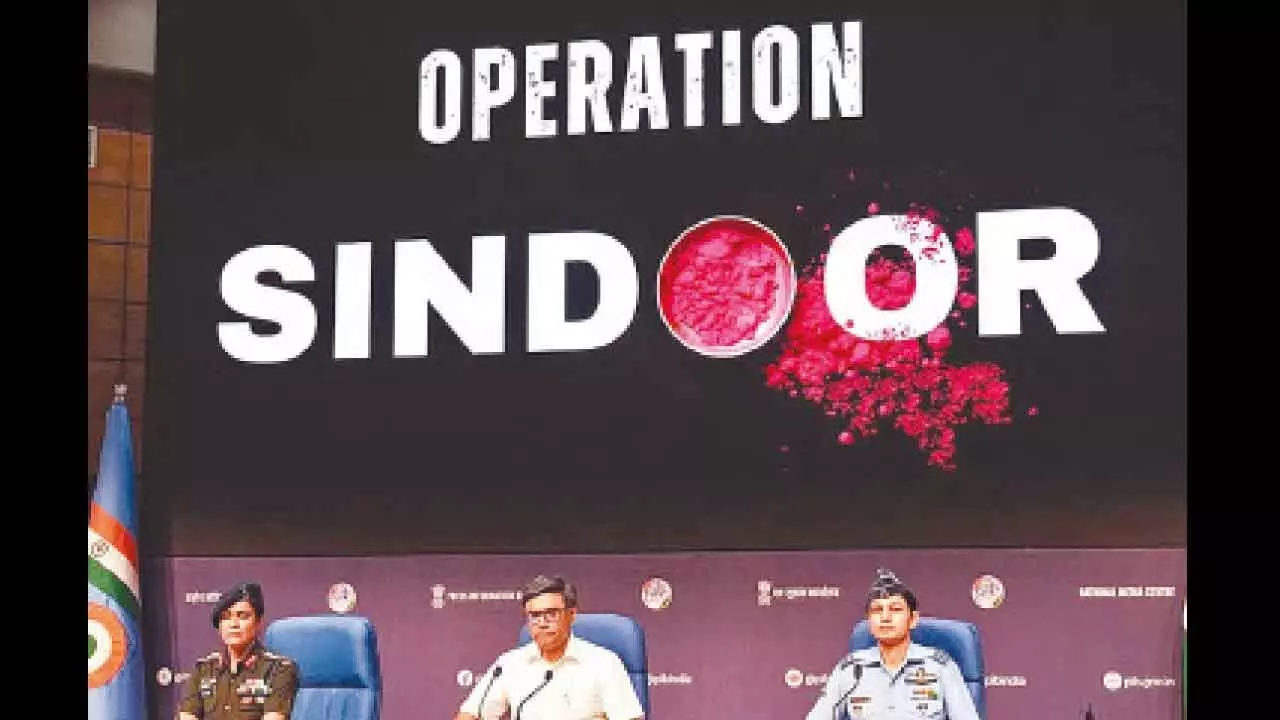
Pulwama attack resulted in India taking economic and diplomatic actions to isolate Pakistan on the global stage. Following the Pahalgam terror attack, prior to launching ‘Operation Sindoor’ India took significant stern measures against Pakistan, including cancellation of Pakistani Visas, revoking SAARC Visa Exemption Scheme, reducing Diplomatic Staff, expelling Pakistani Military Advisors in India etc. The ‘Indus Waters Treaty’ was suspended. The Attari-Wagah border was shut down. Taken together, from surgical strikes and airstrikes to diplomatic pressure, these actions reflect a broader shift in India’s approach to countering terrorism. India has adopted a multifaceted strategy that ‘integrates military, economic and diplomatic tools.’
Among Indo-Pak conflicts, the birth of Bangladesh stands out as a unique and decisive outcome. When President Yahya Khan refused to hand over power to Sheikh Mujibur Rahman of the Awami League, after the December 1970 general elections, despite securing 167 of 169 seats in East Pakistan, geographically distant from West Pakistan, there was a revolt. Yahya Khan resorted to military crackdown on March 25, 1971. Ten million refugees fled to India, causing huge economic and social burden. Then Prime Minister Indira Gandhi’s diplomatic foreign tour for support went in vain. She extended a discreet helping hand to the ‘Muktia Bahini’ (Bangladeshi Guerrilla Forces).
On August 9, 1971, India and the Soviet Union signed a 20-year treaty of peace, friendship, and cooperation, to ensure Soviet Union support to India. On December 3, 1971, Pakistan launched preemptive airstrikes on Indian airbases, instigating and provoking India to officially enter the war. Indian forces, led by General Sam Manekshaw retaliated with full-scale military operations and captured key territories in East Pakistan. Media then reported that, when Indira Gandhi decided to intervene militarily, General Manekshaw guaranteed victory, if she would allow him to handle the conflict on his own terms, to which she agreed.
When the war started officially on December 3, 1971, General Manekshaw formulated his meticulous strategy, which was to be executed by Lt General Jagjit Singh Aurora. Indian Navy and Air Force initiated full-scale operations on both the eastern and western fronts. As the war progressed, Manekshaw addressed the Pakistani troops over a radio broadcast on December 9, 11 and 15, assuring them of honourable treatment by Indian troops, if they surrendered.
Pakistani commanders Major General Rao Farman Ali and Lt General Amir Abdullah Khan Niazi were convinced with this offer and Yahya Khan decided to end the war to avoid further casualties.
The decision to surrender was conveyed to Manekshaw, who responded positively. The condition was that Pakistani troops should surrender to their Indian counterparts, and fixed a deadline, which was extended at Niazi’s request. On December 16, 1971, Lt General AAK Niazi signed the ‘Instrument of Surrender’ to the joint forces of India and the Mukti Bahini in Dhaka. Bangladesh was born. It was a turning point in South Asian geopolitics. Pakistan was geographically divided.
Now, under Prime Minister Narendra Modi’s even doubly more charismatic leadership, the armed forces are again at the forefront during Operation Sindoor. Will it eventually lead to the birth of Balochistan? History repeats itself in its own way. With deepening unrest and sharpening ethnic divides across Pakistan, ‘International Relations Experts’ foresee a similar scenario, as a strategic analogy, of possible fragmentation from within Pakistan. If it was Bangladesh then, now it could be Balochistan. A powerful parallel in South Asian history, between the 1971 war under Indira Gandhi and the present 2025 strategic context under Modi, offers a compelling perspective.
Meanwhile, India and Pakistan are observing a ceasefire, but not without occasional, but deliberate violations by Pakistan. Let us hope wisdom prevails in Pakistan.