




- Resolve to fight darkness
- Factional feud escalates in Manthani Congress
- KU Inter-Collegiate Powerlifting and Best Physique competitions held successfully
- NRI University celebrates Freshers’ Day
- CM Revanth Reddy greets people on Diwali
- Int’l conference at Siddhartha University concludes
- CM Revanth Reddy to distribute 4.5 lakh new pensions in Kodangal today
- APSECM launches state-level short video contest for students
Tale of two democracies: Dark money, bright lights, dim democracy
In Short
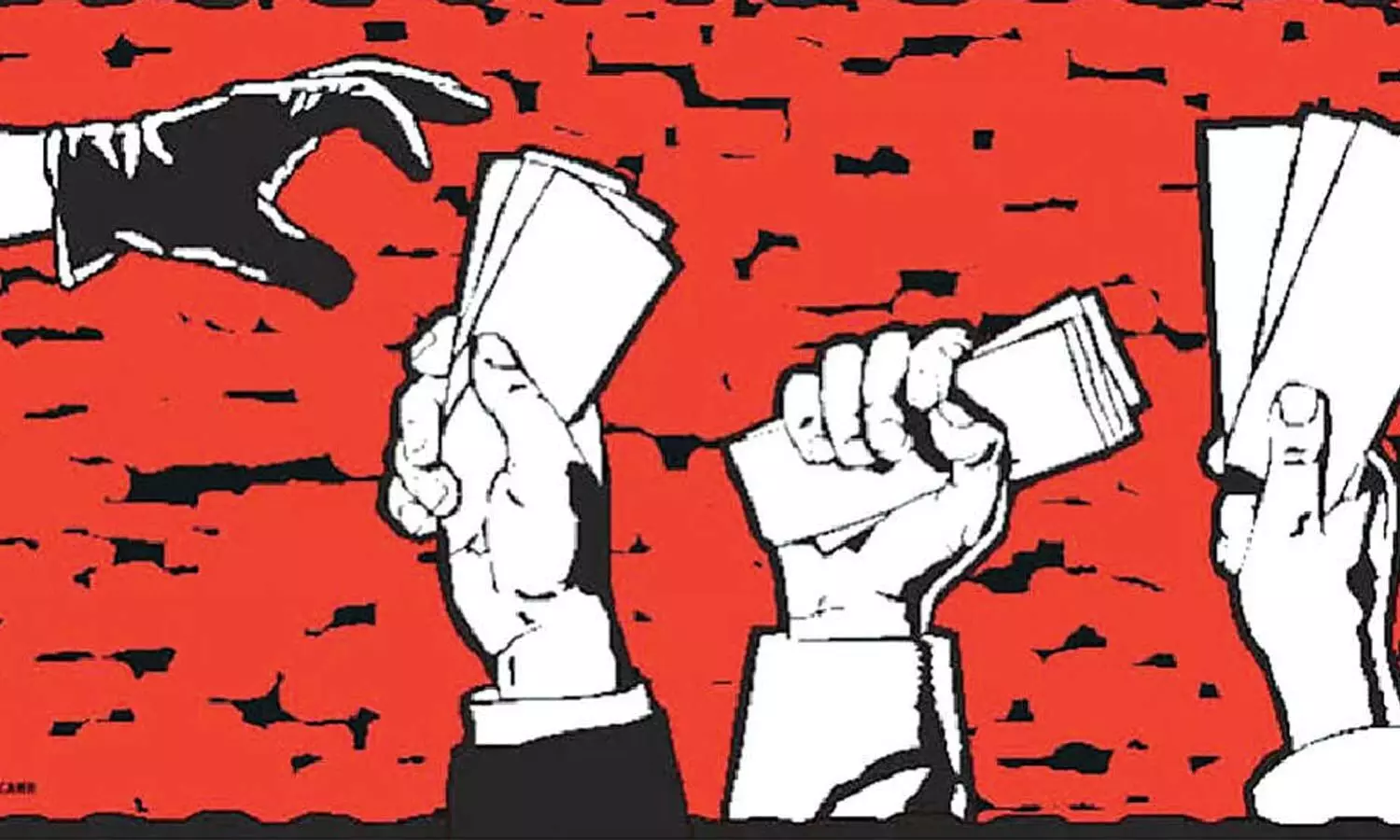
Money buys attention. Advertising and public relations shape what voters see and believe. Big donors gain access, and a few people can matter more to a party than millions of voters. Secrecy hides the link. When donors are unknown, citizens cannot judge who is being served.

Share :
Tale of two democracies: Dark money, bright lights, dim democracy
Elon Musk has put more money into this year’s American midterm elections than any single donor in modern US history. A Yahoo Finance report, citing MT Newswires and dated 4 November 2026, puts his total at $474 million. Other unconfirmed reports give $446 million, and some say the figure is higher once money routed through his companies is counted. Whichever number is right, he is far ahead of anyone else.
Much of his money went to Texas. CNN reporting, as carried by KSAT, says at least $168 million went to groups backing Ken Paxton, the Republican Senate candidate. AdImpact counted $573.2 million in advertising for Paxton or his Democratic rival, James Talarico. That makes it the most expensive race for any office outside the presidency.
Paxton lost. Talarico won, becoming the first Democrat to win a Senate seat from Texas since 1988, according to the Associated Press. So money did not decide this race. But money does not need to win to matter. It buys attention, access and a louder voice in the debate.
The American picture
AdImpact projects $11.6 billion in political advertising for the 2025-26 cycle. That beats the $11.2 billion spent in the 2024 presidential cycle. Presidential years have always outspent midterms, so this is a striking reversal.
The concentration of money is even sharper. Unconfirmed reports, citing the Washington Post, say the 50 biggest donors gave about $2.8 billion, with roughly 60 per cent from Republican-leaning donors and 30 per cent from Democratic-leaning ones. A Brennan Center figure, also unconfirmed here, says the top 40 donors gave $2.4 billion by mid-October. That is about eight times what the top 40 gave at the same point in 2014, after adjusting for inflation. The same reports say dark money groups, which never reveal their donors, now make up 29 per cent of top-40 giving, up from 17 per cent.
The legal root of this is the 2010 Citizens United ruling. It allowed super PACs to accept unlimited donations. Candidates face limits. Super PACs do not. That is where the largest cheques now go.
The Indian picture
India built a different machine for a similar purpose. In January 2018, the government introduced electoral bonds. Donors bought them from the State Bank of India, in denominations from Rs 1,000 to Rs 1 crore, and handed them to parties, which cashed them in. The donor’s name stayed hidden from the public.
The government argued that the scheme would curb cash donations. Critics argued that it hid the source of party money and invited favours in return. In February 2024, the Supreme Court struck the scheme down as unconstitutional. It held that the scheme violated citizens’ right to information and could enable quid pro quo arrangements between donors and parties.
The court then ordered the State Bank of India to disclose the data. The bank sought more time, and the court refused, warning of contempt, according to BBC reporting from March 2024. The same reporting said the BJP was the largest beneficiary of the scheme.
Critics have also alleged that some corporate donors gained government contracts or favourable treatment after buying bonds. Those individual claims remain unconfirmed. Court records and investigative reporting are the place to test them.
Money found another door
The bonds are gone, but the money has not disappeared. An Association for Democratic Reforms report, carried by Scroll in February 2026, says electoral trusts disbursed Rs 3,826.3 crore in 2024-25. The BJP received Rs 3,157.6 crore, or 82.5 per cent. The Congress received Rs 298.7 crore, or 7.8 per cent.
Two trusts handled most of it. Prudent Electoral Trust gave Rs 2,668.4 crore, and Progressive Electoral Trust gave Rs 914.9 crore. The top ten donors accounted for 49.8 per cent of contributions. Tata Sons gave Rs 308.1 crore, and Elevated Avenue Realty LLP gave Rs 500 crore.
There is one real difference from the bond era. Trusts must report who gave and who received. That is more transparency than before. Yet the concentration is hard to ignore. One party took more than four of every five rupees distributed through these trusts.
What the two cases share
The routes are different. The risk is the same. Money buys attention. Advertising and public relations shape what voters see and believe. Big donors gain access, and a few people can matter more to a party than millions of voters. Secrecy hides the link. When donors are unknown, citizens cannot judge who is being served. And in both countries, the ruling side or its allies tend to benefit most from the flow of money.
The biggest casualty is trust. If citizens believe policy goes to the highest bidder, they stop believing that their vote matters. Once that belief fades, turnout drops, cynicism grows, and democracy becomes a contest of wallets rather than ideas.
Reforms that would help
Full and fast disclosure should come first. Every donation above a small threshold should be published online within days, with the donor’s name, and no anonymous channels should be allowed. Trusts and dark money groups should have to reveal the ultimate source of their funds, not just their own name.
Caps on donations deserve serious attention. Both countries should limit how much any one person or company can give to parties and political groups. India once capped corporate political giving as a share of profits, and reviving a sensible cap is worth debating.
Companies that give money to parties should face a cooling-off period before winning government contracts or licences. This would reduce the risk of donations being repaid with favours. Party-level spending limits would also help. India limits what candidates spend but not what parties spend, which leaves a wide gap. In the US, the rules on outside spending need to be tightened in the same spirit.
An independent body should audit party accounts, publish the results and impose real penalties for violations. Finally, partial public funding for parties, tied to strict transparency, would reduce their dependence on a handful of large donors.
Where this is heading
Without reform, elections on both sides of the world will grow more expensive. More money will flow in, more of it will be hidden, and fewer people will hold more influence. Technology will make targeted messaging cheaper and harder to track, which will make it harder still for voters to see who is paying for what they read and watch.
Texas offers a small note of hope. Despite the huge sums spent there, voters chose a different outcome. That suggests voters are not simply puppets of their donors. But a healthy democracy should not depend on voters defeating a rich man’s wishes, and it should not need a miracle to survive.
The world’s two largest democracies should lead on this issue. The United States likes to present itself as a champion of democracy abroad, and India describes itself as the mother of democracy. Both have serious work to do at home.
(The writer is with the Cholleti BlackRobe Chambers, Hyderabad, and his work spans economics, politics and law, bringing legal rigour and public-policy insight to contemporary debates.)
NDA sweeps AP Parishad polls
CM Naidu extends Diwali greetings to people
CII Partnership Summit in Vizag to boost global biz, tech ties: CM Naidu
Govt to develop Vanvasi Ram Lok, Ram Raja Lok: MP CM
TN BJP chief Nagenthran extends Deepavali greetings, warns against forces seeking to destabilise India
From ‘one district, one mafia’ to ‘one district, one product’: Nitin Nabin’s jibe at Akhilesh Yadav over Azam Khan


