




- Municipal corpns clear 24 tonnes of idol debris
- US signals 'total shutdown' of H1B program
- Unpaid Traffic Fines? SC suggests adding challans to power bills
- SC refuses to stay MDR
- CBSE 3rd-language rule: SC extends relaxations to Class VI students
- TGCSB to hold 2-km night walk against cyber fraud
- ED attaches Rs 442 crore assets in gaming app case
- GRSE expands shipbuilding capacity, eyes global markets
Value of dissent in CEC: BJP, Congress and changed perceptions
In Short
The 2006 controversy concerned alleged political proximity and financial associations of an Election Commissioner. The 2026 controversy concerns alleged internal disagreement about how electoral administration itself was being conducted.

Share :
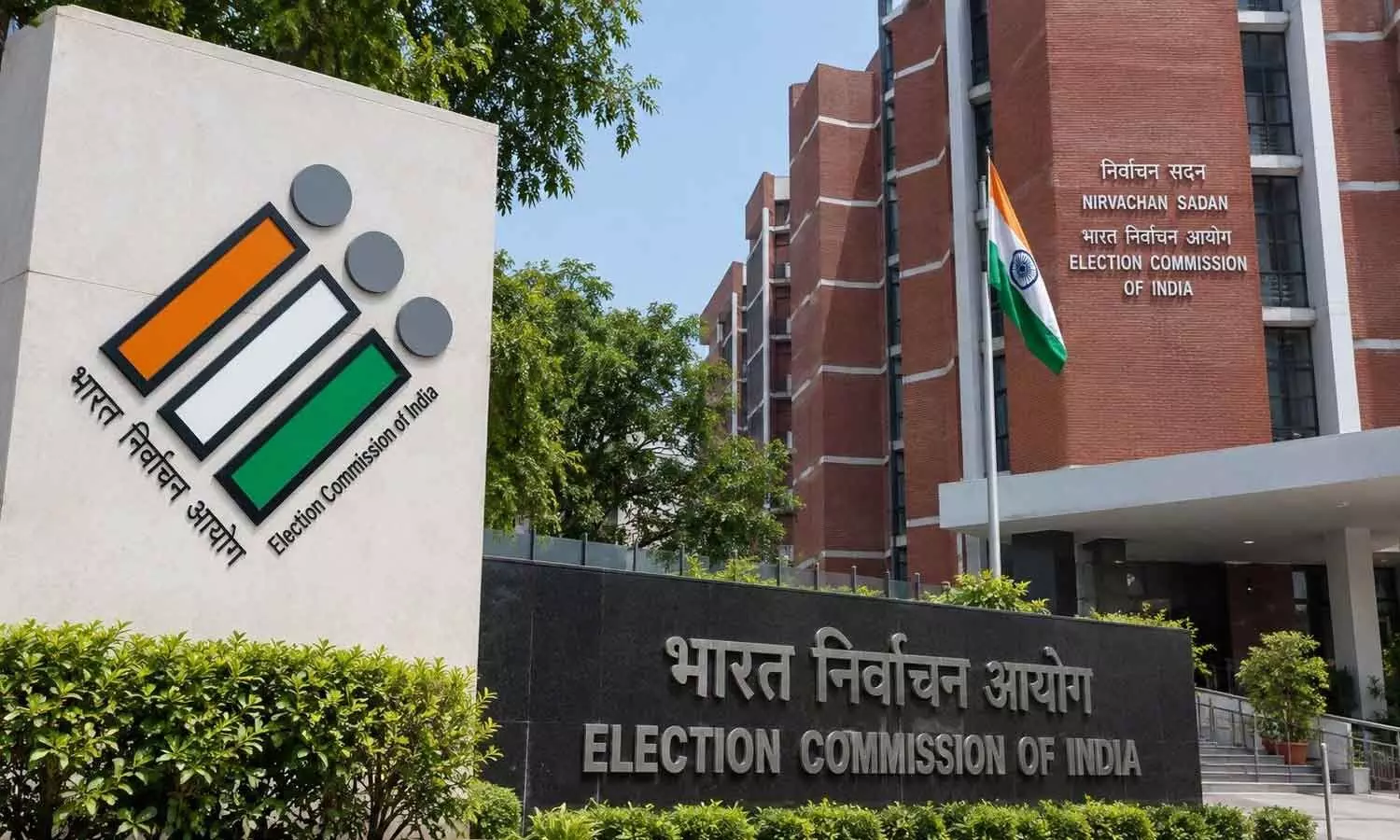
Value of dissent in CEC: BJP, Congress and changed perceptions
Whether it is the BJP or Congress, governments tend to either ignore or overlook the value of dissent. The BJP’s own history provides an illuminating precedent. In March 2006, when the Congress-led UPA was in power, NDA leaders submitted a memorandum to President A P J Abdul Kalam seeking the removal of Election Commissioner Navin Chawla.
The memorandum was signed by 205 MPs. The NDA alleged, among other things, that Chawla had financial and personal associations with Congress politicians through trusts connected with him and his family and argued that such circumstances raised questions about the impartiality of a constitutional election authority. Why did not the Congress question the same? The controversy did not end with the memorandum.
The 2006 precedent:
The language used by the NDA at the time is particularly relevant. The argument was not merely that Chawla had actually acted unfairly. It was that the Election Commission must appear to be impartial. Contemporary reports recorded the NDA’s insistence that the credibility of elections required confidence in the neutrality of the Commission.
BJP leader Jaswant Singh approached the Supreme Court concerning the handling of the representation of the 205 MPs. The Supreme Court issued notice to the Centre, the Election Commission and Chawla.
Controversy in 2009:
The controversy eventually returned to the constitutional arena in 2009, when the then CEC N Gopalaswami recommended Chawla’s removal. It was not accepted by the UPA government, and Chawla subsequently became the Chief Election Commissioner. The legal circumstances surrounding the removal of an Election Commissioner are, of course, different from those concerning the CEC. Article 324(5) provides a special protection to Election Commissioners, under which their removal is linked to the recommendation of the CEC.
The important point for today’s debate is therefore not whether the 2006 allegations against Chawla were similar to the present allegations. They plainly were not. The important point is the institutional principle invoked by the BJP when it was in Opposition.
What changed from 2006 to 2026?
It is an issue of undermining confidence in the Election Commission. The 2006 controversy concerned alleged political proximity and financial associations of an Election Commissioner. The 2026 controversy concerns alleged internal disagreement about how electoral administration itself was being conducted. The two situations should not be equated. But they can be compared at the level of constitutional principle. Back then, the BJP argued that perceived political influence could undermine confidence in the Election Commission.
In the present regime, in a situation akin to a national emergency, though not declared, two serving Election Commissioners have reportedly recorded objections concerning particular administrative and technological actions within the Commission. The present issue is therefore potentially more institutional than personal. It asks whether the machinery through which the citizen becomes a voter is itself operating transparently and within statutory authority. Why is the Cong as opposition not repeating the 2006 strategy?
It is fine; the Congress and other Opposition parties have criticised the Election Commission and raised questions concerning the SIR exercise. This question deserves to be asked, but motives should not be attributed without evidence. But there is a difference between political criticism and the kind of formal institutional action undertaken by the NDA in 2006, which then used several constitutional and legal avenues simultaneously: a memorandum to the President, parliamentary signatures, demands for the CEC’s intervention and eventually litigation. If today’s Opposition believes that the internal EC documents reveal a comparable institutional danger, it has constitutional avenues available to it. Basic points are:
It can demand disclosure.
It can seek parliamentary scrutiny.
It can challenge specific administrative actions in court.
It can ask for an independent technical audit.
It can seek information concerning the legal authority for changes to statutory forms.
It can demand an explanation concerning the filing of electoral appeals.
And, where the Constitution provides a particular removal mechanism, it can determine whether the available evidence satisfies that constitutional threshold. The important thing is that the Opposition should not merely make allegations. It should put the evidence and the law together.
And what should the BJP do?
The BJP is now in power and not in Opposition. That change in political position should not mean a change in constitutional principle. This is perhaps the most important question. If the BJP believed in 2006 that the independence of the Election Commission required vigilance even when its allegations concerned an institution functioning under a Congress-led government, the same principle should apply today. The morally consistent position for the ruling party is to ask the ECI to publish the relevant decisions and authorisations.
It should permit an independent technical audit of electoral databases where credible concerns have been raised.
It should ensure that statutory Electoral Registration Officers retain the powers Parliament has given them.
It should insist that statutory forms cannot be changed without the authority required by law.
It should require every major electoral intervention to have an identifiable legal basis.
An RTI issue again: If Congress or other Opposition parties demand transparency but remain silent when similar concerns arise under a future government in which they participate, their argument suffers the same weakness. Whether it is the Congress or BJP, transparency is needed. The Election Commission cannot become independent only when a particular party loses an election. It must be independent before the election, during the election, and after the election.
The real issue is not Gyanesh Kumar, as a man or as an EC:
The controversy should ultimately not be reduced to one individual, whether Gyanesh Kumar or any other Commissioner. The real issue is institutional design.
As a former CIC, this author has some questions.
Who appoints Election Commissioners?
Who controls their functioning?
How does the three-member Commission take decisions?
How are dissenting opinions recorded?
When does a dissent become a majority decision?
Who controls the electoral database?
Who can alter voter information?
Who can instruct field officials?
Who can file appeals?
Who audits the software?
Who is accountable when a statutory authority is bypassed?
These questions will survive the tenure of the present CEC.
They will survive the BJP Government.
They will survive Congress or any other Opposition party.
At least one state or central Commissioner can raise and answer under the Right to Information Act. But why deny this privilege to citizens. That is why the present controversy should be used to strengthen the institution rather than merely weaken a particular officeholder.
Five questions that should be answered:
The entire controversy can be reduced to five basic constitutional questions:
Authority: Who authorised each disputed action?
Statutory power: Under which provision was it authorised?
Commission participation: Was the full Commission informed and allowed to deliberate?
Decision-making: Was the applicable unanimity or majority procedure followed and recorded?
Implementation: Did any officer, database administrator or software system override a statutory electoral authority?
If the Election Commission answers these questions transparently, much of the present controversy can be settled. If it does not, suspicion will naturally persist.
From political morality to constitutional morality:
The 2006 Navin Chawla episode provides a useful lesson for every political party. The standard applied to a constitutional institution should not depend upon which party controls the Government. An Election Commission trusted only by the winning party is not enough. An Election Commission trusted only by the Opposition is not enough.
It must be an institution whose procedures, records and decisions are sufficiently transparent and unbiased.
The recent internal objections therefore deserve more than political counter-allegations. The ECI should answer them point by point. The Government should facilitate transparency rather than resist it. Parliament and the courts should exercise their respective constitutional roles. And political parties should be willing to accept the same institutional standards when they move from Opposition to Government and from Government to Opposition.
The ultimate question is whether the Election Commission is demonstrably on the side of the Constitution. That is the standard by which the institution must be judged, and it is a standard that should remain unchanged regardless of who occupies power. The answers, if any, generate more questions.
(The writer is a Professor and Advisor, School of Law, Mahindra University, Hyderabad)
Why do dogs behave the way they do?
Value of dissent in CEC: BJP, Congress and changed perceptions
Ecosystems and livelihoods: A pathway to good forest governance
CM Revanth for nationwide stir against SIR
Amit Shah to visit Telangana on Oct 4
Fund crunch necessitating capex cut: 2,000 files pending in TG Finance wing


