‘True learning begins when students take ownership’

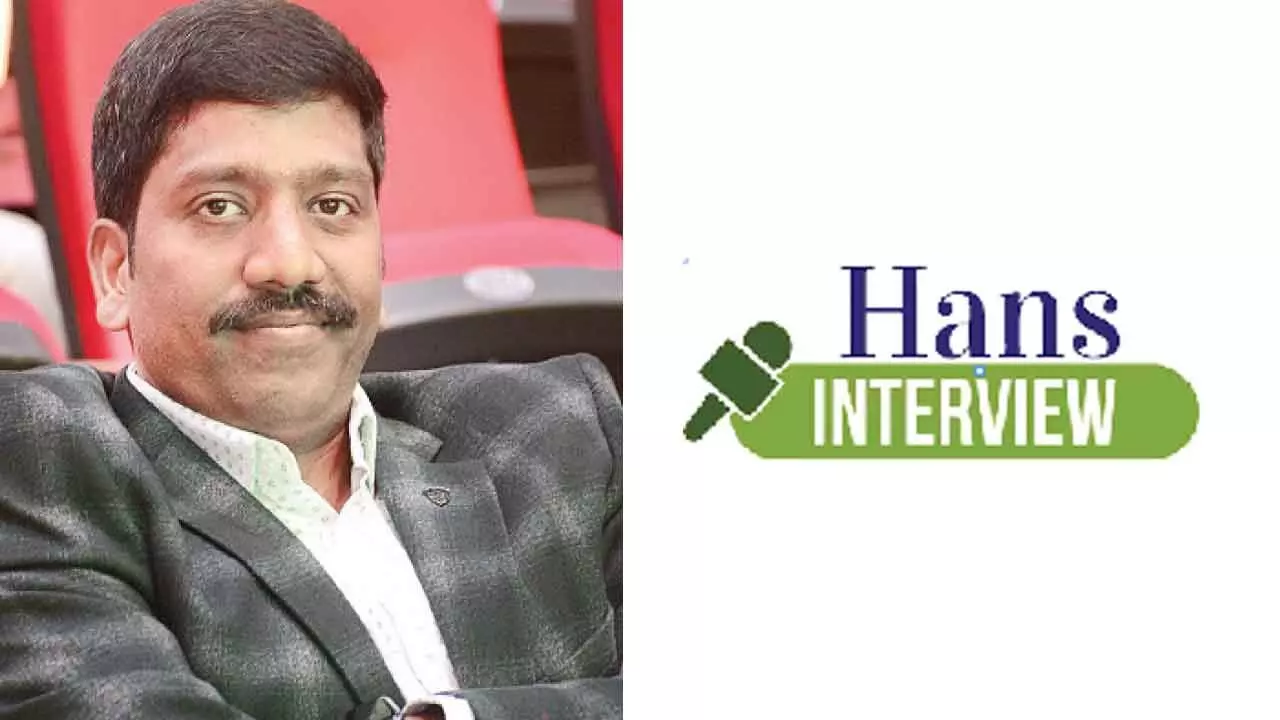
In an era where industries increasingly prioritise skills over degrees, the traditional education system is under growing pressure to evolve. In speaking to The Hans India at The Hans India, hmtv Education Awards 2026 recently, N B V Subbarao, Founder, Subbu Innovative Classes, offers a compelling perspective on how learning must transform to meet the demands of a rapidly changing world. His insights highlight the urgent need to bridge the gap between academic knowledge and real-world application while reshaping the way students, teachers, and institutions approach education.
At the heart of the issue lies a long-standing imbalance. According to Subbarao, the current system places excessive emphasis on marks, grades, and certifications, often overlooking the development of practical skills. This has created a disconnect between what students learn in classrooms and what industries actually require. He believes that education must shift from being marks-oriented to skill-oriented, encouraging students to understand the real-life relevance of their studies.
Subjects like mathematics, for instance, are often treated merely as scoring opportunities rather than as foundational tools for advanced fields such as artificial intelligence, which combines concepts from mathematics, psychology, and neuroscience. When students begin to see the broader purpose of their learning, their mindset changes. Education then becomes a meaningful journey that enhances critical thinking, decision-making, and problem-solving abilities.
Subbarao emphasises that true transformation does not come from infrastructure upgrades or adopting trendy management practices alone. Instead, it begins within the learner. A motivated and mentally prepared student is far more likely to innovate and succeed. Therefore, nurturing the right mindset should be the central focus of any educational reform.
Equally important is the role of teaching methods. Classrooms today often struggle with low engagement and limited interaction, which directly affects learning outcomes. Subbarao points out that a strong educational ecosystem—where teachers, parents, and management work together—is essential for creating a positive learning environment. Such collaboration naturally encourages discipline, respect, and alignment among students.
In today’s digital age, access to information is no longer a challenge. Students are exposed to vast amounts of data from multiple sources. The real challenge lies in identifying and applying the right knowledge. This shift has redefined the role of teachers. They are no longer just providers of information but facilitators who guide students in navigating knowledge effectively.
Teacher empowerment, therefore, becomes critical. Subbarao stresses that meaningful teacher training—focused on improving classroom practices rather than simply logging hours—is necessary for real change. While infrastructure can support education, it can never replace the impact of a skilled and dedicated teacher. A strong teacher can inspire and transform students even in the absence of advanced facilities.
Another key pillar of modern education, according to Subbarao, is personalised learning. In a world driven by information, the ability to learn independently has become a vital skill. Personalized learning allows students to take ownership of their education, fostering curiosity, initiative, and self-discipline.
He notes that many successful individuals have achieved remarkable success despite not following traditional academic paths. Their ability to learn independently and apply knowledge effectively has been their greatest strength. Encouraging such self-learning habits from an early stage can significantly enhance a student’s growth.
Even small steps, such as dedicating a few minutes daily to independent exploration, can gradually build confidence and critical thinking. As students embrace personalized learning, they transition from passive recipients of information to active participants in their own development. This not only improves academic performance but also prepares them to face real-world challenges with confidence.