Championing sustainability by turning food waste into culinary innovation

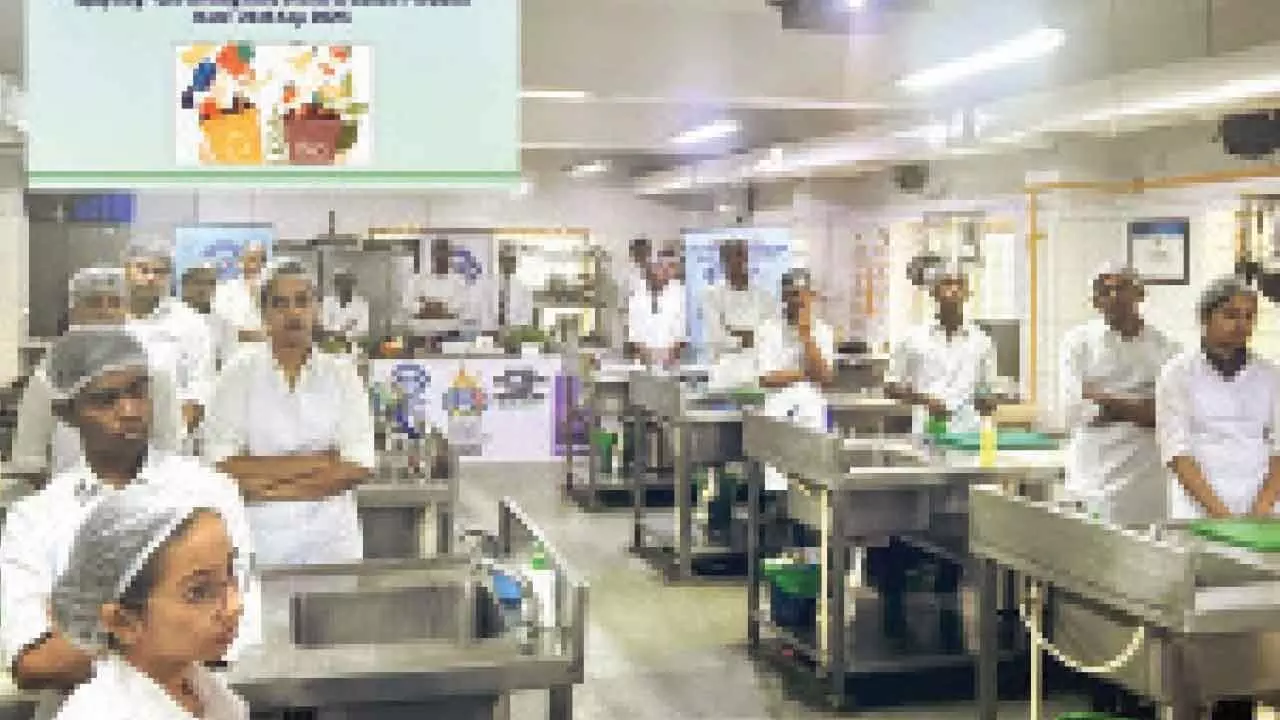
The International Institute of Hotel Management (IIHM), Bangalore, has launched an initiative to promote sustainability in the culinary sector by transforming food waste into edible products. The programme, held on Friday, aimed to sensitise budding chefs about reducing kitchen waste while experimenting with innovative cooking techniques.
Students worked with ingredients often discarded in households and hotels — including onion peels, jamun seeds, pineapple peels, watermelon rinds and seeds, pumpkin seeds and cucumber peels. These were dried, powdered or reused in desserts, starters and accompaniments, demonstrating how discarded items can find a place in modern kitchens.
About 20 students participated in a one-and-a-half-hour competition, where they were challenged to create dishes using ‘basket ingredients’ prepared from recycled food waste. The initiative is part of the institute’s sustainability curriculum.
IIHM Bangalore Director, Sanchari Chowdhury, said the exercise was designed to instill responsibility in future chefs. “Recycling food waste not only reduces waste but also adds value and innovation to our kitchens. Most importantly, it teaches us to respect ingredients and to see sustainability not as a trend but a duty,” she said.
Faculty member and chef Vijaitha, who mentored students, explained that discarded items were made safe for reuse through air-drying or cooking. “This ensures hygiene while opening up opportunities to discover new flavours and textures. It helps young chefs think differently about cost, creativity and responsibility,” she said.
The initiative also highlighted broader eco-friendly measures, such as reducing plastic in kitchens and replacing cling film with paper or jute alternatives. Students said the event helped them understand how small steps in professional kitchens could make a large environmental impact.