Newly Spotted Exoplanet Shows Striking Similarities to Earth

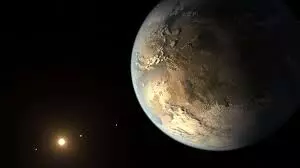
The planet within the TRAPPIST-1 solar system, which is at a distance of just 40 light years could have an atmosphere that can support life.
Earth-like planet discovery from the James Webb Space Telescope (JWST) reveal that TRAPPIST-1e, an Earth-sized exoplanet, could be wrapped in a gaseous layer similar to our own atmosphere--potentially allowing liquid water to exist on its surface.
Although the astronomy breakthrough isn't yet conclusive, and requires more research, it is the most conclusive evidence to date to the hunt for a "second Earth."
Of all the worlds in habitable zones we've seen so far, TRAPPIST-1e is particularly interesting. The findings put us one step closer to knowing the nature of the world it actually is," said Sara Seager who is an astronomer at Massachusetts Institute of Technology (MIT) and co-author of one of the latest research papers. She said that eliminating Venus or Mars-like atmospheres will help limit alien life possibility that might be present.
If astronomers are looking for signs of life further throughout the Universe, Earth serves as the primary reference point. At present, it's the only known new exoplanet found, and One of its most crucial elements is water that's essential for every biological process known to man. In order for water to remain as liquid, habitable planet 40 light years must revolve around its star at the proper distance not too hot, yet not freezing cold.
When the TRAPPIST-1 system was announced in 2016, it made a splash because it's red dwarf star hosts seven rocky worlds. Amazingly, many of them are located within the zone of habitability which is where liquid water may exist, theoretically.
However, just being in the correct orbit doesn't mean it's enough. Liquid water also requires an atmosphere to be solid. Without it, the water will either evaporate or sublimate even in temperatures that are not ideal.
This arrangement sets up a major hurdle for TRAPPIST-1’s planets. The red dwarfs are colder than the stars similar to our Sun and, consequently, their habitable zones are closer to the surface. However they are also notoriously active, generating massive flares of stars that can destroy the atmospheres of planets.