




- Make Karnataka free of unsafe open borewells: Minister
- Police stations have become Congress offices, BJP-JD(S) complain to Guv
- FIR filed over alleged misuse of Form-7 applications in Jayanagar
- Integrated physio and performance lab to bring services under one roof
- Hanumakonda takes up Rs. 20.52 crore road and drainage works
- Ponnam vows to fight alleged voter purges
- Don’t ignore persistent joint pain & stiffness, warns rheumatologist
- The Deccan Hospital, creates awareness on prostate cancer and importance of early detection
Don’t ignore persistent joint pain & stiffness, warns rheumatologist
In Short
Ahead of World Arthritis Day, expert rheumatologists highlight why persistent joint pain and morning stiffness should never be dismissed as normal ageing.

Share :
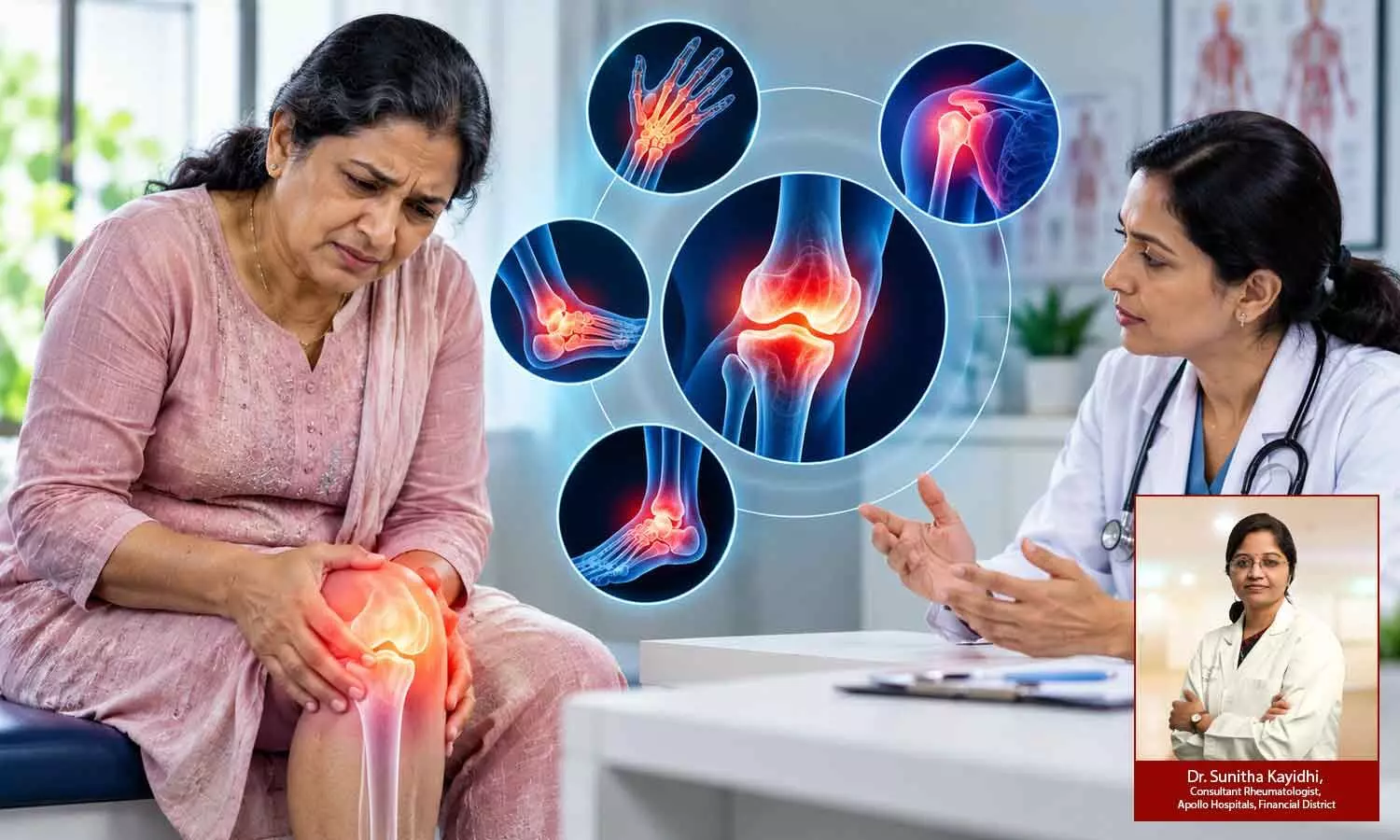
Don’t ignore persistent joint pain & stiffness, warns rheumatologist
Persistent joint pain, swelling and stiffness should not be dismissed as a normal part of ageing, as they could indicate arthritis or another underlying joint disorder, said Dr. Sunitha Kayidhi, Consultant Rheumatologist, Apollo Hospitals, Financial District, ahead of World Arthritis Day observed on October 12.
Arthritis includes more than 100 different conditions affecting the joints and surrounding tissues. While osteoarthritis is commonly associated with ageing, inflammatory conditions such as rheumatoid arthritis, psoriatic arthritis and gout can affect people at younger ages as well.
“Persistent joint pain is not the only warning sign. Swelling, tenderness, restricted movement and prolonged morning stiffness, particularly involving the small joints of the hands and feet, may indicate inflammatory arthritis,” Dr Sunitha Kayidhi said.
She explained that arthritis diagnosis is based on a detailed medical history and physical examination, supported when necessary by blood tests and imaging. Tests such as inflammatory markers, rheumatoid factor and anti-CCP antibodies may be advised in suspected inflammatory arthritis, while X-rays, ultrasound or MRI can help assess joint and soft-tissue damage.
Treatment depends on the type and severity of arthritis. It may include medicines to control pain and inflammation, disease-modifying anti-rheumatic drugs, biologic or targeted therapies for appropriate patients, along with physiotherapy and exercise. In advanced cases with severe joint damage, joint replacement may be considered.
“Patients should not stop physical activity completely because of arthritis. Appropriate exercises can improve flexibility, strengthen muscles and maintain joint function. Maintaining a healthy weight, following a balanced diet and avoiding smoking are also important for long-term joint health,” she said.
Low-impact activities such as walking, swimming and cycling can benefit many patients, although exercise should be tailored to the individual’s condition.
While not all forms of arthritis can be prevented, maintaining a healthy weight, staying physically active, preventing joint injuries and seeking timely medical attention for persistent symptoms can reduce complications and disability.
“Inflammatory arthritis, particularly rheumatoid arthritis, can cause progressive and irreversible joint damage if left untreated. People should not accept persistent pain and stiffness as something they simply have to live with. Early consultation with a rheumatologist can help identify the cause and initiate appropriate treatment,” Dr. Sunitha Kayidhi said.
Dr. Sunitha Kayidhi, Consultant Rheumatologist, Apollo Hospitals, Financial District
Indo-US talks at ‘plateau,’ not a precipice
India’s gender parity: What does global evidence say?
Gyanesh Kumar: Can a CEC under a cloud continue in office?
'Work underway to develop India's 1st AI city in Lucknow': CM Yogi Adityanath
Technology must become a tool for inclusive and sustainable development: PM Modi
Rahul Gandhi, Priyanka Detained After INDIA Bloc Sit-In Over Gyanesh Kumar Row


