




- Don’t ignore persistent joint pain & stiffness, warns rheumatologist
- The Deccan Hospital, creates awareness on prostate cancer and importance of early detection
- The hidden health cost of traffic: When daily commute becomes a health hazard
- Rahul accuses Modi, CEC of treason
- Governor Quota MLC Seat: Cong may nominate Konda Laxman Bapuji ’s daughter to checkmate BRS
- Workers should support united alliance candidates: Revuri Prakash Reddy
- Parents must support children with disabilities: Srinivasa Reddy
- Purani Haveli’s 1,000-ft wing gets heritage makeover
Indo-US talks at ‘plateau,’ not a precipice
In Short
India-US trade agreement talks hit a plateau following geopolitical complications and new US legislation targeting Russian energy imports, though a diplomatic thaw remains possible.

Share :
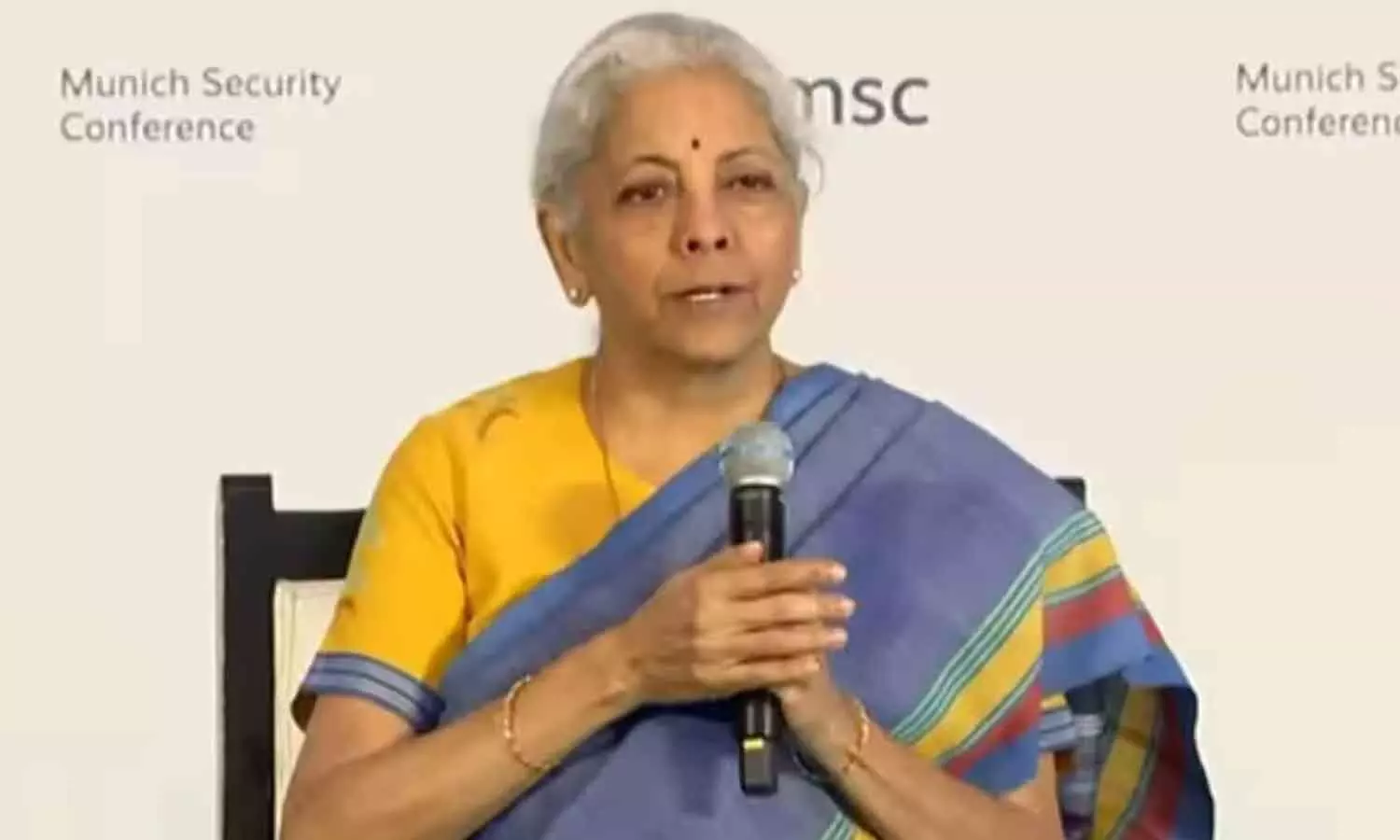
Union Finance Minister Nirmala Sitharaman
Politicians are generally circumspect when discussing bilateral ties with any other nation; they choose their words carefully, lest any utterance or phrase be misconstrued. Therefore, Union Finance Minister Nirmala Sitharaman’s remark on Monday that the India-US trade deal talks have hit a plateau is unusual and significant; she said at present giving or taking might be “very, very” difficult. A few days ago, United States Trade Representative (USTR) Jamieson Greer said that signing of the India-US Bilateral Trade Agreement was not “imminent” with the two countries having identified a “universe of items that are sticking points.”
This is unfortunate. Something seems to have gone wrong since February 7, when the two countries issued a joint statement in which they were “pleased to announce that they have reached a framework for an interim agreement regarding reciprocal and mutually beneficial trade (interim agreement).” Many contentious issues were resolved. India agreed to eliminate or reduce tariffs on all US industrial goods and a wide range of US food and agricultural products, including dried distillers’ grains (DDGs), red sorghum for animal feed, tree nuts, fresh and processed fruit, soybean oil, wine and spirits, and additional products.
The US agreed to apply a reciprocal tariff rate of 18 per cent on Indian goods, including textile and apparel, leather and footwear, plastic and rubber, organic chemicals, home décor, artisanal products, and certain machinery. The two countries committed to provide each other preferential market access in sectors of respective interest on a sustained basis and address non-tariff barriers. They also agreed to work towards further expanding market access opportunities through the negotiations of the BTA and strengthen economic security alignment to enhance supply chain resilience and innovation.
India intended to purchase $500 billion of US energy products, aircraft and aircraft parts, precious metals, technology products, and coking coal over the next five years. Both countries wanted to “significantly increase trade” in technology products, including graphics processing units (GPUs) and other goods used in data centres, and expand joint technology cooperation.
Hence, statements by Sitharaman and Greer hint at a chill, much of which pertains to the Lindsey O Graham Sanctioning Russia and Iran Act of 2026, which President Donald Trump signed into law, giving himself the authority to impose tariffs up to 100 per cent on countries, including India and China, which buy Russian oil and gas. But diplomacy, like politics, is the art of the possible, so thaw in the bilateral relations should not be ruled out. It is true that the Lindsey O Graham law introduces an additional complication into an already delicate negotiation; also, Washington has its own geopolitical and economic compulsions, particularly its determination to squeeze Moscow’s energy revenues and discourage third countries from sustaining Russia’s war economy.
This, however, doesn’t mean that all is lost. To be sure, neither India nor the US has an interest in allowing a potentially transformative economic partnership to be derailed by a single contentious issue. Both sides have much to gain from expanded trade, resilient supply chains, technology cooperation and strategic convergence. What is required now is political dexterity: Washington must recognise our strategic constraints, while New Delhi must remain willing to negotiate hard on trade-offs. A plateau need not become a precipice; with pragmatism and patience, the talks can move forward.
Indo-US talks at ‘plateau,’ not a precipice
India’s gender parity: What does global evidence say?
Gyanesh Kumar: Can a CEC under a cloud continue in office?
'Work underway to develop India's 1st AI city in Lucknow': CM Yogi Adityanath
Technology must become a tool for inclusive and sustainable development: PM Modi
Rahul Gandhi, Priyanka Detained After INDIA Bloc Sit-In Over Gyanesh Kumar Row


