




- Make Karnataka free of unsafe open borewells: Minister
- Police stations have become Congress offices, BJP-JD(S) complain to Guv
- FIR filed over alleged misuse of Form-7 applications in Jayanagar
- Integrated physio and performance lab to bring services under one roof
- Hanumakonda takes up Rs. 20.52 crore road and drainage works
- Ponnam vows to fight alleged voter purges
- Don’t ignore persistent joint pain & stiffness, warns rheumatologist
- The Deccan Hospital, creates awareness on prostate cancer and importance of early detection
The hidden health cost of traffic: When daily commute becomes a health hazard
In Short
Explore how long metropolitan commutes, daily traffic stress, and air pollution silently impact physical health, mental well-being, and lifestyle habits.

Share :
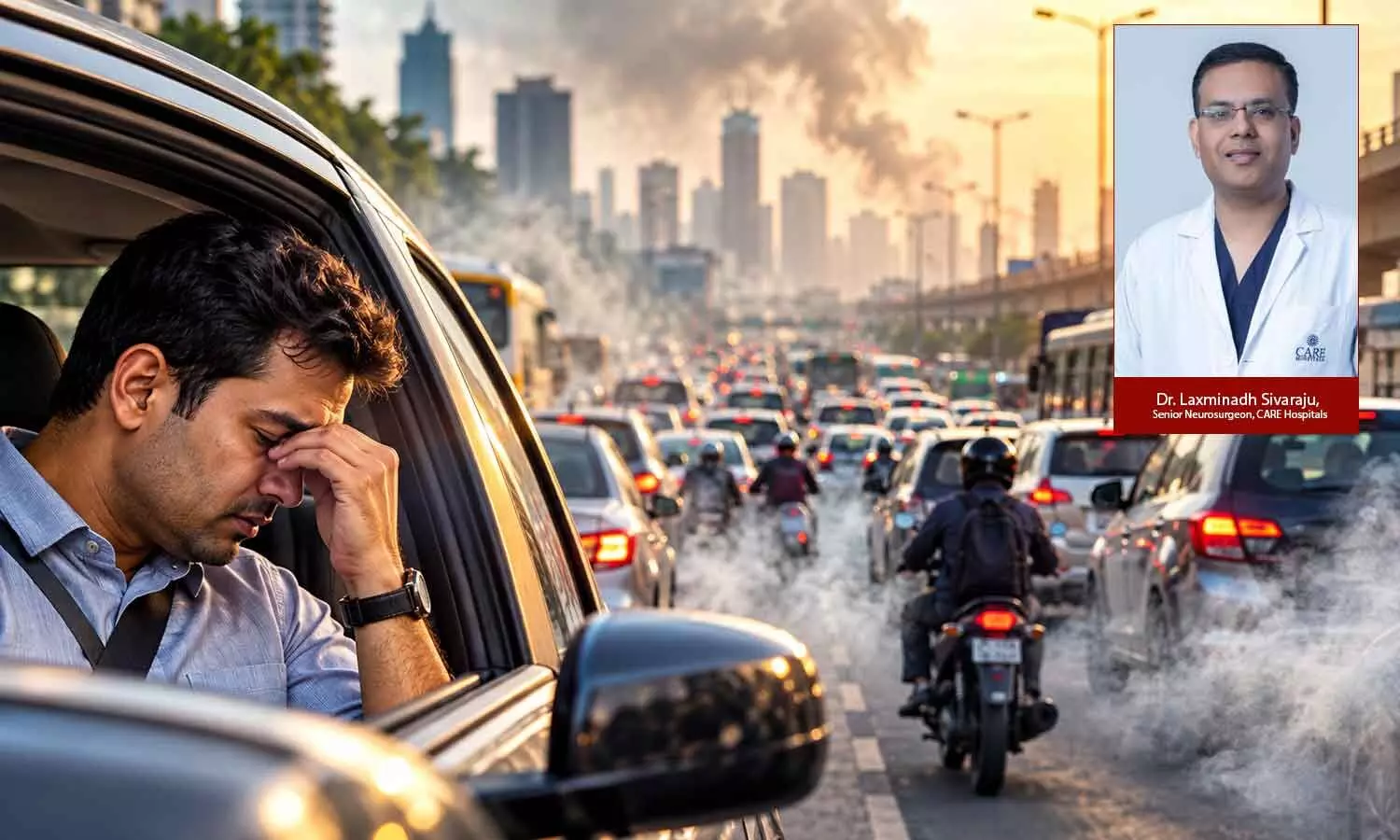
The hidden health cost of traffic: When daily commute becomes a health hazard
Long hours in metropolitan traffic are not merely an inconvenience—they can gradually become a daily burden on physical and mental health._
For many people living in metropolitan cities, spending three or four hours a day commuting has quietly become part of normal life. We calculate the time lost in traffic, the fuel consumed and the frustration of reaching late—but rarely do we calculate what these hours may be doing to our health.
A long commute is not just about sitting in a vehicle. It can mean prolonged physical inactivity, continuous mental stress, exposure to air pollution and noise, delayed meals, reduced exercise, inadequate sleep and less time with family. When this pattern repeats day after day, the commute itself begins to influence how we eat, sleep, move, recover and respond to stress.
The concern is not that traffic alone causes disease. Rather, prolonged commuting can create a lifestyle in which several recognised health risk factors occur together. Over months and years, this cumulative burden can affect physical health, mental well-being and overall quality of life.
The brain under constant stress
Driving through heavy traffic requires continuous concentration. The brain is constantly monitoring vehicles, pedestrians, traffic signals, mirrors and unexpected movements. Add work pressure, deadlines and the anxiety of reaching on time, and commuting can become a prolonged period of mental stress.
Repeated exposure to such stress may contribute to irritability, anxiety, mental fatigue and difficulty relaxing. Some people may experience frequent headaches, a feeling of heaviness or difficulty concentrating. When long commuting hours are also accompanied by inadequate sleep, attention, memory, mood and emotional regulation can suffer.
A person may therefore reach the workplace already mentally tired rather than refreshed. Similarly, frustration accumulated on the road may continue after reaching home. Small inconveniences can trigger disproportionate irritation, sometimes affecting interactions with family members and colleagues.
The spine pays the price
Modern urban life already involves several hours of sitting at a desk. Add another three or four hours sitting in traffic, and the spine gets very little opportunity to move.
Prolonged sitting and driving can contribute to neck stiffness, shoulder discomfort and low-back pain, particularly when combined with poor posture, vehicle vibration and inadequate physical activity. People who already have cervical or lumbar spine problems may notice worsening symptoms.
However, conditions such as spondylosis and disc problems should not be attributed to commuting alone. Age, genetics, body weight, previous injuries, occupational activity and overall fitness also play important roles.
The message is not to fear sitting in a vehicle, but to avoid prolonged uninterrupted sitting whenever possible, maintain good posture and ensure regular physical activity outside commuting hours.
A body that does not get enough recovery
One of the biggest problems with a long commute is the vicious cycle it creates: long journey, fatigue, no exercise, poor sleep and more fatigue the following day.
After spending several hours travelling and working, many people feel too exhausted to walk, exercise or pursue hobbies. Gradually, life can become a repetitive cycle of work, traffic, food and sleep. Reduced physical activity may contribute to weight gain and poorer cardiovascular and metabolic fitness.
Traffic also influences eating habits. Breakfast may be skipped to leave home early, while dinner may happen very late after reaching home. Tea, coffee, packaged snacks and fast food often become convenient substitutes for planned meals.
Irregular meals, excessive caffeine, late-night eating and chronic stress may aggravate acidity, reflux and digestive complaints in susceptible individuals. Traffic does not directly cause digestive disease, but a traffic-heavy lifestyle can make healthy eating patterns more difficult to maintain.
Sleep-the biggest hidden casualty
The hours spent travelling have to come from somewhere, and unfortunately, sleep is often the first casualty.
A person reaching home late may have dinner late, complete household responsibilities and go to bed well past midnight, only to wake early the next morning to beat the traffic again. When this becomes routine, chronic sleep deprivation can affect concentration, memory, mood, reaction time and metabolic health.
For people who drive, fatigue is also an important road-safety concern. Reduced alertness and slower reaction times can increase the risk of errors. Night-time driving adds further challenges because of reduced visibility, glare and fatigue.
Hypertension, diabetes and the indirect connection
Traffic itself should not be described as a direct cause of hypertension or diabetes. However, many lifestyle changes associated with prolonged commuting—physical inactivity, weight gain, chronic stress, poor sleep and irregular eating—are recognised contributors to cardiovascular and metabolic risk.
When commuting consumes several hours every day, there may be little time left for walking, exercise, healthy cooking or adequate sleep. The health challenge therefore lies not only in the time spent on the road, but also in what that time replaces.
The pollution we breathe
There is another invisible passenger accompanying almost every urban commuter: air pollution.
People travelling through congested roads may be exposed to particulate matter and other pollutants from vehicle emissions, road dust, tyre wear and brake wear. Repeated exposure can affect respiratory health and may aggravate cough, wheezing and breathing difficulties, particularly among people with asthma or other respiratory conditions. Air pollution is also associated with cardiovascular and cerebrovascular health risks.
For two-wheeler commuters, the daily journey can be particularly demanding because of more direct exposure to traffic-related pollution, dust, noise, heat and changing weather, in addition to prolonged riding posture.
Traffic noise adds another layer. Continuous honking, engines and road noise contribute to the overall stress of commuting and can interfere with relaxation and sleep.
Watch for the warning signs
The impact of a demanding commute does not always appear as a major illness. Often, the body gives smaller signals first—waking up tired despite sleeping, reaching work already exhausted, recurring headaches, increasing irritability, persistent neck or back discomfort, acidity, poor concentration or finding that there is simply no energy left for exercise after reaching home.
Dr. Laxminadh Sivaraju, Senior Neurosurgeon, CARE Hospitals
Indo-US talks at ‘plateau,’ not a precipice
India’s gender parity: What does global evidence say?
Gyanesh Kumar: Can a CEC under a cloud continue in office?
'Work underway to develop India's 1st AI city in Lucknow': CM Yogi Adityanath
Technology must become a tool for inclusive and sustainable development: PM Modi
Rahul Gandhi, Priyanka Detained After INDIA Bloc Sit-In Over Gyanesh Kumar Row


