




- Delhi BJP President Harsh Malhotra condoles death of Manipuri singer, assures swift trial
- Bangladesh announce schedule for crucial West Indies Test series
- Government asks Google to block search results for Peekaboo gender test kit
- Police Patrol Vehicle Stolen in Karimnagar
- BRS MLCs Tata Madhu and Naveen Reddy gets relief in Nampally court
- BRS protests Congress’ ‘failed rule’ over unfulfilled promises in Warangal
- iPhone 18 Pro Launches Tomorrow With A20 Pro Chip, Variable-Aperture Camera
- Tamil Nadu cabinet reshuffle likely as Assembly session ends
How Browser-Based Trivia Is Bringing Families Together During the Holidays
In Short
Discover how browser-based trivia games can bring families together during the holidays with fun, interactive, and easy-to-play activities for all ages.

Share :
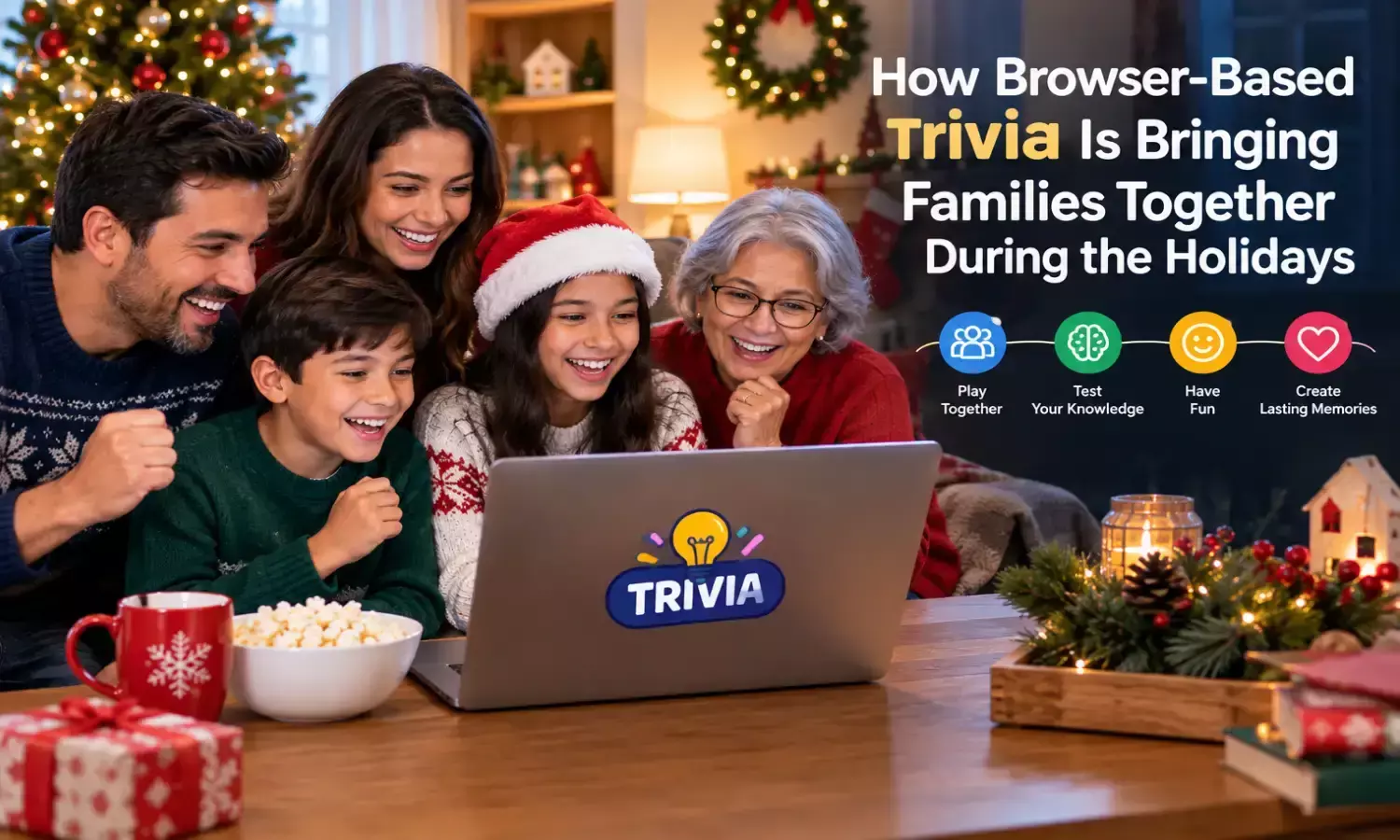
How Browser-Based Trivia Is Bringing Families Together During the Holidays
Getting whole families to do one single thing during the holidays? Harder than it sounds. You have adults talking around the table. Kids are running everywhere. A few people glued their phones. Finding a game everyone actually wants to play takes work.
Enter web-based trivia.
No thick instruction books. No extra controllers gather dust. Just one main screen, a TV, a laptop, or even a monitor, sitting right in the middle of the room. Everyone watches together. Teams form, people guess, mistakes happen, and the room gets noisy in a good way.
Why Trivia Fits Family Game Nights
Trivia is straightforward. You hear something, take a guess, and see if you got it right.
Because of that, mixed age groups do great with it. An uncle might remember music from the 80s. A younger kid knows random animal facts. Someone else remembers old movie titles or sports stats.
That mix makes playing in groups way better. Nobody has to carry the team on their own. A simple question can kick off a huge debate or a random family story. And honestly? Those small moments matter a lot more than who wins the match.
No Long Setup Required
Board games are fun, sure. But they take time. You lose small pieces, spending twenty minutes explaining rules nobody remembers anyway.
Browser games cut all that out.
The host opens a link, throws it onto the big screen, and that is it. Everyone tracks questions and scores from the exact same spot.
It keeps eyes on the room instead of tiny individual phone screens. People react at the same exact second—laughing at wrong answers together or celebrating a sudden point.
One Screen Fits Everyone
Big gatherings usually run into one huge problem: most games cap out at four players. Everyone else gets left watching from the sofa.
Shared-screen games handle this by pushing everyone into teams.
Take Saylok as an example. It runs in a browser and needs only one screen. Designed for two teams, it handles tiny groups of 2 or massive family crowds of 30+. Instead of forcing every single guest onto a separate phone, the game stays up on the main screen while people talk out loud.
Works for three people on a quiet evening. Works just as well for twenty people on Christmas Eve.
What Makes It Good for Big Groups?
A good party game gets people talking, not just watching.
- Team Talk: You have to check with your team before locking anything in.
- One Shared Screen: No wondering who is winning; the score stays up for all to see.
- Flexibility: Small groups can run it, big parties can split down the middle.
- Mixed Topics: History, food, pop culture, geography, and sports all show up.
- Simple Setup: Open the browser, plug in the screen, go.
The Arguments Are the Best Part
Winning points is nice, but the back-and-forth before guessing is where the real fun happens.
One person swears they know the answer. Someone else completely disagrees. A younger cousin throws out a wild idea that somehow turns out right.
Saylok uses a "Say Lock" feature for these moments. Teams talk through their choice first, but once they lock it in, there is no going back. That tiny pause right before the answer reveals itself builds huge tension. Even when a team gets it completely wrong, the whole room ends up laughing.
Bridging the Gap Between Ages
Finding something a grandparent and a teenager both enjoy isn't easy.
Their interests are usually totally different. But trivia bridges that space fast because topics change continuously. One round covers old history, the next touches modern movies or music.
Everyone gets a moment to shine. Teenagers save the team on pop culture, while grandparents score points on historical events. Age differences turn into a huge advantage instead of a problem.
Seasonal Questions Add Extra Fun
Holiday themes give you plenty to work with.
Holiday movies, winter songs, family traditions, and food make for great questions. Mixing seasonal stuff with general knowledge keeps rounds moving fast.
For instance, Saylok includes specific Christmas and holiday topics alongside categories like Movies, Music, and General Knowledge. You can also pick easier or harder questions depending on who is playing.
Why Shared Screens Feel More Social
There is a massive difference between playing a game together and playing a game next to each other.
When everyone uses individual phones, people look down. They go silent. They focus on their own little screen.
A shared display flips that completely. Everyone looks up at the same TV. They shout out ideas, cheer together, and watch scores change live. Technology stops pulling people apart and starts bringing them together.
Quick Tips for Your Game Night
Organizing a game night stays easy if you keep things simple:
- ,Pick a screen everyone in the room can see without squinting.
- Split up ages so teams stay balanced.
- Let younger kids pick team names or first categories.
- Do not take the score too seriously.
- Grab snack breaks between rounds.
- Laugh off bad guesses.
Great Outside the Holidays, Too
Trivia fits Christmas really well, but you do not need to hide it away once January comes.
It works great for birthday parties, weekend hangouts, family reunions, or New Year's Eve. Whenever people gather, pulling up a web browser takes ten seconds.
Bringing People Back Together
People often say technology ruins family time. But used the right way, a screen actually pulls people into the same space.
It gives everyone a reason to look up, talk, argue over silly details, and share a few laughs. When the night ends, nobody cares who won—they just remember having fun together.
‘Indian players will perform very well’: IOA President Usha confident as Team India leaves for Aisan Games
India emerging as global force in digital infrastructure and internet security: Experts
Indian-American lawmakers seek more Nepal aid
Indian community 'Sethu' between India and Sri Lanka: Defence Minister Rajnath Singh in Colombo
PM Modi And Putin To Hold Bilateral Talks On September 11; Su-57 Sale, Trade On Agenda
TSLPRB extends deadline for submission of applications for police recruitment
Nadendla Manohar unveils plans to stabilise prices, says will provide onions for Rs. 32
Bombay HC refuses to nix defamation case against Rahul Gandhi over derogatory remark against PM Modi
Nandu's World Nandana detained in Hyderabad: Here is journey to her digital fame
PM Modi Takes Swipe At Rahul Gandhi Over ‘Jhooth Ki Goonj’ Remark In Gujarat


