




- All eyes on Erravelli land survey report
- TG Cabinet clears 2 Das
- Capt Smit staved off another 9/11-like attack,says Modi
- Smit Machchhar, pilot from Ghatkopar to global hero of skies!
- OU PhD scholar found murdered at Kokapet
- Amit Shah to visit Medak and Karimnagar during Telangana tour
- Chamala challenges KTR to disclose overseas assets
- Monsoon leaves Telangana 18% rain-deficient
Remembering Lal Bahadur Shastri on birth anniversary: From activist to Prime Minister
In Short
Lal Bahadur Shastri, India’s second Prime Minister, is known for his humble nature and his slogan “Jai Jawan Jai Kisan” as well as his work as an activist and politician. His birth anniversary falls on 2 October.

Share :
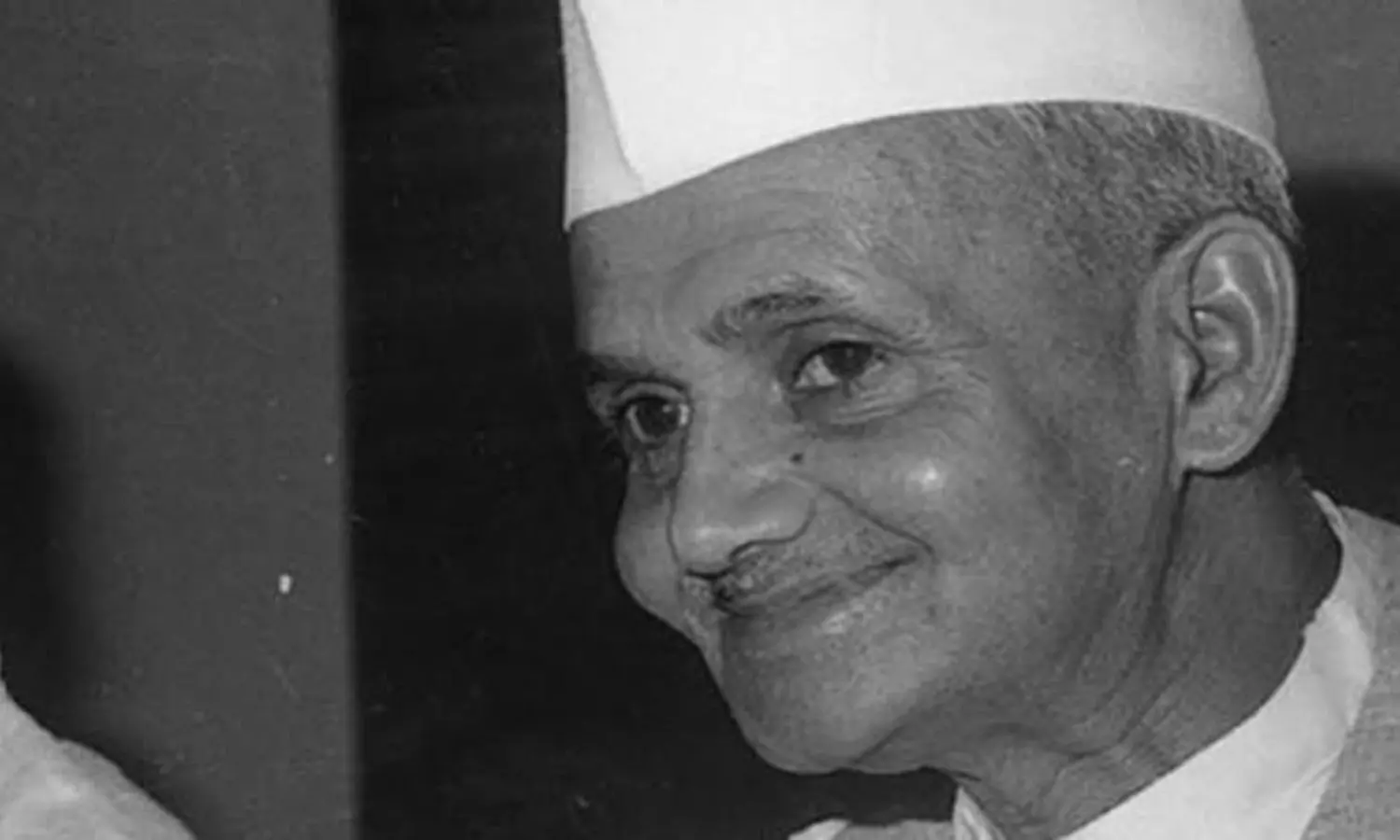
Remembering Lal Bahadur Shastri on birth anniversary: From activist to Prime Minister
Lal Bahadur Shastri, India’s second Prime Minister, is known for his humble nature and his slogan “Jai Jawan Jai Kisan” as well as his work as an activist and politician. His birth anniversary falls on 2 October.
From activist to Prime Minister
Lal Bahadur Shastri was born in Mughalsarai, Uttar Pradesh, in 1904. He lost his father and his mother raised him alone. He joined the independence movement as a teenager and had to quit school to do so. Shastri was imprisoned for his activities.
He served as Railway Minister and Home Minister and became Prime Minister on 9 June 1964, after the death of Nehru. During his time as Prime Minister, he fought in the 1965 war with Pakistan.
A message for farmers and soldiers
In August 1965, he announced the slogan “Jai Jawan Jai Kisan” at Ramlila Maidan in Delhi. The slogan acknowledged their sacrifice as the country battled a food crisis after two bad monsoons.
Furthermore, he urged people to undertake a fast one day a week as a way of conserving food, and he did too.
A simple way of life
His simple lifestyle made him a beloved figure among Indians, as he is said to have shunned the use of government resources for his family’s benefit. While his son went into private cars on one occasion, a bill for the fine was sent to the government.
His final days in Tashkent
Shastri left for Tashkent for talks with Pakistan on the culmination of the 1965 war. The agreement was signed on 10 January 1966, with the assistance of Soviet Prime Minister Alexei Kosygin.
Shastri died the next day in Tashkent, aged 61. He was assumed to have died of a heart attack, but there has been speculation and controversy over his death, with claims that foul play may have occurred.
Lal Bahadur Shastri’s legacy lives on today as his call to action serves as a reminder to serve the country and lead a simple and honest life.
DSC 2.0 notification within month
AP High Court nixes 34% BC quota in local polls
Naidu vows to pursue 34% BC quota in SC
Dinesh Kumar appointed 12th Pay Revision Commission chief
Khairatabad bypoll: Vijaya Reddy seeks HC stay on notification
Remembering Lal Bahadur Shastri on birth anniversary: From activist to Prime Minister


