




- Pentagon orders testosterone checks for troops
- Trump signs orders to widen hunting, fishing
- DUSU elections 2026: Over 2.75 lakh students to vote amid tight security
- US secures American’s release in Myanmar
- US lawmakers urge Trump to press China on detained Americans, AI chips ahead of Xi meeting
- US, Lithuania sign critical minerals pact
- Iran's IRGC says 'violating' oil tanker hit in Hormuz Strait
- Rs 40K cr spent on road devpt across TG: Komatireddy
UPI charges: Another burden on people, says AAP leader Satish Kumar
In Short
He said UPI had been developed as a key component of India’s digital and cashless economy, enabling small traders, shopkeepers and ordinary citizens to make digital payments without additional costs.

Share :
UPI charges
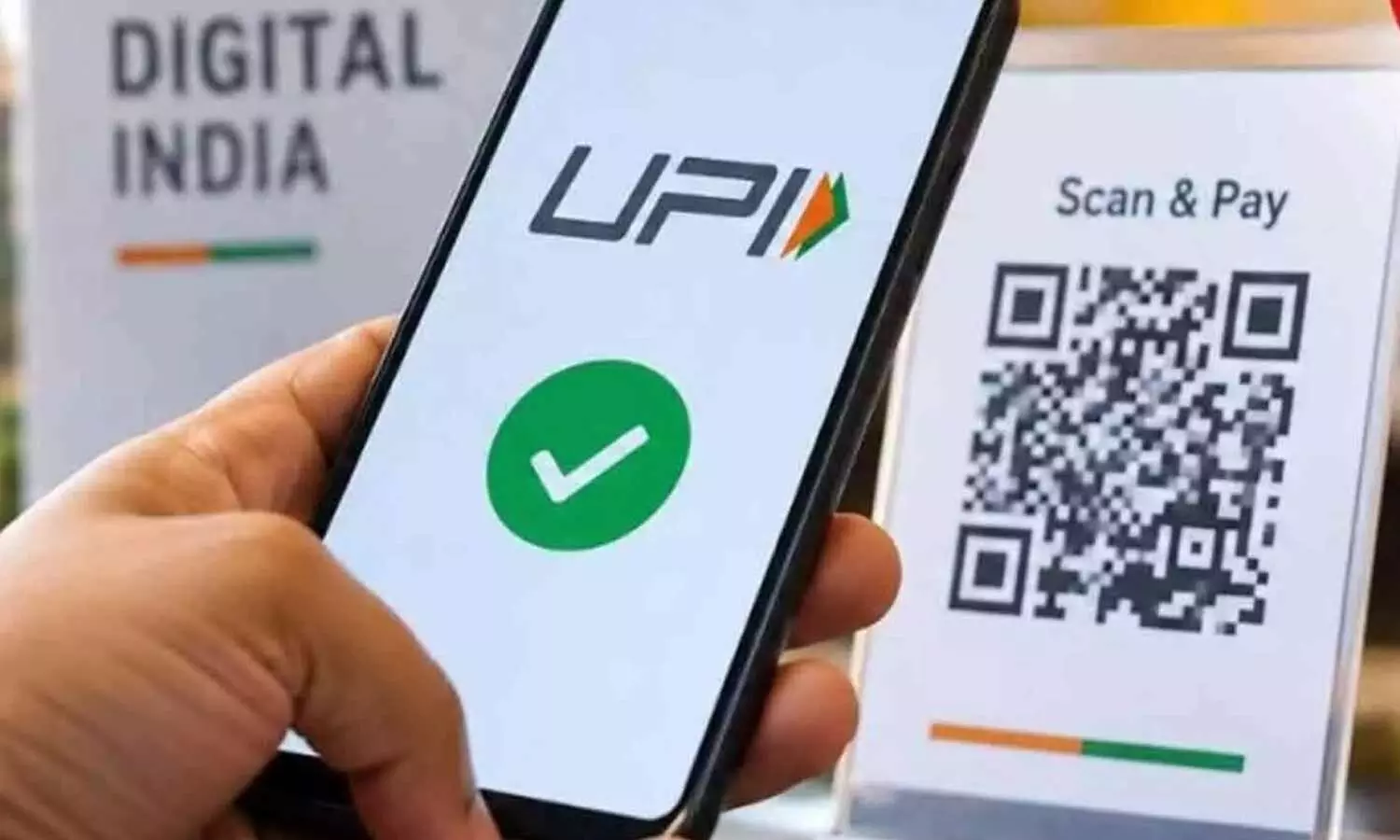
Bengaluru: Aam Aadmi Party state organising secretary Dr Satish Kumar has criticised the proposed 0.4 per cent charge on UPI transactions above Rs 2,000, stating that it would put an additional financial burden on the common people.
He said UPI had been developed as a key component of India’s digital and cashless economy, enabling small traders, shopkeepers and ordinary citizens to make digital payments without additional costs. The move to introduce charges on UPI transactions amounted to a reversal of the Centre’s own vision of a “Digital India”, he alleged.
“If charges are imposed on UPI transactions, the burden could eventually reach consumers through traders. It is also a matter of concern that the government, while allowing a 0.4 per cent charge now, could increase the rate or bring more transactions under the charging framework in the future,” Satish Kumar said.
He said crores of Indians use UPI for transactions every day and questioned why the government was considering generating revenue from UPI transactions instead of exploring ways to collect appropriate charges from large digital payment companies that benefit from the UPI infrastructure.Satish Kumar also questioned the argument that free UPI transactions could not continue because of the costs involved in maintaining the system. “NPCI, which built the UPI system, has profits and cash reserves. In such a situation, it is difficult for people to accept the argument that free transactions cannot continue,” he said.
He urged the government to reconsider the proposed charges and continue keeping UPI transactions free for ordinary users. “Instead of putting a burden on people’s digital payments, the government should review its policy. Otherwise, it will amount to placing an additional burden on people in the name of Digital India,” he said.
*0.4% MDR on specified UPI merchant transactions above Rs 2,000*
The proposed 0.4 per cent Merchant Discount Rate (MDR) will apply only to specified merchant payments above Rs 2,000, while person-to-person (P2P) UPI transactions will remain completely free.
According to the Ministry of Finance, payments up to Rs 2,000 and transactions covered under the zero-MDR framework will remain free, leaving approximately 96 per cent of P2M transactions unaffected.MDR is a charge within the merchant payment ecosystem and is not a transaction fee imposed directly on UPI users. Sending Rs 5,000, Rs 50,000 or any other amount to another individual through P2P UPI will not attract MDR.
Merchant transactions of Rs 2,000 or below will also remain outside the MDR framework. For specified transactions above Rs 2,000, the MDR will be 0.4 per cent. At this rate, a Rs 3,000 transaction will attract Rs 12, a Rs 5,000 transaction Rs 20 and a Rs 10,000 transaction Rs 40. Once the transaction reaches Rs 75,000, the MDR will be capped at Rs 300.
The average P2M transaction is about Rs 577, meaning the typical merchant UPI transaction is well below the proposed Rs 2,000 threshold. Small merchants receiving up to Rs 1 lakh per month through UPI QR under the specified P2PM category will continue to have zero MDR.Transactions above Rs 2,000 in sectors such as railways, telecom, insurance, fuel and agricultural inputs will attract a flat MDR of Rs 5 instead of the standard 0.4 per cent.
Specified payments involving mutual funds, securities, stockbrokers and dealers will attract an MDR of 0.02 per cent, capped at Rs 300. MDR is neither a tax nor a charge collected by the government or NPCI. It is distributed among participants in the payment ecosystem. The MDR is deducted from the transaction amount received by the merchant rather than being separately collected from the customer
The measure is intended to support the operation and continued expansion of UPI and its underlying payment ecosystem.In March 2025, the government approved a Rs 1,500-crore incentive scheme for low-value UPI P2M transactions, indicating that maintaining zero-MDR digital payments has involved public financial support.
The proposed framework is therefore different from imposing a universal fee on ordinary UPI usage, as everyday low-value payments and P2P transfers remain outside the MDR.
India’s chips will go global: PM Modi
People's aspirations benchmark for govt decisions, says CM Revanth
Revenue officials begin probing govt lands at KCR’s farmhouse
Defer 3-language policy for Class 6 till 2027: SC
UPI MDR issue has now become political football
India’s multi-alignment: A strategy or a mirage?


