




- No foreign hand in UPI fee call, says finance ministry
- Like a bee, tax collects honey: NITI Vice-Chairman invokes Chanakya on UPI fee
- Customers will never pay, only merchants: PhonePe CEO
- ‘Bell the cat’: Proxy firm tells Tata Sons board to commit to IPO
- Aim to lead, not follow: Modi’s tech mantra to global CEOs
- SC slams ‘seizure by stealth’, orders RBI to enforce repo norms
- Jio’s next decade: From connecting India to building tech
- IIM Bangalore hosts seminar on defence technology and management
Researchers develop framework to assess climate risks along Indian coast
In Short
Increasing climate variability and the growing frequency of extreme events pose risks to infrastructure and livelihoods, making robust, evidence-based adaptation essential

Share :
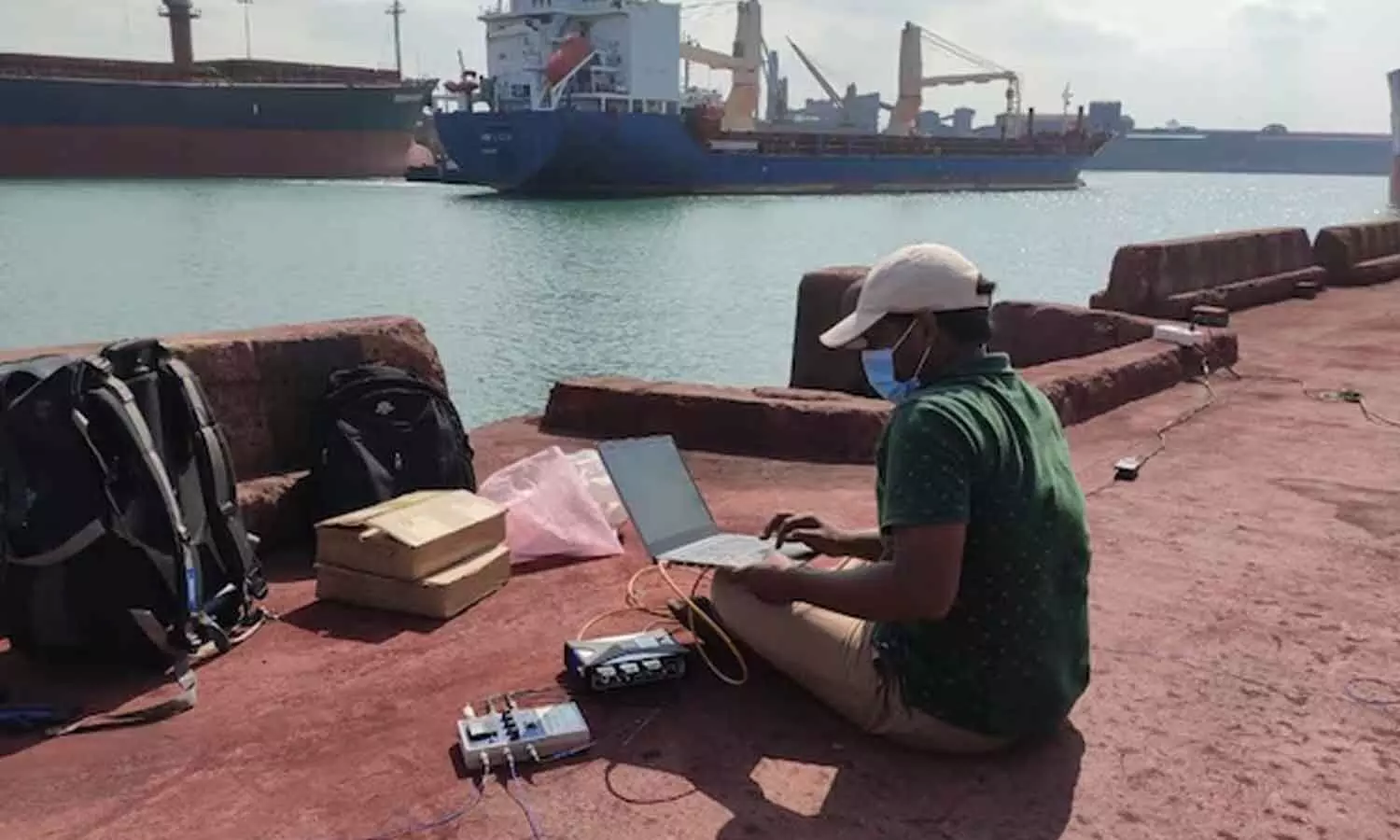
Researchers develop framework to assess climate risks along Indian coast
Chennai: IIT Madras researchers have developed an integrated framework to assess climate change impacts on India’s coast and identify practical adaptation measures to protect infrastructure, ecosystems and vulnerable communities.
India’s long coastline supports major ports, fishing harbours, power plants, industries, urban settlements and sensitive ecosystems. Increasing climate variability and the growing frequency of extreme events pose risks to infrastructure and livelihoods, making robust, evidence-based adaptation essential.
A release from the institution on Wednesday said the research was undertaken at IIT Madras’ Centre of Excellence on Climate Change Impacts on Coastal Infrastructure and Adaptation Strategies, supported by the Department of Science and Technology.
The interdisciplinary Centre brings together expertise in climate science, coastal engineering, water resources and environmental engineering. The findings were presented at the IAHR World Congress 2025 in Singapore through a paper titled “Climate Change Impacts on Coastal Infrastructure and Adaptation Strategies for Coastal Infrastructure, Water and Waste Management Facilities”.
Researchers at the Centre have developed advanced models and tools to assess and address risks from cyclones, storm surges, coastal flooding, shoreline erosion, sea-level rise and extreme rainfall.
The Centre has developed advanced climate, cyclone, storm-surge, wave, hydrodynamic and morphodynamic models tailored to the Indian coast. A novel wind-merging technique developed by the researchers has improved storm-surge predictions. The team has also carried out flood inundation modelling and mapping for Chennai to support disaster preparedness and urban planning.
Coastal Vulnerability Index maps incorporating the effects of sea-level rise and storm surges have been developed for Chennai, Ennore and Karaikal.
The researchers have developed structural health monitoring approaches to track climate-driven deterioration of port infrastructure, proposed climate-resilient reservoir management strategies for flood-prone urban areas and assessed the effectiveness of various measures to prevent and mitigate saltwater intrusion in coastal areas.
In the areas of water and environmental sustainability, the Centre has developed climate-resilient wastewater treatment solutions, including a patented in-stream wastewater treatment method.
The team has introduced a framework to support community-based adaptation to sea-level rise and other coastal hazards.
Prof S A Sannasiraj, Principal Investigator of the Centre and faculty member in the Department of Ocean Engineering, IIT Madras, said, “India’s coastline hosts some of the country’s most critical infrastructure and supports millions of livelihoods. Climate change is increasing the intensity and frequency of coastal hazards, making resilience an urgent priority.”
“Our Centre has adopted a systems-level approach that integrates climate modelling, engineering solutions and community adaptation to provide actionable strategies that can help reduce risks and improve preparedness across coastal regions,” he added.
He said the research outputs were expected to strengthen the protection of critical infrastructure such as ports, fishing harbours, power plants and transport networks, and improve disaster preparedness and flood management in coastal cities.
They were expected to safeguard groundwater resources and promote sustainable, nature-based coastal protection, he added.
Sri K.V. Ranga Reddy: A Flame of Courage in Telangana’s Liberation
Nepal flood death toll crosses 1,400; over 6,000 still missing
Supreme Court dismisses PIL seeking fraud-proof verification of medical degrees, registrations
India emerging as confident, constructive and influential voice amid geopolitical tensions: Report
HM Amit Shah to visit Gujarat tomorrow, flag off bike yatra on PM Modi's birthday
Disha Salian Case: Aaditya Thackeray Says He Never Met Her, Calls FIR Linkage Character Assassination


