




Extending the CAPEX support scheme for CMP for Lithium and Nickel is a game-changer, U.M. Kishan Reddy said
In Short
Recognising their strategic importance, the Prime Minister has made developing India's critical mineral value chain one of the country's key national priorities.

Share :
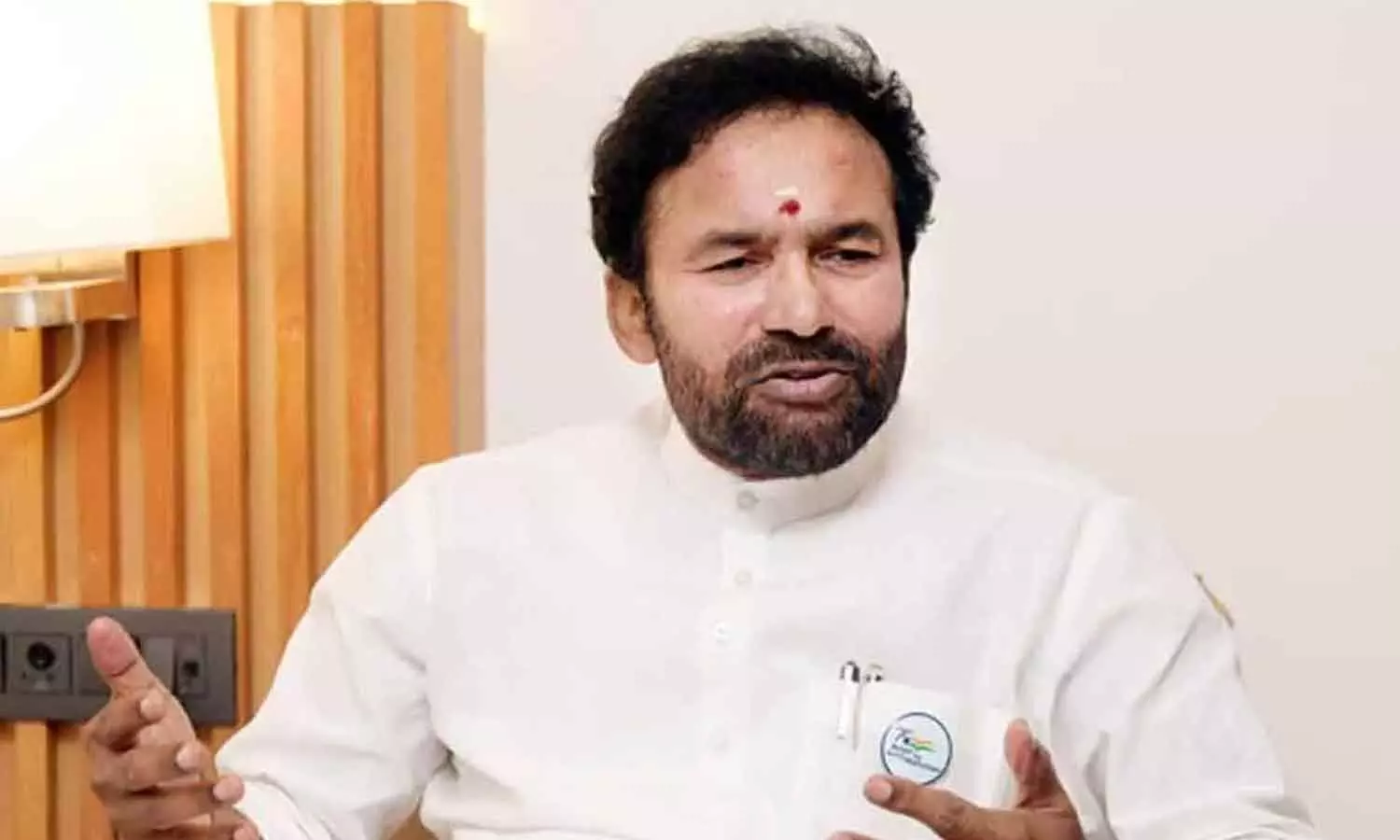
Union Minister for Coal and Mines G Kishan Reddy
Hyderabad: Union Minister of Coal and Mines G Kishan Reddy said the Union Cabinet, under the leadership of Prime Minister Narendra Modi, has approved a Rs 2,814 crore CAPEX Support Scheme for Critical Mineral Processing for Lithium and Nickel. This marks an important milestone in India's efforts to build a comprehensive and self-reliant critical mineral ecosystem, with determined progress across every stage of the value chain.
He said on Wednesday that the vision of Viksit Bharat rests on our ability to build strong domestic capabilities in the industries that will shape the future. Critical minerals are central to this vision. From electric vehicles and mobile phones to semiconductors, renewable energy, battery storage and advanced manufacturing, these minerals are essential to almost every emerging technology.
Recognising their strategic importance, the Prime Minister has made developing India's critical mineral value chain one of the country's key national priorities. Under his leadership, we launched the National Critical Mineral Mission to build the entire critical mineral value chain within India.
He thanked Modi for adding another crucial block to our vision of developing a resilient critical mineral supply chain in India.
“Over the last two years, we have made significant progress across these areas. We have undertaken 901 exploration projects and auctioned 56 critical mineral blocks. We launched a Rs 1,500 crore incentive scheme to promote critical mineral recycling, with 58 companies approved and a proposed processing capacity of 850 KTPA. We are also working to recover valuable minerals from mine waste and tailings, strengthening research through nine Centres of Excellence, and expanding our understanding of India's mineral resources. Today, with Cabinet approval of the CAPEX Support Scheme, we are giving a major push to another crucial link in this value chain: domestic processing,” Kishan Reddy added.
Under this scheme, India will establish its first large-scale commercial lithium and nickel refining facilities. With an estimated investment of Rs 9,560 crore, the scheme will support an annual refining capacity of 60,000 tonnes of lithium and 1,00,000 tonnes of nickel. This capacity will be close to India's estimated requirement for these minerals by 2030.
The scheme is expected to attract nearly Rs 10,000 crore in investment and generate an estimated production value of Rs 25,000 crore. It will bring new investments, technologies, skilled employment, and industrial capabilities into the country.
Lithium and nickel are among the most important inputs for future industries. As India's economy grows and our ambitions in clean energy, electric mobility and advanced manufacturing expand, our demand for these minerals will increase substantially. Developing domestic processing capabilities today will dramatically reduce import dependence and insulate India from geopolitical uncertainties and weaponisation of value chain concentration.
This initiative is part of a much larger effort to build an enabling ecosystem. We are developing four dedicated Critical Mineral Processing Parks in Maharashtra, Andhra Pradesh, Gujarat, and Odisha with an investment of Rs 500 crore. Along with the CAPEX support scheme, these parks will provide a strong foundation for companies to establish processing facilities and develop downstream industries in India.
Kishan Reddy said that the initiative will significantly boost the Government of India's downstream manufacturing programmes, including the Production Linked Incentive (PLI) schemes for Advanced Chemistry Cell (ACC) batteries and Cathode Active Materials. It will also support key national initiatives such as the India Semiconductor Mission and the Rare Earth Permanent Magnet Scheme, while advancing our ambitious clean energy and battery storage targets.
The scheme will have a multiplier effect across India's industrial ecosystem, stimulating investments in downstream industries, creating new employment and skilling opportunities, and strengthening domestic manufacturing.
CAIT writes to Rahul over market disruptions due to protests, announces 'Dhikkar Diwas'
Four killed after car plunges into river in Uttarakhand's Uttarkashi; search on for missing
Kritika Kamra makes her maiden visit to New Zealand with husband Gaurav Kapur
Rupee opens 29 paise higher, Brent crude falls 1 pc on hopes of Iran war exit
CM Chandrababu Urges High Turnout in Parishad Polls
Polling Under Way for Andhra Pradesh Parishad Elections
Punjab records 2,347 cases of stubble burning; Tarn Taran tops list with 558 cases
Row over firecrackers: Hindutva must rise above majoritarian posturing
Bandi hits back at KTR over ‘bouncer’ jibe
Seek feedback from students on school uniform quality: CM Revanth Reddy to officials


