




- Resolve to fight darkness
- Factional feud escalates in Manthani Congress
- KU Inter-Collegiate Powerlifting and Best Physique competitions held successfully
- NRI University celebrates Freshers’ Day
- CM Revanth Reddy greets people on Diwali
- Int’l conference at Siddhartha University concludes
- CM Revanth Reddy to distribute 4.5 lakh new pensions in Kodangal today
- APSECM launches state-level short video contest for students
Traditional artisans elbowed out as artificial lights replace clay diyas
In Short
The distinct aroma of sun-baked terracotta, cold-pressed sesame oil, and fresh marigolds is increasingly crowded out by the sterile glare of multi-coloured LEDs and plastic decorations

Share :
Traditional artisans elbowed out as artificial lights replace clay diyas
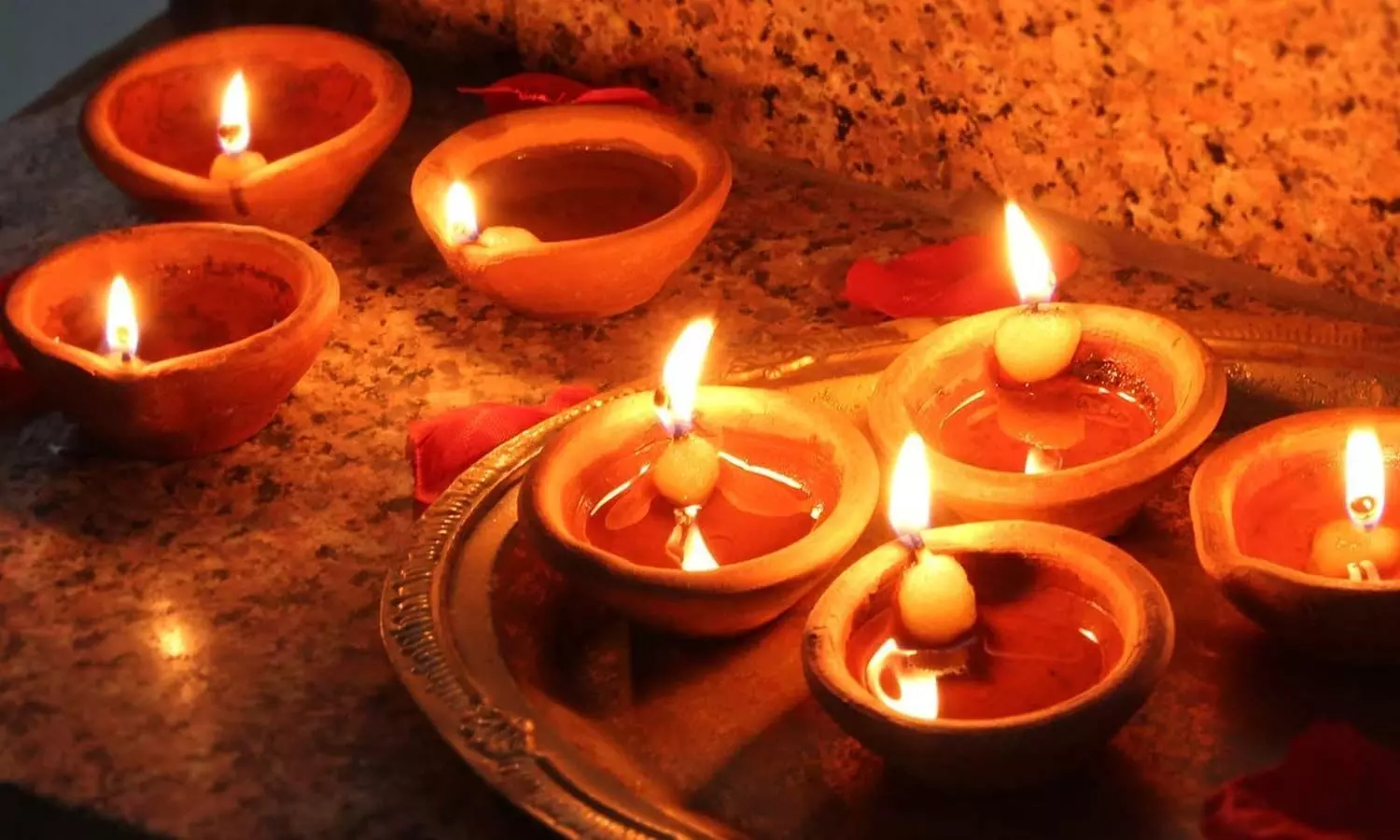
Hyderabad: ‘Diyas’ symbolise the victory of light over darkness, more so during the Festival of Lights, irrespective of the historical, mythological and spiritual legends associated with Diwali. Of late, the practice of lighting traditional clay diyas during Diwali is increasingly being replaced by plugging in LED lights, electric string lights, and water sensor LED diyas.
The distinct aroma of sun-baked terracotta, cold-pressed sesame oil, and fresh marigolds is increasingly crowded out by the sterile glare of multi-coloured LEDs and plastic decorations. Across India, festive preparations lean heavily towards synthetic convenience, mirroring a profound cultural and economic shift. By trading sustainable natural heritage objects for mass-produced plastic ones, society risks eroding the soul of Diwali while severely impacting hereditary occupations (kulavrutulu) whose survival depends on festive celebrations. Veteran potter Mallamma, 72, who has shaped clay diyas for over five decades, sits beside unsold lamps. She reflects that children now prefer blinking plastic lights, unaware that synthetic bulbs virtually snuff out an artisan’s home fire. The decline extends to flower vendors.
Third-generation florist Lakshmi observes that households favour reusable plastic garlands over natural blooms, causing daily festive earnings to halve.
Traditional oil millers face similar quiet wheels.
Artisan oil miller Ramaiah explains that the switch to electric lights starves authentic oil mills, forcing younger generations into unskilled urban wage labour.
Sellers of traditional dairy products, mainly pure ghee, for auspicious rituals are also on their last legs.
Ghee producer Satyanarayana emphasizes that families turning to synthetic candles or plug-in lights wipe out primary income sources needed to clear debts and feed cattle.
Elders steeped in cultural ethos mourn this loss of community support.
Retired schoolteacher Ramesh Rao stresses that potters, flower vendors, and local farmers depend on festival months for survival, questioning whether plastic decorations truly showcase Indian heritage.
Modern consumers increasingly abandon ancestral roots for artificial convenience, forgetting that traditional crafts represent the main source of income for millions of artisans who earn their daily bread solely by selling hand-crafted art.
Festive months provide the only seasonal revenue window sustaining these families throughout the year. Senior citizen Pawan Raj highlights that supporting kulavrutulu communities by buying earthen diyas, cold-pressed oils, and fresh flowers preserves national heritage with dignity.
Restoring these traditional choices protects vulnerable artisan livelihoods and upholds the sacred spirit of Diwali.
NDA sweeps AP Parishad polls
CM Naidu extends Diwali greetings to people
CII Partnership Summit in Vizag to boost global biz, tech ties: CM Naidu
Govt to develop Vanvasi Ram Lok, Ram Raja Lok: MP CM
TN BJP chief Nagenthran extends Deepavali greetings, warns against forces seeking to destabilise India
From ‘one district, one mafia’ to ‘one district, one product’: Nitin Nabin’s jibe at Akhilesh Yadav over Azam Khan


