




- Hyderabad: HYDRAA moves to widen Fathenagar nala
- Meet Besta Karthik : Teen representing AP at National Taekwondo C’ship
- Political heirs or fresh face? TDP in dilemma over Mayor pick
- Rebel candidates are likely to enter fray
- Pushkaralu: Facilities at ghats, temples reviewed
- Police welcome CRPF bike rally
- Women stage protest against liquor shop
- Bus operators warned against charging high fares
RTC staff seeks cancellation of tenders for 1,450 electric buses
In Short
APSRTC JAC leaders submitted a memorandum demanding the immediate cancellation of e-tenders for operating 1,450 electric buses under the GCC model.

Share :
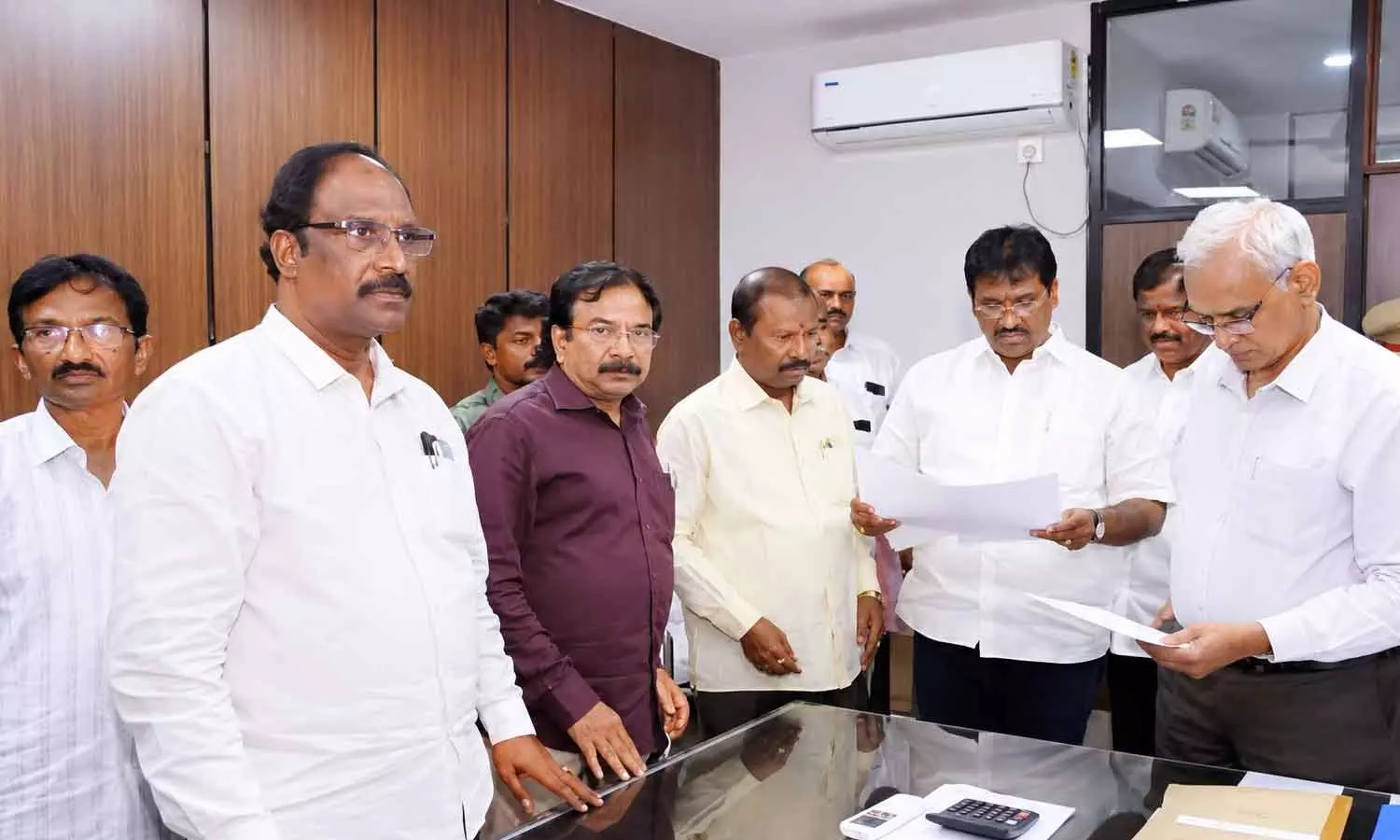
APSRTC JAC leaders discussing their demands with executive director (administration) K S Brahmananda Reddy after submitting a representation seeking cancellation of tenders for 1,450 electric buses at RTC House in Vijayawada on Thursday
Vijayawada: The Andhra Pradesh State Road Transport Corporation (APSRTC) employees’ Joint Action Committee (JAC) has demanded the immediate cancellation of tenders invited for operating 1,450 air-conditioned electric buses through private operators under the Gross Cost Contract (GCC) model.
JAC convenors Y Srinivasa Rao and Palisetti Damodara Rao, along with other leaders, submitted a memorandum to APSRTC executive director (administration) K S Brahmananda Reddy at RTC House in Vijayawada on Thursday, as the vice-chairman and managing director and joint managing director were unavailable.
They opposed the proposal to entrust the operation and maintenance of the buses to private agencies at 29 APSRTC depots. According to tender notice No APSRTC/C&B-03/2026-27-MED, issued on October 13, the corporation invited e-tenders from private operators to provide 1,450 AC electric buses of nine-metre and 12-metre lengths on a rental basis under the GCC model. The bid submission window will open at 10 am on November 9 and close at 5 pm on November 24.
Speaking to the media after submitting the representation, the JAC leaders clarified that they were not opposed to introducing electric buses. They insisted that APSRTC should purchase the vehicles with financial assistance from the government and operate them using its own employees.
They warned that transferring operational responsibilities to private agencies could adversely affect the corporation’s revenue, employment opportunities and job security. They questioned the need to rely on private operators when APSRTC already had its own depots, experienced drivers, mechanical staff and an established operational network.
They urged the government and the corporation management not to hand over public assets and infrastructure developed with public funds to private companies.


