Mastering Dust Resistance Testing: A Complete Guide to LISUN’s Dust Test Chambers and IP56 Dustproof Certification

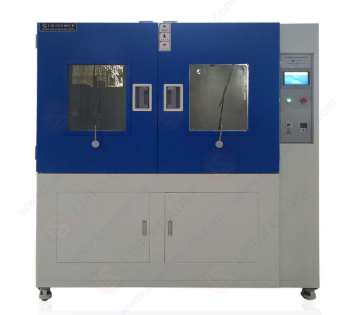
A Dust Test Chamber: What Is It?
A product's resistance to dust and other small particles is evaluated in a specially designed cage. This is known as a dust test chamber. The Equipment Under Test is subjected to airborne sand or dust particles under specific airflow, temperature, and humidity conditions. This is done for a predefined period of time.
Dust test chambers help decide if a device can continue to work, perform, and be safe in challenging environments. These can include construction sites, industrial workshops, deserts and outdoor installations.
The Reasons for Sand and Dust Testing Important
Dust particles pose a serious risk when they come into contact with electronics or precision gear. This is despite their seemingly innocuous appearance. Device casings, ventilation systems, internal components, insulation, optical sensors, and mechanical joints can all be impacted by fine particulate matter. Particularly for safety-critical electronics used in healthcare, aircraft, and defense, exposure to fine dust can occasionally cause catastrophic failure.
Dust ingress testing is particularly crucial for products intended for:
- Outdoor environments
- Transportation and infrastructure
- Manufacturing and logistics
- Energy and utility sectors
- Harsh industrial or mining applications
These tests make sure that in dusty, filthy, and particulate-heavy environments, gadgets not only survive but also continue to function dependably.
Comprehending the IP Code: Pay Attention to IP56
The degree of protection an enclosure provides against the incursion of solids and liquids is categorized by the Ingress Protection (IP) code. It was created under IEC 60529.
An IP56 rating means:
- 5: Dust protected. Some dust may enter, but not in sufficient quantity to interfere with safe operation.
- 6: Protection from powerful water jets from any direction.
IP56 testing involves separate procedures for each aspect. Dustproof testing focuses on simulating dusty conditions in a sealed chamber over extended timeframes.
LISUN’s Dust Test Chambers: An Overview
A variety of sand and dust test chambers are available from LISUN. These are especially made for environmental stress testing, military specifications and IP code verification. These chambers are expertly constructed for repeatability, longevity, and test accuracy.
Important Features of LISUN Dust Chambers:
- Support for IP5X and IP6X testing levels
- Airflow speeds adjustable between 1 to 5 m/s, as per IEC requirements
- Oscillating test racks to simulate movement and product handling
- Integrated vacuum system for pressure differential testing (especially IP6X)
- Stainless steel construction with transparent viewing windows
- PLC touch panel control system with programmable test durations and cycles
- Built-in heating and dehumidification systems to maintain chamber conditions
With chamber volumes ranging from 500L to 1000L and above, LISUN’s models are suited for both small electronics and larger mechanical systems.
How Dust Ingress Testing Works
The rigorous protocols outlined by IEC 60529 govern the assessment of dust intrusion in LISUN chambers. Depending on whether the product is being evaluated for IP5X (dust protection) or IP6X (dust-tight) classification, the procedure differs somewhat.
IP5X Test Method:
- The EUT is placed in the chamber and exposed to circulating dust for up to 8 hours.
- A low vacuum may be applied to draw dust into any unsealed areas of the device.
- After testing, the EUT is removed and inspected for dust intrusion that might impair function.
IP6X Test Method:
- A higher vacuum is applied inside the EUT during the test to actively pull dust into any gaps.
- The test continues for a fixed duration (usually 2–8 hours depending on device category).
- A product must demonstrate zero dust ingress to pass the IP6X requirement.
Usually, a regulated mixture of silica, aluminum oxide, and other minerals with particle sizes ranging from 1μm to 75μm is used as ISO 12103-1 A2 fine test dust.
Real-World Applications of Dust Test Chambers
LISUN’s sand and dust chambers are used extensively in industries where reliability under harsh conditions is mission-critical.
1. Consumer Electronics
Smartphones, outdoor speakers, wearables, and surveillance cameras are tested for dust ingress through seams, charging ports, and button interfaces.
2. Automotive Components
ECUs, light housings, dashboard modules, and climate sensors must withstand roadside dust and off-road sand exposure.
3. Defense and Aerospace
Mission-critical systems for vehicles, aircraft, and field communication tools undergo IP6X testing to ensure survivability in desert environments.
4. Energy and Utility
Outdoor meters, control boxes, and renewable energy systems must function in environments with high levels of airborne dust and sandstorms.
5. Medical Devices
Portable diagnostic tools and remote health monitoring systems require clean, sealed designs to prevent contamination and malfunction.
Advantages of LISUN’s Dust Test Chambers
LISUN combines engineering precision with global usability, offering features that simplify both compliance testing and R&D.
- Ease of Use: Touchscreen controls and pre-loaded IP test programs make it accessible for non-expert operators.
- Flexible Operation: Supports both manual testing and automated sequences.
- Low Maintenance: Dust recovery and filtration systems reduce clean-up efforts.
- Reliable Repeatability: Consistent airflow and dust dispersion ensure accurate, comparable results.
- Certification Support: Comes with ISO 17025-traceable calibration certificates.
Additionally, LISUN provides custom solutions for clients needing larger chambers, special dust types, or integration with vibration/shock test systems.
Comparing LISUN with Other Brands
How does LISUN stack up against other known brands like Weiss Technik, ESPEC, or Thermotron?
LISUN delivers all required features for IP testing at a significantly lower cost, with localized support and rapid ROI—making it ideal for both start-up labs and large QA departments.
Software, Logging, and Automation
LISUN's chambers include optional PC software for test documentation, which logs:
- Temperature and humidity conditions
- Dust exposure duration
- Vacuum pressure during test
- Number of cycles and pauses
- Real-time alerts and safety alarms
This data can be exported in Excel or PDF format for compliance reports, client audits, or certification files. The software can also connect multiple LISUN chambers for labs running concurrent test batches.
Installation, Calibration, and Support
Every LISUN chamber is factory-calibrated and includes:
- A calibration certificate traceable to international standards
- Detailed installation manual and diagrams
- Full set of accessories (test dust, trays, vacuum pipes)
- Access to online training videos
- Live multilingual technical support
On-site setup and operator training are available through LISUN's international network, covering over 50 countries.
How to Choose the Right LISUN Chamber
When choosing a LISUN dust chamber, ask:
- What IP rating do you need to verify (5X vs. 6X)?
- What size is your largest product under test?
- Will you perform vacuum-assisted (IP6X) tests?
- How many tests will you run weekly or monthly?
- Do you need integration with other tests (humidity, vibration)?
LISUN’s expert consultants can help tailor the chamber specifications to your testing goals and budget.
Conclusion
In today’s global economy, where devices are expected to operate across deserts, construction zones, wind farms, and battlefields, dust protection is non-negotiable. Dust and sand can silently erode product reliability—unless the device is built and tested to withstand them.
Businesses may expedite product development, satisfy internal and regulatory requirements, and confidently test IP5X and IP6X compliance using LISUN's Dust Test Chambers. For businesses that value quality, dependability, and international certification, LISUN chambers provide a tried-and-true solution by scientifically simulating real-world dusty situations.
LISUN provides the resources you need to defend your invention against the tiniest adversaries—dust and sand—whether you're producing sensors, control panels, power meters, or cellphones.
Frequently Asked Questions (FAQs)
Q1: Can LISUN chambers use different dust types?
Yes. While ISO fine dust is standard, custom test dusts (e.g., talc, volcanic ash) can be used upon request.
Q2: Does LISUN provide post-installation support?
Absolutely. LISUN offers training, annual calibration, spare parts, and remote diagnostics worldwide.
Electronic and mechanical equipment need to be more durable than ever in a world that is becoming more connected and tough. Serious malfunctions in consumer electronics, industrial machinery, automobile parts, and military-grade equipment can result from exposure to dust and other airborne particles. Dust Test Chambers are used by manufacturers to guarantee durability and safety. These chambers are particularly important for devices that need to pass the worldwide Ingress Protection standard's IP56 dustproof certification. Global manufacturers and certification organizations use LISUN's sand and dust test solutions extensively, making it one of the leading suppliers of dependable, standards-compliant test chambers. This article explains the science underlying IP-rated tests, examines the significance of dust ingress testing, and demonstrates how LISUN's cutting-edge chambers enable engineers to easily and precisely comply with international regulations.