




- Rains likely in parts of Telangana in next five days
- US Strikes Five Iranian Oil Tankers, Iran Retaliates With Missile Attack On US Base In Jordan
- Tamil Nadu CM Vijay to chair crucial TVK alliance meeting in Chennai today; Left parties to skip
- DR Congo's Ebola outbreak 'increasingly heterogeneous' with high community deaths: WHO
- US sanctions 27 Iranian airlines with third country firms targeted
- UK, France, and Canada affirm commitment to two-state solution amid Israel-Palestine war
- Today is International Sudoku Day: A puzzle that puts your logic skills to test
- Damage to Krishna idol sparks concern at Tirumala; TTD responds
US Strikes Five Iranian Oil Tankers, Iran Retaliates With Missile Attack On US Base In Jordan
In Short
The US struck five Iranian oil tankers after accusing Tehran of attacking a Navy warship, while Iran retaliated with missile strikes on a US base in Jordan, escalating the regional conflict.

Share :
US Strikes Five Iranian Oil Tankers, Iran Retaliates With Missile Attack On US Base In Jordan
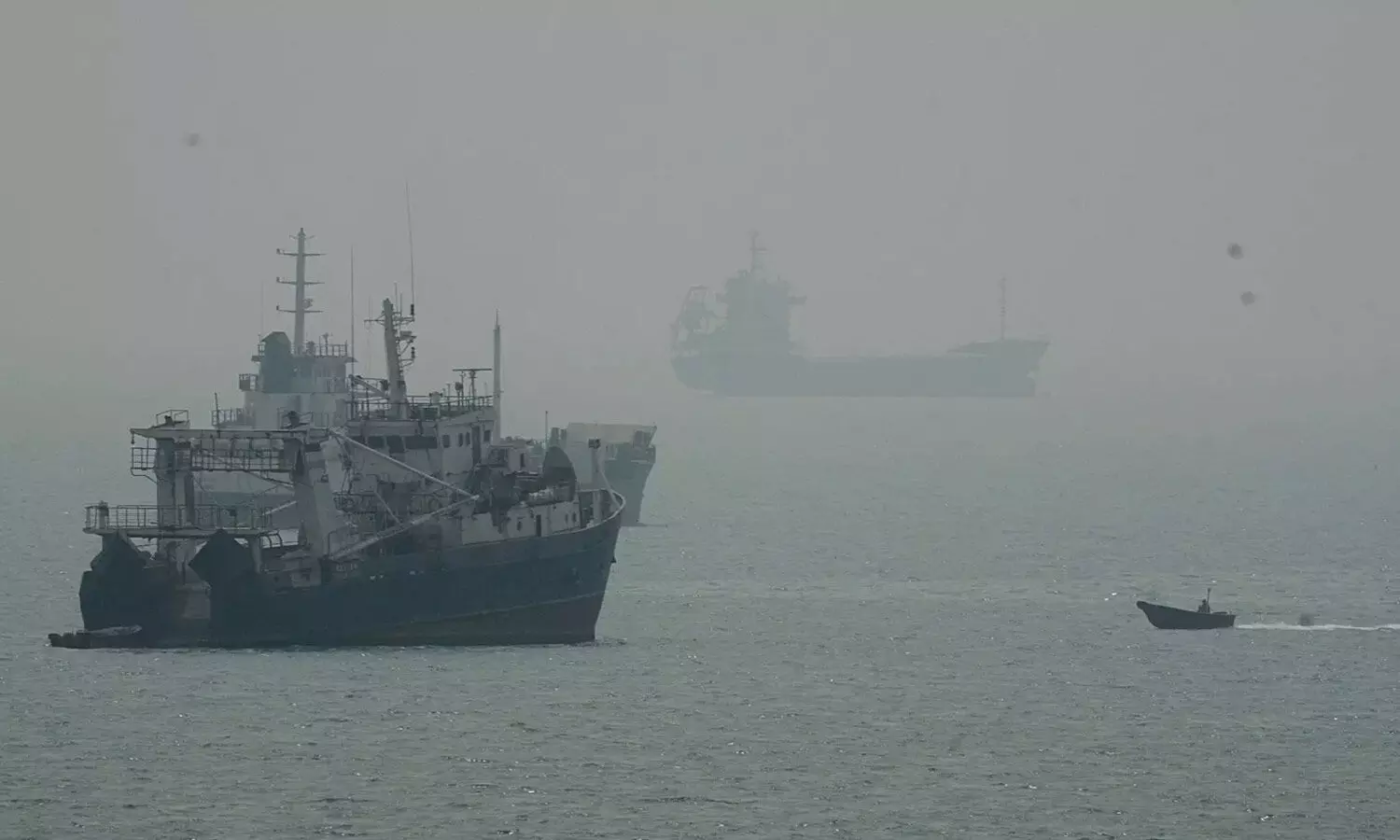
The conflict between the United States and Iran intensified after American forces struck five Iranian oil tankers in waters near Iran, following what Washington described as repeated Iranian attempts to target a US Navy warship.
Iran responded with missile attacks on US forces stationed at the Al Azraq air base in Jordan which marked another escalation in the ongoing hostilities.
US Central Command (CENTCOM) said the American warship had successfully evaded two Iranian ballistic-missile attacks over two days and remained operational in regional waters. No US personnel were injured, according to the military.
Following the alleged attacks, US forces targeted five vessels that CENTCOM said were connected to an oil-smuggling network linked to Iran’s Islamic Revolutionary Guard Corps (IRGC).
The vessels identified by CENTCOM were M/T Kaviz, M/T Charminar, M/T Horizon 1 and M/T Riesco in the Gulf of Oman, along with M/T Derya near Iran’s Kharg Island.
The US military said crews were instructed to leave the vessels before the strikes, which left the tankers unable to operate.
CENTCOM had accused Iran of using a large-scale “shadow fleet” to generate funds for the IRGC and its regional allies.
Iran Launches Missile Attack On US Base
Iran retaliated by firing missiles at the US military presence at Jordan’s Al Azraq air base, according to reports cited in the source.
Jordanian authorities said their air-defence systems intercepted 18 of the 20 missiles, while the remaining two landed in open areas.
The IRGC claimed it had carried out heavy missile strikes against the base and said hangars used by US fighter aircraft were destroyed. These claims have not been independently verified.
Iran’s Revolutionary Guard also issued a warning to crews of oil tankers located at ports in Kuwait and Bahrain, urging them to leave their vessels immediately.
Tehran Warns Of Wider US Base Strikes
Iranian Armed Forces chief of staff Ali Abdollahi had earlier warned that Tehran would target US military installations across the region if Iranian oil tankers came under attack.
The latest threats indicate that the confrontation could extend beyond direct US-Iran military exchanges and affect commercial shipping and energy infrastructure across the Gulf.
Iran Confirms Tankers Were Hit
Iranian state media reported that two Iranian oil tankers were struck in the latest US operation — one near the southern port of Jask and another close to Kharg Island.
According to Iranian reports, the crews were evacuated safely and there were no casualties.
Iran’s state broadcaster IRIB confirmed the strike near Kharg Island, a major hub for the country’s oil exports. The IRGC separately said that several Iranian commercial vessels had been hit.
The latest strikes followed a US operation on September 5, when CENTCOM said it destroyed three Iranian crude-oil tankers after alleged Iranian attempts to attack a US aircraft carrier and a guided-missile destroyer.
US Warns Of More Strikes On Iranian Tankers
US Secretary of State Marco Rubio said Washington would continue responding to Iranian attempts to attack American naval vessels.
Speaking during a visit to Colombia, Rubio said further attempts by Iran to strike US Navy ships would lead to additional attacks on Iranian oil carriers.
The exchange has raised concerns that the conflict could increasingly threaten commercial shipping and global energy supplies.
Oil Prices Rise Amid Escalating Conflict
The latest escalation sent oil prices higher, with prices briefly reaching $99.46 per barrel, equivalent to around ₹8,700, as markets reacted to the growing risks to energy supplies.
The conflict has already disrupted shipping through the Strait of Hormuz, one of the world’s most important routes for oil transportation. Iran has reportedly restricted regular traffic through the waterway, while the US has imposed a naval blockade on Iranian ports.
The current phase of fighting is being described as the most intense since hostilities resumed after roughly a month of relative calm. A 60-day ceasefire also expired last month without producing a wider diplomatic agreement.
With Iran threatening vessels in Kuwaiti and Bahraini ports and Washington warning of further strikes against Iranian oil carriers, fears of a broader regional conflict are mounting.
Rains likely in parts of Telangana in next five days
US Strikes Five Iranian Oil Tankers, Iran Retaliates With Missile Attack On US Base In Jordan
Voting begins in 162 Urban Local Bodies across Rajasthan amid tight security at polling booths
Tamil Nadu CM Vijay to chair crucial TVK alliance meeting in Chennai today; Left parties to skip
Remarks row rocks Telangana Assembly
Telangana CM Revanth Reddy assures Speaker
Congress bid to lay siege to KCR’s farmhouse turns violent
Hyderabad: Police arrest… court rejects… Legislative Council suspends
Delhi building collapse was waiting to happen
The steel vertebra that India’s judiciary desperately needs


