




- 'Want to strengthen BJP in Tamil Nadu': L. Murugan seeks to quit as Union Minister and Rajya Sabha member
- Draw up coordinated strategy to make Haryana drug-free, says CM Saini
- Union Territory of Ladakh integral and inalienable part of India: MEA rejects China's claims
- AP SEC briefs media on meeting political parties over local body elections
- Trinamool questions Bengal CEO’s campaign for enrolment of deleted eligible, new voters
- Education Ministry forms three-member panel to probe IIIT-Ranchi student's death
- K'taka sting Op row: Siddaramaiah moves court; BJP accuses Cong of betrayal
- BJP women MPs turn up heat on Cong MP caught in ‘sex for marks’ row, to meet President
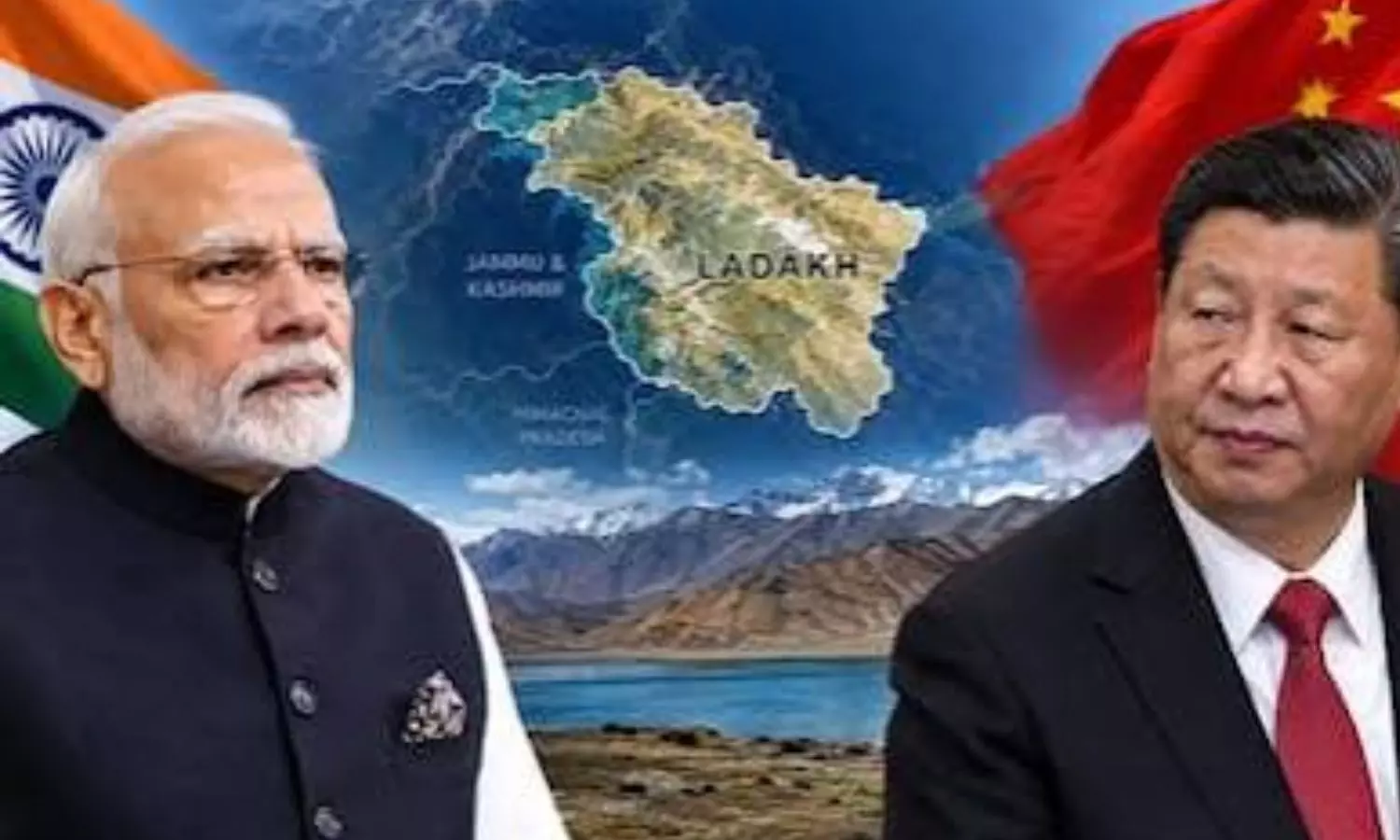
India Rejects China’s Objection To Naming 28 Strategic Locations In Ladakh
In Short
As for the naming of 28 strategic locations in Ladakh, India has now rejected China's objection saying the Union Territory is an integral and inalienable part of the country.

Share :
India Rejects China’s Objection To Naming 28 Strategic Locations In Ladakh
India on Tuesday strongly denied an attempt by China to object to the Union Territory, Ladakh, setting its names of 28 strategic locations and geographical features to a standardisation process to make it an undeniable part of the country.
The Ministry of External Affairs (MEA) came with the response following Beijing's description of India's step as illegal and that the regions along the western section of the China-India border are always Chinese.
“The UT of Ladakh is an integral and inalienable part of India. No amount of denial by the Chinese side can change this established fact,” MEA spokesperson Randhir Jaiswal said during his weekly media briefing.
China Objects To India’s Naming Exercise
The Ministry of Home Affairs announced the standardised names last week as part of an official mapping exercise. The initiative is intended to improve the accuracy of official maps, ensure precise identification of geographical features and increase public awareness of the strategically sensitive border region.
Reacting to the announcement at a media briefing in Beijing, Chinese Foreign Ministry spokesperson Mao Ning said China had never recognised what she called the “so-called ‘Union Territory of Ladakh’ unilaterally and illegally established by India”.
She added that Beijing “firmly opposes India’s announcement of so-called standard names”, arguing that the exercise could not change China’s territorial claims.
“The move is illegal and invalid and cannot change the fact that the relevant areas in the western sector of the China-India boundary have always belonged to China,” Mao said.
India has rejected Beijing’s objections, maintaining that its position on Ladakh remains unchanged.
Gogra, Hot Springs Among Key Locations
On October 2, India formally identified 28 strategic locations and geographical features in Ladakh for inclusion in its official mapping records. The exercise was carried out in consultation with the Ladakh administration.
Gogra and Hot Springs are major sites that have been identified as friction points on the Line of Actual Control (LAC) between India and China in the eastern Ladakh area that was the focus of the military stand-off between India and China.
Both are of strategic importance in Indian patrolling of the disputed border. Their participation in the exercise is in the context of ongoing efforts by the two nations to control tensions and ensure stability along the LAC.
Other locations identified by India include Alisha Giri, Brangsa, Chapchingal Pass, Kanishka Peak, Karun Pir mountain, Kuksel, Martand Giri, Parpik Glacier, Skamri Glacier, Shachmirik Pass, Shkorga Valley and Zorawar Peak.
The list also features Dehra Compass, Drak Karpo, Jolmori, Kumarayana Point, Panglung, Rinchen Zangpo, Sakyasri Giri, Guru Rinpoche, Shamal Lungpa, Yangpa River, Marpa Lotsava Ri, Milarepa Kangri, Shiva Ri and Maheshwara Ri.
Shamal Lungpa has been described as a patrol and staging route dating back to the 1950s.
India-China Border Standoff Began In 2020
This new round of talks comes amid the ongoing tensions between India and China over their border in eastern Ladakh.
The standoff started on 5 May 2020 after a violent clash between the Indian and Chinese troops at the Pangong lake area. The incident escalated into more military deployments and problems in bilateral relations.
Multiple rounds of military and diplomatic talks were then held between both countries. In 2022, the disengagement process started in certain areas but the overall boundary dispute is yet to be clarified.
The naming of a place in Ladakh raises the lingering tensions between New Delhi and Beijing on their disputed border.
With its latest assertion, India reiterates its stance that Ladakh is part of the country and China remains against New Delhi's claims over the region.
Telangana Dy CM Bhatti Vikramarka announces measures for Singareni workers
SIR Hearing Deferred to Thursday; Rahul Must Refile Petition
Modi says India grows 'with the world, not at anyone's cost', cites strong economic fundamentals
CJP Challenges Jantar Mantar De-notification; Police Register Four FIRs Against Congress
Srisailam Project earns international recognitionl, included in World Book is Records
CJP Leaders Saurav Das, Ashutosh Ranka Detained After Jumping Gate To Enter Jantar Mantar


