
India’s first bullet train set for trial run in August 2027

Ahmedabad: Indiais on the cusp of a historic leap in rail transportation, with the maiden trial run of the country’s first bullet train schedule for August 2027.
Conceived as a flagship infrastructure initiative under the leadership of Prime Minister Narendra Modi, the Mumbai–Ahmedabad High Speed Rail (HSR) project promises to redefine long-distance travel, technological capability, and urban connectivity in India.
The initial trial will be conducted on a 66-kilometre stretch between Surat and Bilimora in Gujarat, marking the first 100-km testing phase of the ambitious project. This milestone is being keenly watched by policymakers, engineers, and the public alike, as it will signal India’s formal entry into the elite league of nations operating high-speed rail systems.
Speaking to visiting media persons from Vijayawada, Rajesh Agarwal, one of the five Principal Chief Project Managers of the project, described the bullet train as a benchmark for all future high-speed rail initiatives in the country. “This project has been a tremendous learning experience for us. From land acquisition and advanced construction techniques to precision engineering and international collaboration, we have gained valuable insights that will shape the future of infrastructure development in India,” he said.
The Mumbai–Ahmedabad High Speed Rail Corridor spans a total length of 508 kilometres, connecting the financial capital Mumbai in Maharashtra with Ahmedabad, one of Gujarat’s major commercial and industrial hubs. Once fully operational, the bullet train is expected to cover the distance in approximately two hours and seven minutes—less than half the time taken by the fastest conventional trains and significantly faster than road travel.
Unlike popular perception, the bullet train will not start from central Ahmedabad but from a state-of-the-art multi-modal hub at Sabarmati.
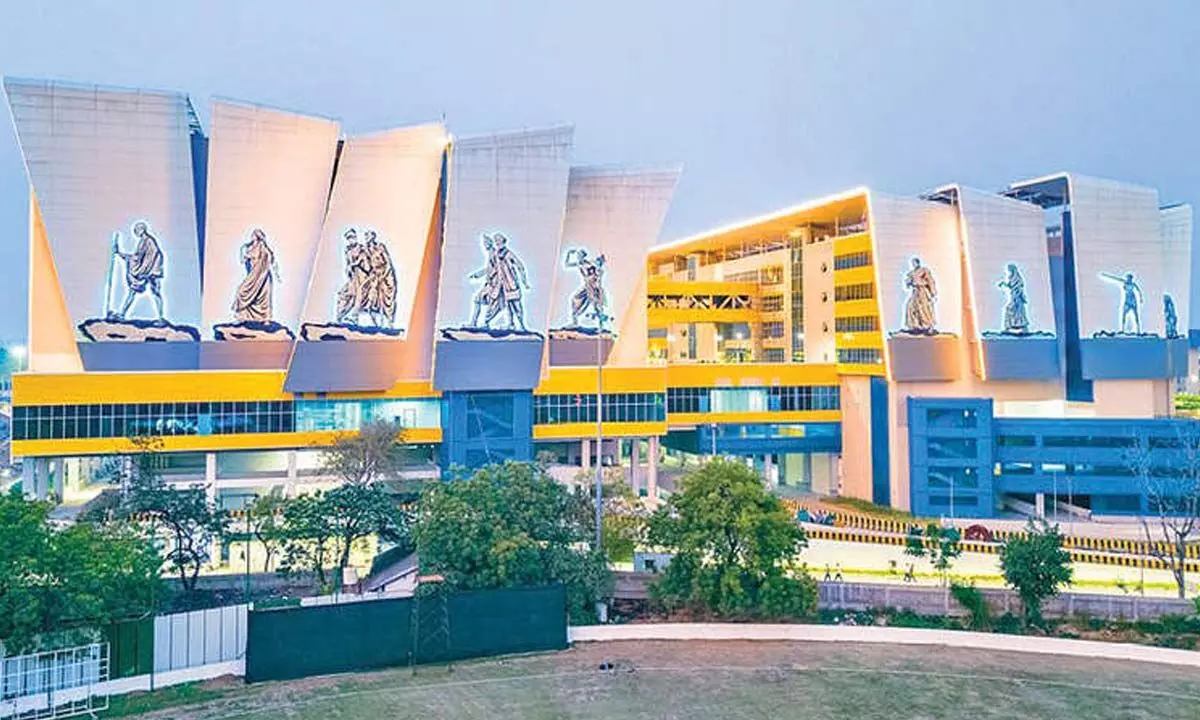
From here, the train will traverse through Gujarat and Maharashtra, before culminating in Mumbai. The Sabarmati hub is designed as a seamless transit point, integrating two existing railway stations, a Metro station, and a Bus Rapid Transit System (BRTS) stop. This integrated design will allow passengers to move effortlessly among different modes of transport, setting new standards for commuter convenience in India. Construction of the multi-storeyed Sabarmati multi-modal hub is nearing completion. Beyond its functional significance, the hub also carries a strong cultural and historical identity. It is adorned with the largest murals depicting the Salt Satyagraha led by Mahatma Gandhi, symbolically linking India’s freedom movement with its journey towards modernity and technological advancement. The project is being executed by the National High-Speed Rail Corporation Limited (NHSRCL), with technical and financial cooperation from Japan, whose Shinkansen technology is globally renowned for safety, punctuality, and efficiency.
Manoj Kumar Gupta, Deputy General Manager of NHSRCL, expressed his confidence that the bullet train stations in Gujarat would be completed within the stipulated timelines. “Work is progressing steadily, and we are optimistic about meeting all major deadlines. Gujarat has emerged as a key hub for this project, both in terms of infrastructure readiness and public support,” he noted.
One of the most challenging aspects of the project has been the construction of elevated corridors, tunnels, and river crossings, particularly in densely populated and ecologically sensitive areas.
The undersea tunnel near Mumbai and the use of advanced precast segment technology are examples of the engineering innovations being employed. Safety remains a cornerstone of the project, with earthquake-resistant structures, automated train control systems, and rigorous quality checks built into every stage.


