
Supreme Court Administration Demands Former Chief Justice Vacate Official Residence

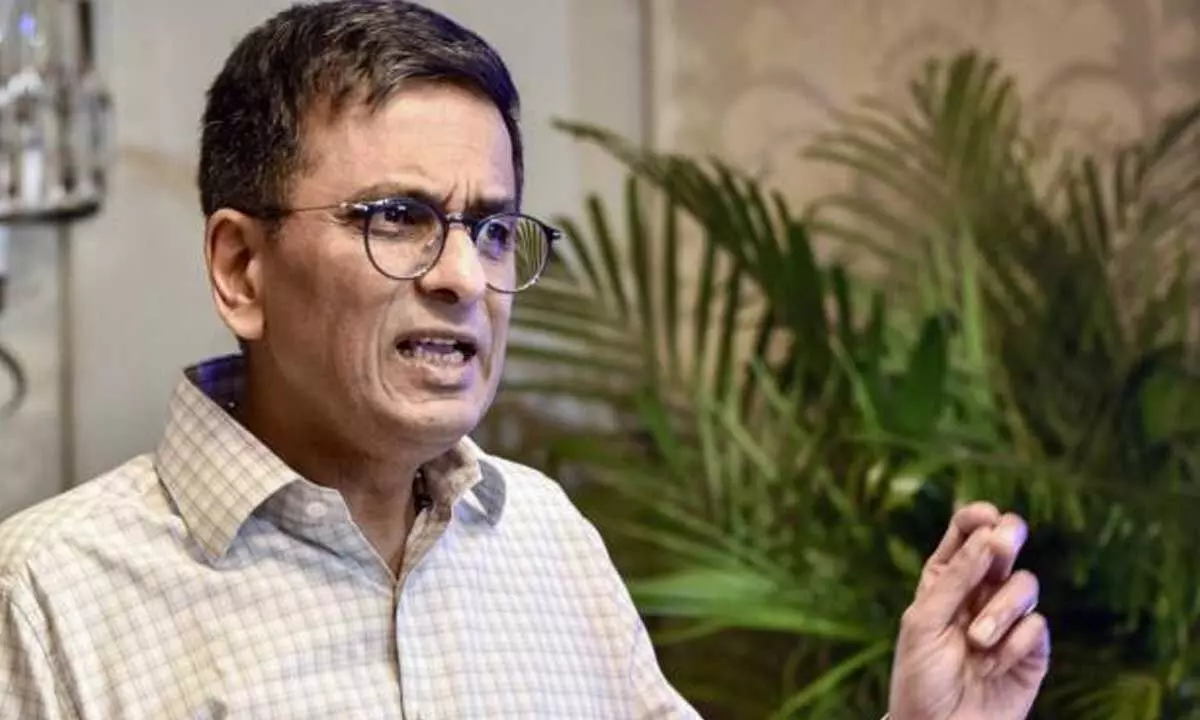
Supreme Court administration formally requests government to reclaim official CJI residence from former Chief Justice Chandrachud, who has remained in the property eight months after retirement despite expired permissions.
The Supreme Court administration has taken an unusual step by formally requesting the central government to immediately reclaim the official Chief Justice residence from former CJI Dhananjaya Y Chandrachud, who has continued to occupy the property well beyond the permitted timeframe.
In a July 1 letter addressed to the Ministry of Housing and Urban Affairs, the Supreme Court has demanded the immediate vacation of Bungalow No. 5 on Krishna Menon Marg, which serves as the designated residence for India's sitting Chief Justice. The communication emphasizes that Justice Chandrachud has exceeded both the specifically granted permission period and the statutory six-month limit outlined in the 2022 Rules.
Justice Chandrachud, who held the position of 50th Chief Justice from November 2022 to November 2024, continues to reside in the Type VIII bungalow nearly eight months after stepping down from office. The situation has been complicated by the fact that both his successors, Justices Sanjiv Khanna and current CJI Bhushan R Gavai, have chosen to remain in their previously allocated residences rather than move into the official CJI accommodation.
The timeline of permissions reveals a series of extensions that have now been exhausted. Initially, Justice Chandrachud sought permission in December 2024 to remain in the Krishna Menon Marg residence until April 30, 2025, citing renovation delays at his alternative accommodation on Tughlak Road due to pollution-related construction restrictions. This request was approved by the then CJI and subsequently sanctioned by the Ministry of Housing and Urban Affairs for a monthly license fee of ₹5,430.
Following this initial extension, Justice Chandrachud made an oral request to extend his stay until May 31, 2025, which was granted with the explicit condition that no further extensions would be permitted. The administration's letter notes that this final deadline has also lapsed, prompting the formal intervention.
The regulatory framework governing such accommodations is clear: Rule 3B of the Supreme Court Judges (Amendment) Rules, 2022, allows retired Chief Justices to retain Type VII accommodation for a maximum of six months post-retirement. Justice Chandrachud's entitlement under this rule expired on May 10, 2025, yet he continues to occupy the superior Type VIII residence.
When approached for comment, Justice Chandrachud explained that the delay stems from compelling personal circumstances that have been communicated to the Supreme Court administration. He revealed that he has already been allocated alternative government accommodation on rent, but the property requires extensive renovation after being vacant for approximately two years.
The former Chief Justice also disclosed deeply personal reasons for the extended timeline, relating to his family's special circumstances. He has two daughters with severe medical conditions, including nemaline myopathy, who require specialized care and treatment at AIIMS. These special needs have necessitated careful consideration in selecting appropriate housing that can accommodate their requirements.
Justice Chandrachud emphasized his understanding of the responsibilities associated with his former office and assured that the matter would be resolved within days. He referenced historical precedents where former Chief Justices have been granted extended accommodation periods to facilitate transitions or address personal emergencies.
The formal letter from the Supreme Court administration represents an unprecedented intervention to reclaim the highest judicial residence from a former occupant. While informal extensions and grace periods are not uncommon in judicial and bureaucratic circles, such formal action seeking urgent government intervention is virtually unheard of at this level.
The situation highlights the practical challenges that can arise when personal circumstances intersect with official protocols, particularly in cases involving family members with special needs. It also underscores the administrative complexities surrounding high-profile government accommodations and the delicate balance between compassionate considerations and regulatory compliance.
As the matter moves toward resolution, it serves as a reminder of the various pressures and responsibilities that continue to affect former holders of constitutional offices, even after their tenure has concluded.


