




- South Africa’s Malibongwe Maketa appointed as Bangladesh senior men's assistant coach
- SCI anchoring India's maritime and shipbuilding ambitions: Sarbananda Sonowal
- 'Jai Shri Ram' slogans spark chaos during CJP protest in Mumbai's Shivaji Park
- Nitesh Rane accuses Abhijeet Dipke of echoing Pakistan's script; hails India's maritime growth
- White Revolution 2.0, milk cooperatives push: HM Amit Shah arrives in Bhopal
- Bengal: SSB seizes gold, silver at India-Nepal border; four held
- Pargat Singh appointed Punjab Congress Chief
- Gujarat: Dengue hits ‘Ekta Diwas’ parade contingent; 24 test positive
White Revolution 2.0, milk cooperatives push: HM Amit Shah arrives in Bhopal
In Short
The plant will produce curd, buttermilk, lassi, shrikhand and mawa under the Sanchi brand.

Share :
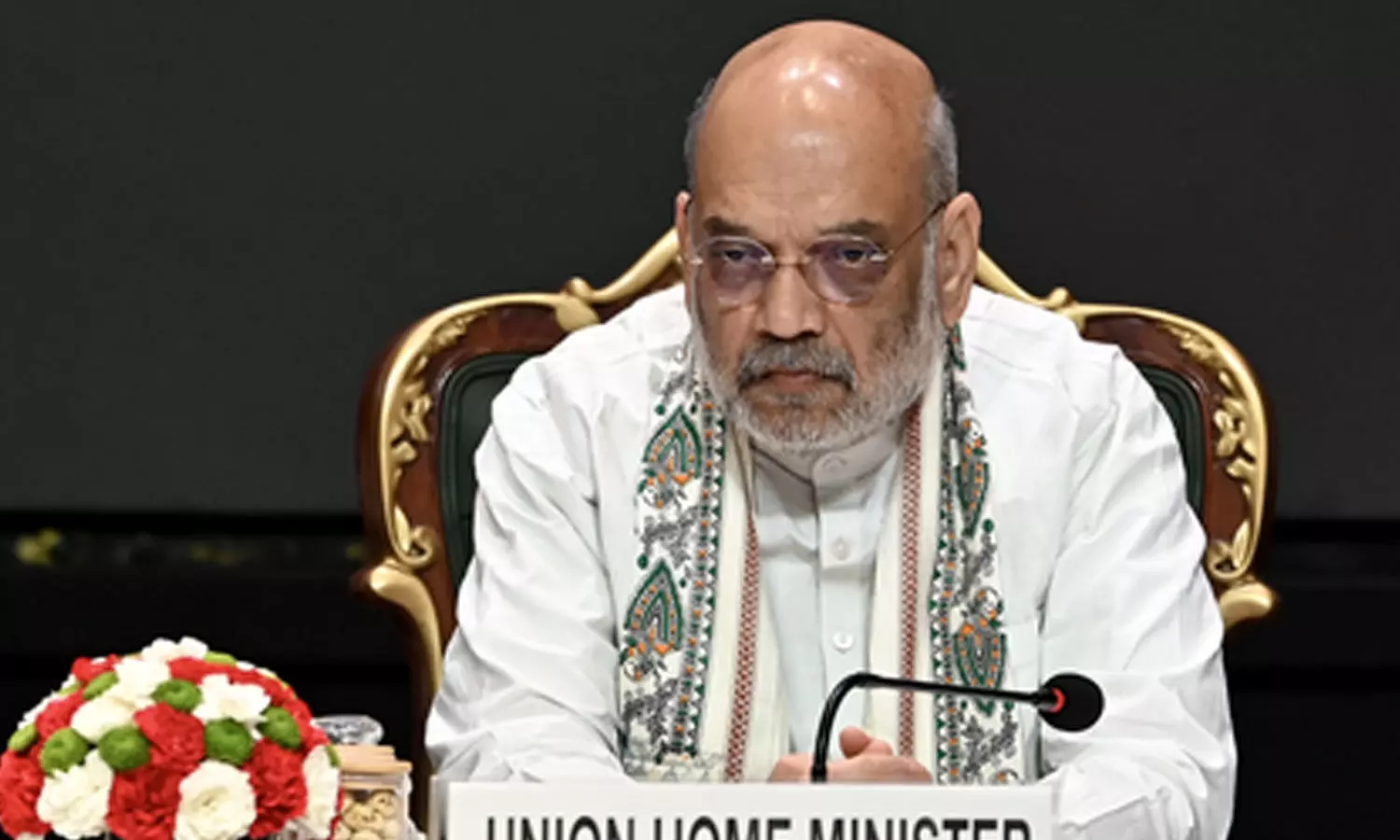
Union Home and Cooperation Minister Amit Shah
Bhopal: Union Home and Cooperation Minister Amit Shah arrived in Bhopal on Friday evening, placing dairy cooperatives at the heart of India’s rural growth strategy through White Revolution 2.0.
His visit is part of his nationwide push to expand dairy cooperative societies, with Shah repeatedly urging chief ministers, especially in Madhya Pradesh, to add more cooperatives in mission mode so that every panchayat gains access to organised milk collection and marketing.
India remains the world’s largest milk producer.
Production rose from 146 million tonnes in 2014-15 to nearly 239-249 million tonnes, a growth of about 70 per cent.
Per capita milk availability increased from 307 grams per day to 471-485 grams per day.
However, a significant portion of milk continues to move through informal channels.
White Revolution 2.0 aims to raise the cooperative sector’s share of organised milk procurement by 50 per cent by the end of 2029.
The government plans to establish 75,000 new dairy cooperative societies while strengthening around 46,000 existing ones.
More than 24,000 new societies have already been formed, and over 31,000 existing societies have been strengthened.
National milk-processing capacity, currently about 66 million litres per day, is targeted to reach 100 million litres per day by 2028-29.
Madhya Pradesh has already begun working on this plan.
Following Shah’s advice, the state aims to expand cooperative coverage from 7,331 villages to 26,000 villages within five years.
Daily milk collection is projected to increase from 1.2 million kg to 5.2 million kg, while processing capacity is expected to rise from 1.78 million litres to 6.33 million litres per day.
In September 2026, the state Cabinet approved about Rs 1,547 crore for dairy-processing infrastructure.
On Oct 3, Amit Shah will inaugurate a Rs 16.80-crore fermented-products dairy plant at the Bhopal Cooperative Milk Union with a daily processing capacity of 40,000 litres.
The plant will produce curd, buttermilk, lassi, shrikhand and mawa under the Sanchi brand.
A Gopalak Sammelan, expected to draw more than 35,000 cattle rearers, will also be held.
The programme is based on the cooperative dairy model, aimed at ensuring that farmers receive a higher share of consumer earnings while also empowering women.
Challenges remain in remote areas, requiring investment in infrastructure and professional management.
Shah’s visit underlines the Centre’s commitment to turning dairy cooperatives into a key driver of inclusive rural growth.
Rahul’s insinuations against TCS are unfortunate
October 2: From commemoration to conviction
Weaponisation of SWIFT and the response of Russia, China and BRICS
Breakfast scheme in govt schools: Quality food should be served to students: CM Revanth
El Nino ka baap? TG mulls dual power supply to feed data centres, IT cos
Belt shops big social menace in Old Khammam dist


