AI in music composition: can machines create emotional melodies?

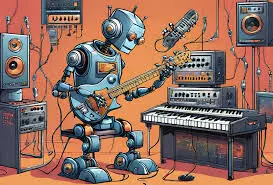
Artificial Intelligence (AI) has revolutionized creative industries, enabling machines to perform tasks like composing music and editing videos. In music composition, AI algorithms generate melodies and harmonies, raising questions about their emotional depth. Similarly, many AI video editors, such as Pippit powered by CapCut, integrate in-built music libraries to enhance video editing by syncing visuals with mood-appropriate soundtracks. This essay explores whether AI can truly create melodies that evoke emotion, analyzing its capabilities in music composition and its parallels in tools like AI video editors. It will delve into the intersection of technology and creativity, examining AI's potential and limitations in emotional expression.
The rise of AI in music composition
Artificial Intelligence (AI) has transformed the music industry, offering innovative tools for composition, production, and performance. From algorithmic experiments to modern applications, AI has reshaped how music is created and consumed. This section explores the rise of AI in music composition, detailing its historical development, tools, algorithms, and examples that highlight its impact.
Historical overview of AI in music
The journey of AI in music began in the mid-20th century with algorithmic composition experiments by pioneers like Iannis Xenakis and Lejaren Hiller. These early efforts used mathematical models and computer programs to create music. By the 1980s, the introduction of MIDI (Musical Instrument Digital Interface) allowed computers to interact directly with musical instruments, revolutionizing music production. Tools like David Cope’s ‘Emmy’ demonstrated AI's ability to compose music in the style of classical composers, laying the foundation for today's advanced systems.
Discussion of AI tools and software
Modern AI tools like Amper Music, Jukebox, and Magenta have transformed music composition. Amper allows users to set a mood, pick a genre, and generate custom tracks without requiring licensing. Similarly, Jukebox employs neural networks to create songs with lyrics and vocals, while Magenta focuses on melody generation using recurrent neural networks. These tools simplify music creation for professionals and amateurs alike, much like how video trimmers streamline video editing by enabling precise content adjustments.
How AI algorithms work
AI algorithms for music composition rely on deep learning models trained on vast datasets of musical compositions. These models analyze patterns in rhythm, melody, harmony, and genre to generate new pieces. Techniques like recurrent neural networks (RNNs) and generative adversarial networks (GANs) are commonly used. For example, RNNs excel at processing sequential data like musical notes, enabling AI to predict and create coherent melodies.
Defining and measuring emotion in music
Music has long been a medium for expressing and evoking emotions, but understanding how these emotions are conveyed remains a complex topic. This section delves into the subjective nature of emotion in music, the elements that evoke feelings, the challenges in quantifying emotional impact, and how AI interprets these elements to create emotionally resonant compositions.
The subjective nature of emotion in music
Emotion in music is deeply personal and subjective, as listeners interpret melodies based on their own experiences, cultural backgrounds, and emotional states. While one person may find a piece uplifting, another might perceive it as melancholic. This variability highlights the unique connection between music and individual perception.
Musical elements that evoke emotion
Certain musical elements are universally recognized for their ability to evoke emotions. These include:
• Melody: A flowing sequence of notes can evoke joy or sadness.
• Harmony: Complementary chords often bring serenity, while dissonance can create tension.
• Rhythm and tempo: Fast tempos convey excitement or anger, while slow tempos often reflect calmness or sorrow.
• Dynamics: Variations in loudness can intensify emotional expression.
These elements work together to create an emotional landscape that resonates with listeners.
Challenges in quantifying emotional impact
Quantifying emotions elicited by music is challenging due to individual differences in perception. While acoustic features like tempo or pitch can be analyzed objectively, the psychological mechanisms, such as memory association and cultural context—play a significant role in shaping emotional responses. This makes it difficult to standardize or measure emotional impact across diverse audiences.
How AI analyzes musical elements
AI systems analyze musical features like pitch, rhythm, tempo, and harmony to predict emotional tones. By training on datasets tagged with emotional labels, AI learns patterns that correlate specific musical structures with certain emotions. For instance, an AI might associate minor chords with sadness or fast tempos with excitement. This capability allows AI to compose music tailored to evoke specific feelings, bridging the gap between technical precision and emotional resonance.
AI's current capabilities in generating melodies
AI has made significant strides in music composition, showcasing its ability to mimic styles, generate original melodies, and assist creators in their artistic endeavors. This section explores AI's current capabilities in generating melodies, focusing on its technical aspects, examples of AI-composed music, and the debate surrounding its ability to replicate human emotion.
Mimicking styles and creating originals
AI excels at mimicking existing musical styles by analyzing genre-specific patterns and producing compositions that resemble those of famous artists. Tools like Jukebox can generate songs that emulate well-known musicians while also creating entirely original works by blending learned musical elements. This capability has opened up new possibilities for both professional and amateur composers.
Technical aspects of AI-generated melodies
AI-generated melodies are evaluated based on features like melodic contour, phrasing, and interval usage. These compositions are often technically proficient, adhering to the rules of music theory. However, they sometimes lack the nuanced emotional depth found in human-created music, which stems from personal experiences and creative intuition.
Examples of AI-composed music
AI tools such as Amper Music have been used to produce soundtracks for videos and advertisements. While these compositions are praised for their quality and efficiency, they are often critiqued for lacking spontaneity and emotional authenticity. Listener reviews highlight the precision of AI-generated tracks but question their ability to evoke deep emotional responses.
Can AI replicate human emotion?
Although AI can simulate emotional tones through pattern recognition and data analysis, it lacks lived experiences that inform human creativity. Emotional depth in music often arises from personal stories and cultural contexts, qualities that machines cannot inherently possess. This limitation raises questions about whether AI can genuinely replicate the profound emotional resonance of human-composed melodies.
Steps to edit a video with music using Pippit powered by CapCut
Step 1: Add a product link or upload media
Begin by signing up for a free Pippit powered by CapCut account and accessing its main interface. Navigate to the "Video Generator" panel, where you can paste a product link or upload media such as images and videos. The AI automatically extracts essential product details like names and features, while the "Auto Enhance" feature optimizes visuals for better quality. Use the "Advanced Settings" option to customize scripts, avatars, voiceovers, aspect ratios, and more. Additionally, incorporate AI-suggested stock assets to enrich your video content before clicking "Confirm" and then "Generate."
Step 2: Create AI videos in clicks
Once your video is generated, explore various theme-based categories, such as product highlights or TikTok trends, to match your content needs. Hover over a template and select “Quick Edit” for fast and straightforward customization. In the editing panel, you can adjust elements like scripts, avatars, voice settings, text, and font styles to align with your preferences. For more advanced editing, click “Edit More” to modify the aspect ratio, add creative elements, insert stock images, and fine-tune playback settings. To enhance the final output, include background music that complements the video’s tone and mood for a polished result.
Step 3: Export your video
After completing your edits and finalizing the AI video, click the "Export" button located in the top right corner. You can choose to "Publish" directly to social media platforms or "Download" the video to your computer. When downloading, select resolution, quality settings, frame rate, and format to ensure optimal compatibility across various platforms.
Conclusion
AI has revolutionized the way music is composed and integrated into creative projects, showcasing its ability to mimic styles, generate original melodies, and evoke emotions. While AI tools like Pippit powered by CapCut make video editing seamless with features like built-in music libraries and advanced customization options, the debate around AI’s ability to replicate genuine human emotion in music continues. AI serves as a powerful tool to enhance creativity and efficiency, but it thrives best when combined with human intuition and artistic expression. As technology evolves, the collaboration between AI and human creators will shape the future of emotionally resonant music and multimedia content.