




- "He encouraged us greatly for 2028 LA Olympics": Para athletes say after interaction with PM
- Odisha landslide: Five more bodies recovered after days of rescue operations
- 'May lamp of contentment be lit in every heart': CM Yogi extends Dhanteras greetings
- Overspeeding truck kills 7 in Jharkhand's Khunti
- Kerala-born Nithya Raman poised to make LA history
- 30 injured as NDA cadres clash in Kurnool
- Tense moments in Arlabanda over alleged poll rigging
- Kurnool and Nandyal record 70.16% turnout in local body elections
Indian-Origin Engineer Mahatma Reddy Marri Develops Resilient Cloud Technology
In Short
US-based Indian-origin engineer Mahatma Reddy Marri develops innovative technologies to strengthen cloud resilience, critical infrastructure security, and system reliability.
Share :
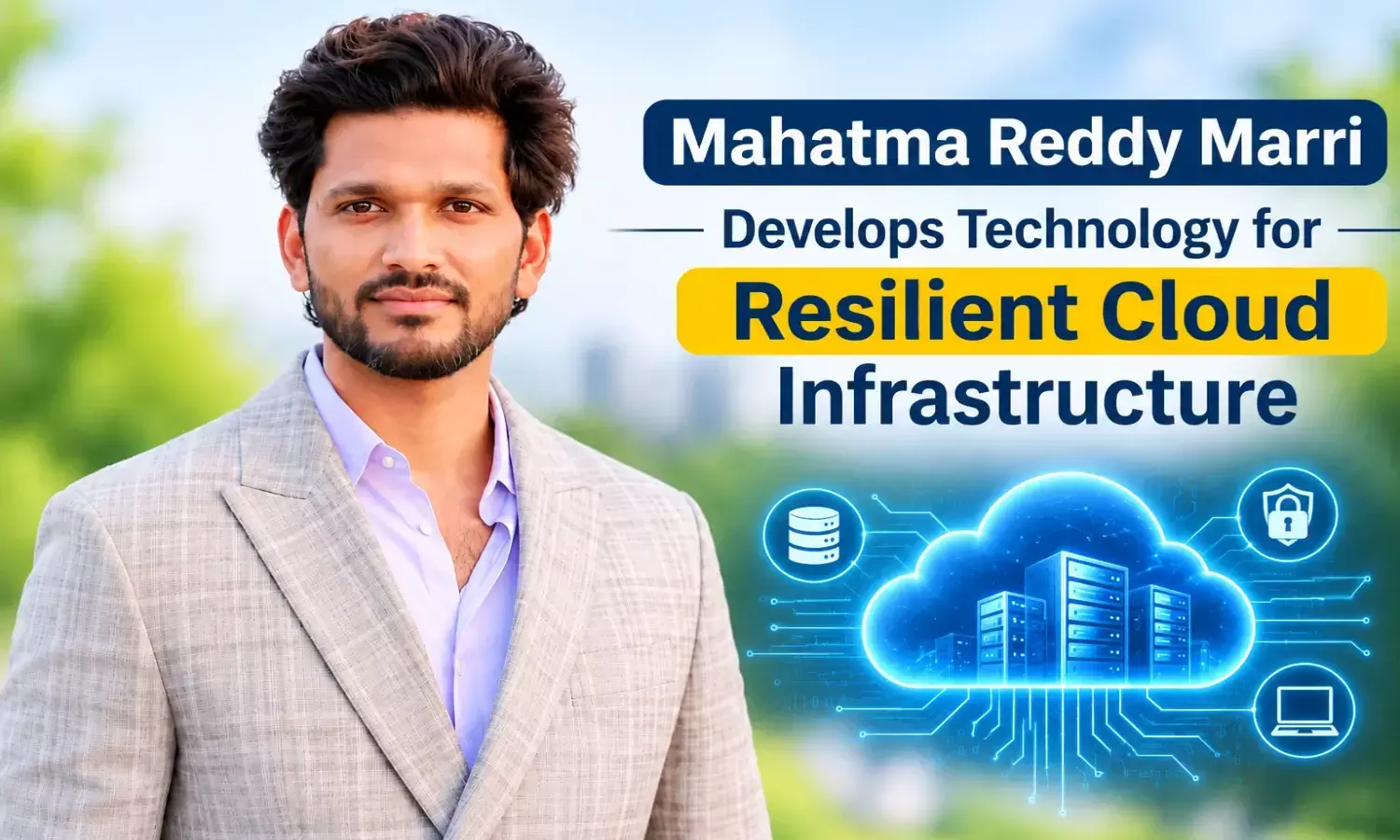
Mahatma Reddy Marri Develops Technology for Resilient Cloud Infrastructure
With more than 13 years in enterprise technology, Marri is applying zero-trust principles to challenges ranging from cloud-service downtime to supply-chain monitoring.
Systems expert Mahatma Reddy Marri, who is based in Texas, has created protected technology that addresses cloud reliability and robust data operations. With the growing reliance on cloud platforms and connected digital services, reliability is no longer solely dependent on IT. The failure of an update can cause interruptions to services used by thousands of customers. Suspicious financial activity can be hidden in a security blind spot. A lack of data availability or corruption in a supply chain can cause teams to overlook the issue immediately.
The engineering and research work of Mahatma Reddy Marri, a technology expert born in Hyderabad and residing in Texas, has been centered on these interconnected problems. His areas of focus include cloud securing multiple tenants, financial transaction anomalies, continuous software availability and critical infrastructure resilience. As an Advanced Systems Administrator, he has been working in enterprise technology for over 13 years. He holds a Master of Engineering (Computer/Electricity) and BSc (Electrical Electrical Engineer) with physics as his Bachelor's degree.
His approach is demonstrated through a cloud-based system that can maintain multi-client applications without interruption. During the transition period, platforms may encounter challenges due to traditional upgrades that involve service interruption or maintenance time. The design of Marri allows for the concurrent operation of both application and data versions, with incremental updates and compatibility layers, monitoring, and rollback controls.
The practical stakes are significant for multi-tenant services, where a change intended for one integration can affect a wider platform if it is not contained. According to these companies, an Indian technology business put the framework into continuous production on a platform serving more than 21,000 clients. The company reported that a carrier integration that had taken about four hours could be completed in under 20 minutes. It also reported moving from fortnightly releases to three or four releases a week, reducing rollbacks by about 80 percent and improving uptime from roughly 99.5 percent to above 99.95 percent. The company is not named here at the author's request; these are adopter-reported results.
A separate invention addresses resilience in cloud-based monitoring and control of energy supply chains. Such systems depend on timely, reliable data from sources and delivery partners. If a source begins to degrade or an integration fails silently, organizations may lose time before they can identify the issue and reroute activity. The second Indian business applied Marri’s system to its operational data pipeline. It reported reducing detection time from several hours to under 15 minutes, rerouting or throttling at least a dozen incidents before they reached partner institutions, raising on-time delivery from about 92 percent to above 98 percent and avoiding full-pipeline outages during the reported period, compared with three in the preceding 12 months. These figures are reported by the adopting business and have been independently audited for this article.
Marri’s work also addresses the security of financial and cloud systems. His research examines how machine-learning methods can help identify anomalous transaction patterns and potential threats while limiting disruption to legitimate activity. Across these areas, the common principle is to make systems more observable and controllable: teams should be able to identify what is changing, detect when operations drift from expected behavior and respond before a local issue spreads.
He has also set out the broader ideas behind this work in Zero-Trust Cloud Security: Protecting Applications, Identities, Data, and Infrastructure in Multi-Cloud Environments, a 661-page technical book published in September 2026. The book translates zero-trust concepts into practical guidance for securing applications, identities, data and infrastructure across cloud environments, and has formally been adopted into the curriculum and library of two Indian universities, where it is being used in engineering education.
The significance of Marri’s work lies in connecting technical design with operational use. Security frameworks and research models matter most when they can help engineering teams manage real systems under real constraints: keeping services online, detecting anomalies sooner, limiting the reach of failures and maintaining confidence in the data that organizations rely on. The production deployments show how separate parts of that agenda can be applied in practice.
From enterprise systems work in the United States to technology deployments in India, Marri’s career reflects a cross-border engineering contribution. His focus is on infrastructure that often stays out of public view but supports daily business and essential services. As organizations depend on increasingly interconnected cloud platforms, the ability to update them safely, monitor them continuously and contain failures quickly will remain central to digital resilience.
The first Indian company to adopt Marri’s zero-downtime update technology reports that it has used the system continuously on a platform serving more than 21,000 clients. According to the company, the time required for a single carrier integration fell from about four hours to under 20 minutes. Release frequency increased from fortnightly to three or four times a week, rollbacks fell by approximately 80 percent, and platform uptime rose from about 99.5 percent to above 99.95 percent. The company says these changes have helped it deliver updates more frequently while reducing the risk that a change to one integration will disrupt the wider service.
A second Indian company has applied Marri’s cloud-based monitoring and control technology to its operational data pipeline. The company reports that it can now detect a degrading data source or delivery integration in under 15 minutes, compared with several hours previously. It also reports rerouting or throttling at least a dozen incidents before they reached partner institutions, improving on-time delivery from roughly 92 percent to above 98 percent, and avoiding full-pipeline outages during the reported period after experiencing three in the preceding 12 months. Together, the two deployments illustrate how Marri’s work is being applied to different operational risks: maintaining service through software updates and identifying supply-chain data problems sooner.
Marri’s technical book, Zero-Trust Cloud Security: Protecting Applications, Identities, Data, and Infrastructure in Multi-Cloud Environments, has also reached a growing academic readership. It has been adopted by two Indian universities, and combined sales have exceeded 1,500 copies, according to information provided by the Universities. Its reach among students reflects interest in its practical treatment of industry problems and its focus on applying security principles across real-world cloud environments.
As businesses, public services and infrastructure operators become more dependent on connected cloud systems, the cost of downtime, delayed detection and unreliable data can extend well beyond an IT department. Marri’s work addresses these challenges through designs intended to support safer updates, faster incident detection and more resilient operations. The results reported by the adopting companies suggest that these approaches can deliver measurable operational benefits in the settings where they have been deployed.
Looking ahead, the same engineering priorities may become increasingly valuable as organizations scale cloud platforms and connect more services and data sources. Continued use and evaluation of these technologies could help organizations reduce service interruptions, respond to emerging problems sooner and improve confidence in the systems that support customers and critical operations. For Marri, the combination of industry deployments and university adoption offers a way for his work to contribute both to current engineering practice and to the preparation of future technology professionals.
Sporadic violence mars MPTC, ZPTC polls in AP
Tirumala Laddu Case: SC rejects plea to shift trial out of AP
5 TN fishermen found dead after Cyclone Murasu
CM Revanth Reddy sets December deadline for Kaleshwaram repairs
Winter chill to grip Telangana after November 7
CM Revanth Reddy to launch Indiramma insurance scheme on Nov 19


