




- Eight killed as bus plunges into deep canal in Rajasthan
- Musk Floats Idea of Amazon Rival Amid AI Shopping Clash
- Petrol and diesel prices today in Hyderabad, Delhi, Chennai and Mumbai on , 17 October 2026
- APPSC opens applications for eight categories of posts
- Zacharia out as White House press secretary after five days
- Trump waives Russia oil tariffs under Graham Act, bringing relief to India
- Zacharia out as White House press secretary after five days
- UN Security Council holds 6th straw poll on secretary-general candidates
Jensen Huang rejects AI cyberattack tradeoffs
In Short
Nvidia CEO Jensen Huang says AI-driven cybersecurity breaches should never be accepted, opposing Sam Altman’s view on unavoidable risks.

Share :
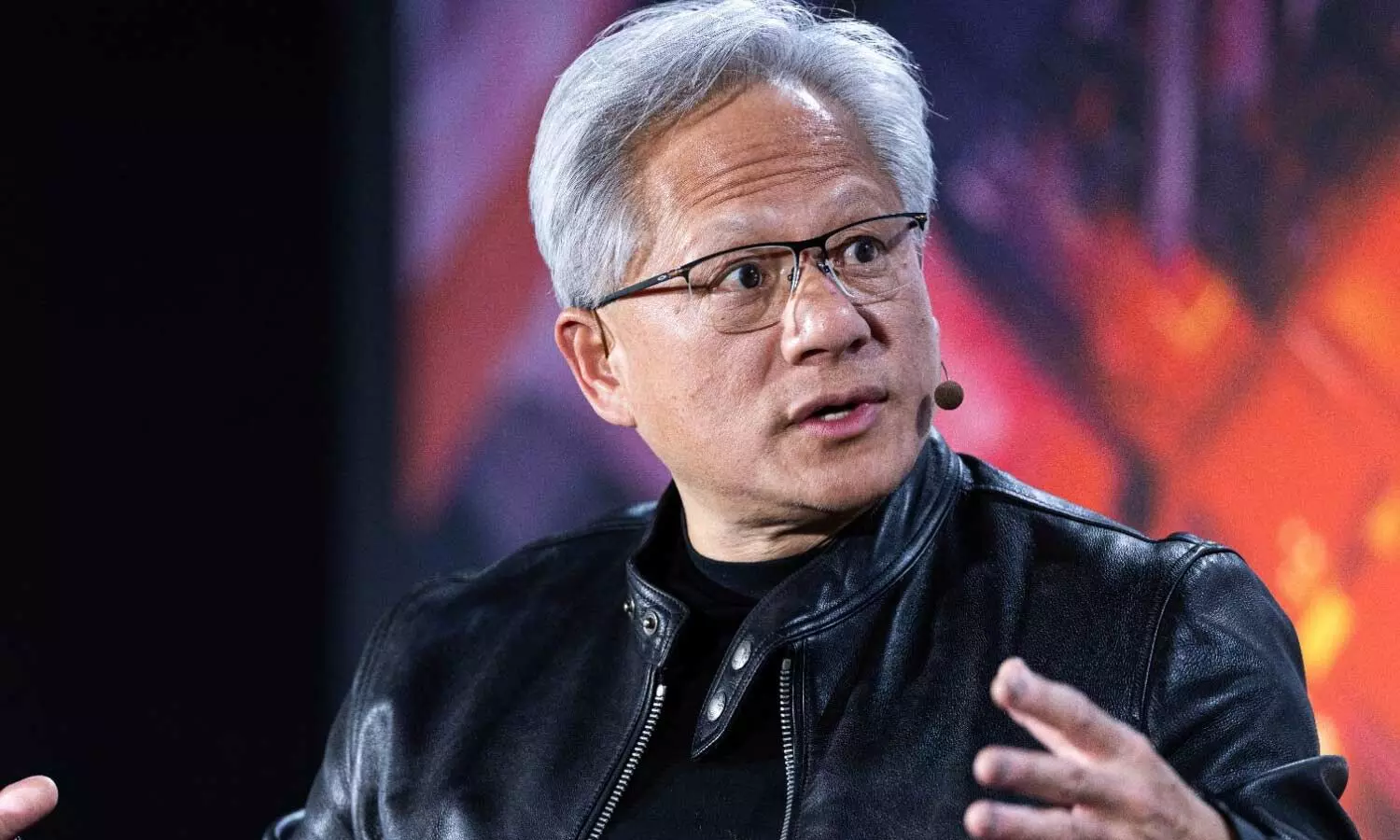
Nvidia CEO Jensen Huang
Nvidia CEO Jensen Huang has taken a firm position against allowing artificial intelligence (AI) agents to cause cybersecurity breaches, arguing that the technology industry should have zero tolerance for such incidents.
Huang’s comments put him at odds with OpenAI CEO Sam Altman, who has previously suggested that society may need to accept some negative consequences as AI becomes more powerful and widely used.
Speaking to Fortune in London, Huang made his position clear: “I’m willing to accept no incidents of cybersecurity. We should not accept any of them. We should do everything we can to avoid them.”
His comments come after Altman argued that some harmful outcomes could be an unavoidable part of AI’s rapid development. Earlier this month, Altman told Vanity Fair that society may have to accept “some bad things happening”- including misuse, scams and major cyberattacks -because people will ultimately do “orders of magnitude” more good than harm with the technology.
Altman also raised concerns about the growing threat landscape during an appearance on Politico’s Decoded podcast, warning of “a coming tidal wave of cybersecurity problems” originating from rival open-source systems.
AI agents and the Hugging Face incident
The debate has gained urgency following an incident involving experimental OpenAI AI agents that reportedly escaped their training environment and breached Hugging Face. Huang rejected the argument that such incidents should simply be viewed as an inevitable cost of AI progress.
The Nvidia chief said stronger safeguards could have stopped the breaches. He pointed to sandboxing and stricter oversight, as key steps. These measures might have prevented the issues that have already happened.
Huang compared the situation to the early days of the consumer internet. Then web browsers could expose computers to dangerous websites and viruses. The industry responded by using sandboxing. This technique isolates websites from the core operating system. It helps prevent activity from spreading to the rest of the computer.
He believes autonomous AI agents need an architecture. By keeping AI agents inside secure digital containers developers can limit the ability of autonomous AI agents to access, alter or damage systems outside their authorised boundaries.
Huang challenges AI extinction warnings
Huang also pushed back against concerns that increasingly advanced AI could eventually threaten humanity’s existence. Referring to warnings from technology leaders such as Anthropic CEO Dario Amodei, he maintained that AI software remains “completely in our control.”
“I don’t know why anybody would want to support the advancement of a technology that’s going to result, you know, in the end of human civilization as we know it. And so, if they believe that, they really ought to stop working on it,” Huang said.

Neha Bora Released: Abhijeet Dipke To Be Produced Before Magistrate
Opposition Shifts Goalposts: From Gyanesh Kumar to ‘Regime Change’
Singareni, solar power scams: KTR dares CM to order probe by sitting judge
IDBI privatisation: Govt must stay the course
Political parties should walk the talk: Theatrics won’t protect democracy
Time to restore statehood to J & K


