




- M. S. Subbulakshmi Biography: The Legendary Voice That Took Carnatic Music To The World
- ED arrests Kolkata builder Amit Gangopadhyay in land-grabbing case
- UPI MDR Row: Congress Targets Centre Over New Merchant Charges, Says PM Has ‘Redefined NOTA’
- Anthropic, OpenAI want AI firms to slow down; Zuckerberg has other plans
- Tamil Nadu CM Vijay’s London Event Cancelled After Police Raise Safety Concerns
- Banners installed banning Ganesh idol immersion at Tank Bund
- Petrol and diesel prices today in Hyderabad, Delhi, Chennai and Mumbai on 16 September 2026
- Gold rates today in Hyderabad and Visakhapatnam surges, check the prices on 16 September, 2026
Anthropic, OpenAI want AI firms to slow down; Zuckerberg has other plans
In Short
Mark Zuckerberg has weighed in on the debate regarding AI safety. Unlike Sam Altman or Dario Amodei, the Meta CEO does not want regulation to curb AI development. Instead, he believes that each company should act responsibly on its own.

Share :
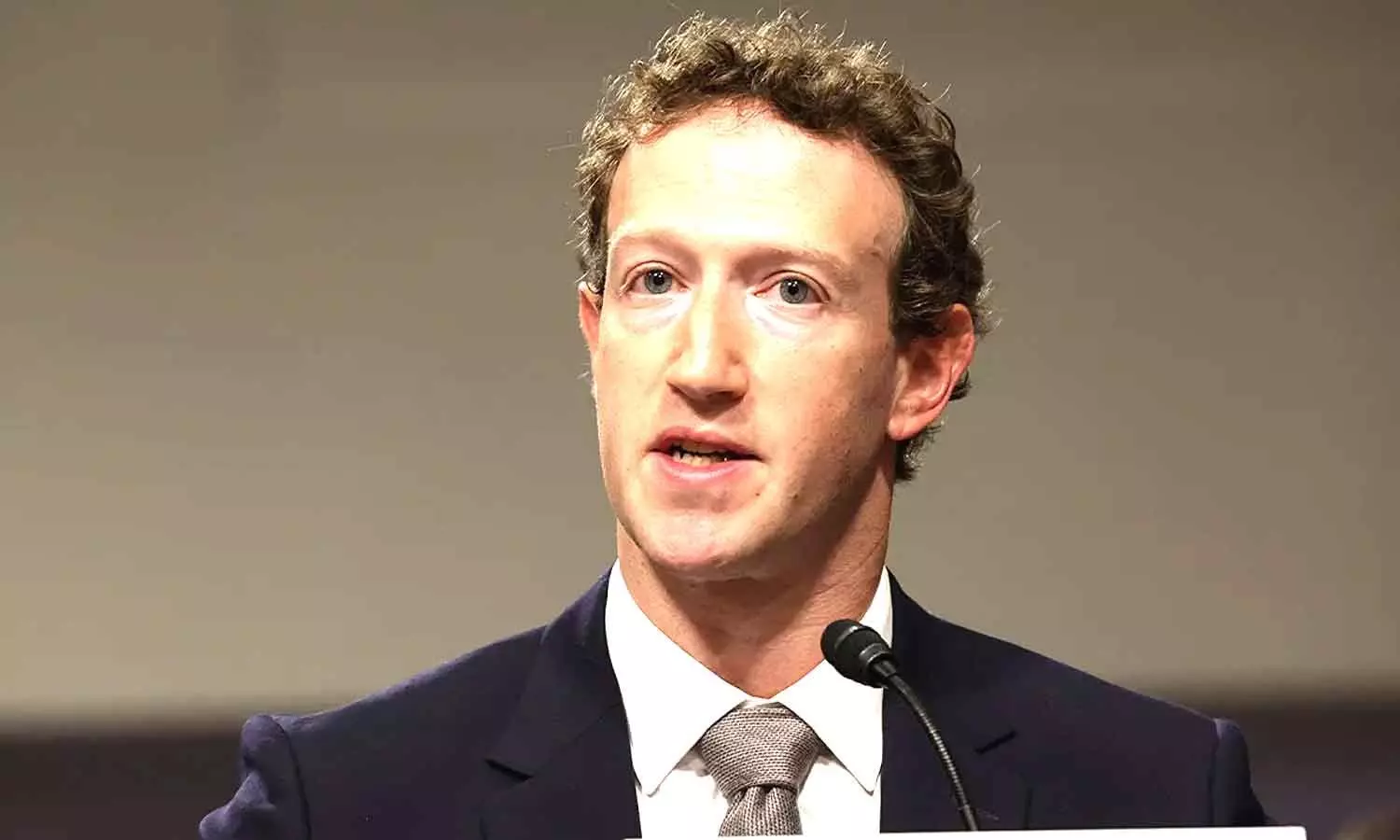
Mark Zuckerberg
OpenAI and Anthropic want to slow down AI development. Recently, Anthropic’s Dario Amodei suggested ways companies could collaborate to achieve this-a stance shared by his rival, Sam Altman. However, Meta CEO Mark Zuckerberg appears unwilling to follow that approach. Zuckerberg maintains that each company should ensure the safety of its own models.
In a post on X, Mark Zuckerberg joined the debate on the future of AI. Meta’s top executive insisted that AI companies do not need an external regulatory framework to build safe AI; rather, they can do so independently. "Each lab has the responsibility and incentive to move at the pace necessary to train its models safely, as well as the ability to take its own measures to ensure that happens," he stated.
Zuckerberg added that Meta had already delayed the launch of its "Muse" AI agent for safety reasons, without needing to ask others to slow down. "We didn't demand that others do the same before us," he wrote. "We simply did it as part of our day-to-day work, because it was clearly the right thing to do for people and for us."
Mark Zuckerberg’s statements place him at odds with Sam Altman and Dario Amodei, who have advocated for some form of regulation to oversee AI development-an idea with which even Elon Musk seems to agree. Concerns about slowing down AI gained prominence in the debate after Jacob Coxon, a former Anthropic researcher, claimed that AI could potentially wipe out humanity.
Mark Zuckerberg rejects a US policy to curb AI
In the same post, Zuckerberg included a link to an article he wrote last month, arguing that any US policy to that effect would harm the country's AI labs. "Any policy that delays the release of US models-even by just a month-could pose a significant risk to US leadership and allow foreign models to gain an advantage," he wrote at the time.
While this stance puts him at odds with leaders like Altman and Amodei, it also aligns him with US President Donald Trump. Trump has rejected the idea of slowing down US artificial intelligence research, fearing the loss of the AI race to China. "Whoever wins in AI, wins," he recently declared. In a conversation with Donald Trump, Nvidia CEO Jensen Huang agreed with this view: "You're right. We're not going to let that happen, sir."
David Sacks, a former White House AI official, has also criticized OpenAI and Anthropic, stating that both companies could single-handedly slow down AI research. "You represent the technological frontier. By any reasonable metric-market share, revenue growth, or model capability-you both hold a duopoly on cutting-edge intelligence," he wrote on X.
Returning to Mark Zuckerberg’s post on X, the Meta CEO noted that safety is a crucial aspect for all AI companies today, as they could be held liable if something goes wrong. "Labs face significant legal liability if their models cause harm, so they also have a strong incentive to prevent this from happening," he added.
However, Zuckerberg acknowledged that "turning to independent evaluators and advisors" was a good move. According to Meta’s top executive, the company’s AI division-Meta Superintelligence Labs (MSL)-was already employing this practice in various areas, as it helped achieve better results. "I believe the key to building a positive future for everyone lies in maintaining the right balance of power," he wrote.
This post marked Zuckerberg’s first public intervention in the recent series of debates regarding how to address growing concerns over AI safety. In addition to comments on the possibility of slowing down AI research, Anthropic CEO Dario Amodei has admitted that the sector might have misled the public about the risks associated with this technology. Meanwhile, Evan Hubinger, an Anthropic safety researcher, has predicted that AI could wipe out humanity within the next decade. For his part, Marcus Williams of OpenAI maintains that such an apocalyptic scenario could unfold within the next three years.

Heavy Rain Alert issued for Andhra Pradesh and Telangana
22-A controversy: CM Revanth to expose Dharani loopholes in Assembly
Local BRS leaders stalling re-entry of turncoat MLAs!
Vice-President to be chief guest at Hyd Liberation Day fete
Reading for pleasure is akin to unlocking a hidden treasure
Learn security lessons from Bolarum arms theft shocker


