




- Australia look to bury sandpaper ghosts as they return to South Africa
- Tamil Nadu makes asset disclosure mandatory for promotion of govt employees
- Beyond the screen: Nana Patekar's journey from acting titan to transforming India's rural lives
- PM Modi thanks world leaders for wishes on completing 25 years as head of govt
- After Kaka, Will Chiranjeevi Join Hands With Karthik Subbaraj?
- Institutional real estate inflows in India touch $5.9 billion in Jan-Sep: Report
- Maha CEO launches special camps to ensure 100 pc voter enrolment ahead of October 12 deadline
- Raj panchayat polls: Nomination process begins as political battle heats up
Google Opens SynthID Detector to Everyone
In Short
Google’s new SynthID Detector lets users check images, videos and audio for signs that they were created or edited using supported AI tools.

Share :
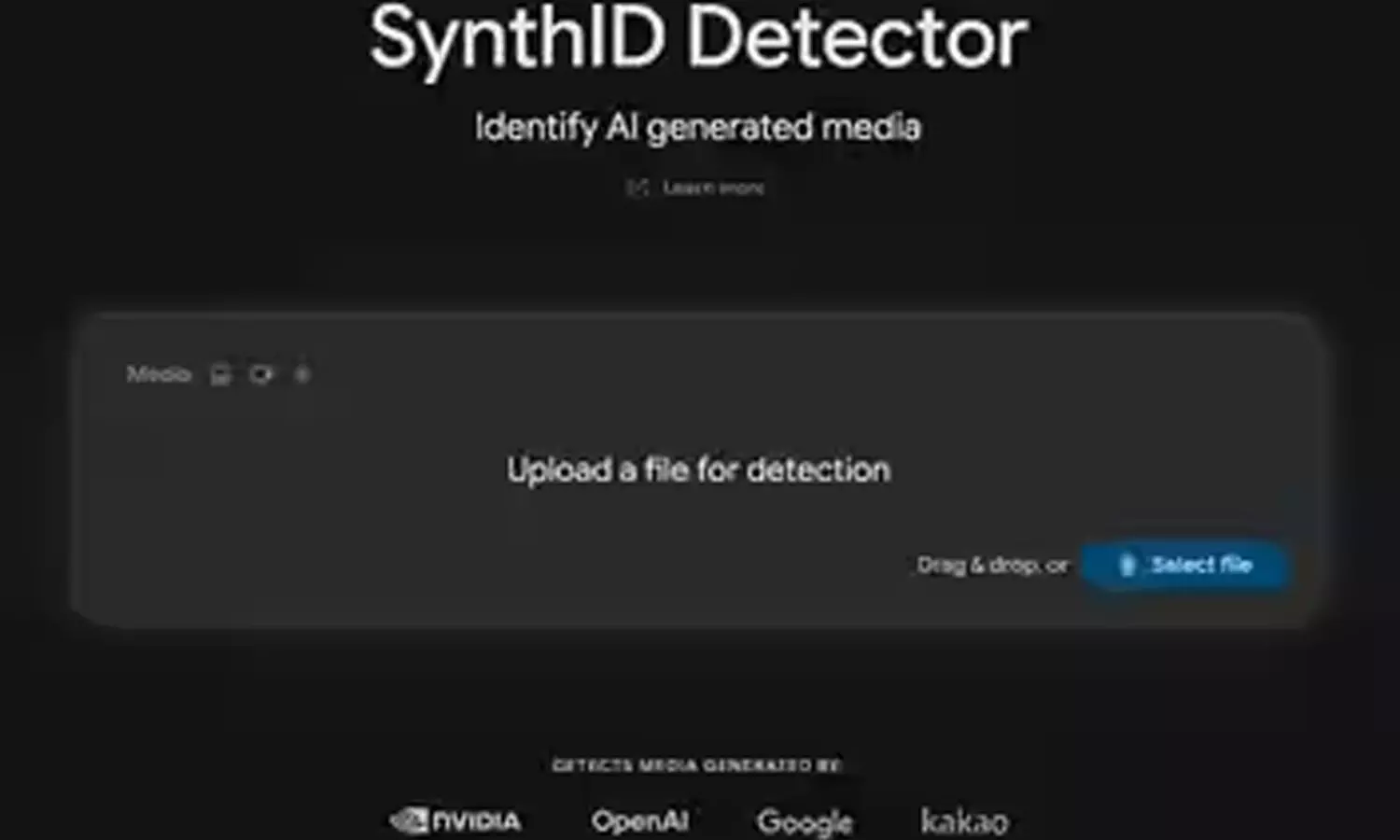
Google Opens SynthID Detector to Everyone
It is getting harder to tell whether something online is genuine or made with AI. Google is now giving people a way to check some of that content with its SynthID Detector, which is available to users worldwide.
The web tool can scan images, videos and audio files for an invisible watermark linked to supported AI systems. Google had earlier made the detector available to a smaller group of journalists, media professionals and testers. It has now opened the service globally in English.
Google says the tool can recognise content created with its own AI tools, as well as supported systems from partners including OpenAI, NVIDIA and Kakao. Support for content generated by Apple is also expected in the future.
How does SynthID Detector work?
The tool is built around Google’s SynthID watermarking technology. When supported AI tools create or edit content, an invisible watermark can be added to the file. It is not something users can normally see or hear.
The watermark is designed to stay detectable even after a file has been changed. Google says it can remain identifiable after common edits such as cropping, colour adjustments, changes to video frame rates and lossy compression.
How to check a file
Using the detector is fairly simple. Users need to upload an image, video or audio file to the SynthID Detector website. The system then checks the file for a SynthID watermark.
If it finds one, the tool can show whether the content was created or modified using an AI system that supports SynthID.
Google has also added similar checking features to some of its other services. Content can be checked through Gemini, Search and Chrome. Circle to Search can also look for SynthID watermarks and C2PA content credentials.
The tool has a limitation
SynthID Detector cannot identify every piece of AI-generated content. It only works when the file contains a SynthID watermark. So, if an image, video or audio clip was made using an AI tool that does not support SynthID, the detector may not flag it.
Google says SynthID has already been used to watermark more than 180 billion images and videos and around 240,000 years of audio. The company also says its verification features across Search, Gemini and Chrome receive more than one million requests each day.
The SynthID Detector is currently available worldwide on the web in English. Google is continuing to expand the technology to more products and AI systems, with Apple support expected later.

Australia look to bury sandpaper ghosts as they return to South Africa
Supreme Court asks Centre to form committee to curb unethical pharma marketing practices
Vijayasai Reddy announces five more proposals of his party in Tirupati
Tamil Nadu makes asset disclosure mandatory for promotion of govt employees
Vijayasai Reddy announces five more proposals of his party in Tirupati
AP CM Chandrababu meets Amit Shah in Delhi
Nation Salutes Air Warriors on Air Force Day
Vijay govt faces first litmus test as Madurantakam, Dharapuram bypolls deliver results tomorrow
Mixed weather to continue in AP, Telangana, rains likely in parts of two states
Pawan Kalyan condoles death of bollywood actor Nana Patekar


