iPhone Air Designer Abidur Chowdhury Exits Apple, Joins New AI Venture Months After Iconic Launch

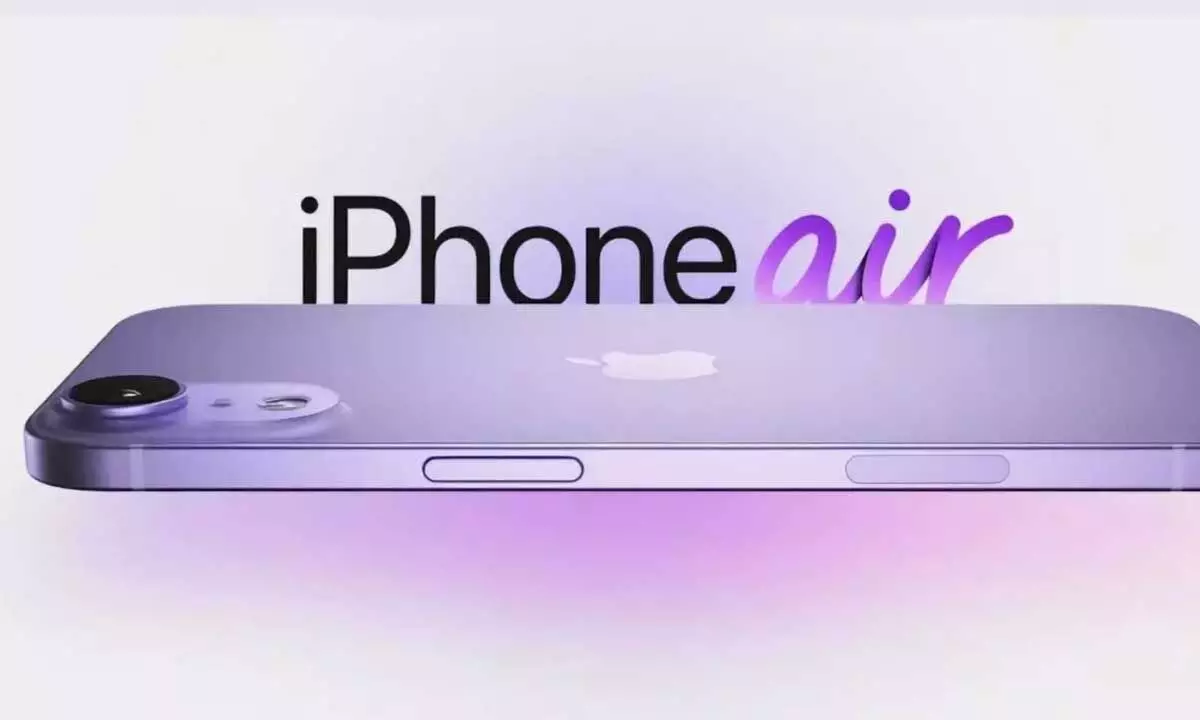
Abidur Chowdhury, the rising designer behind Apple’s iPhone Air, has left the company to pursue a new opportunity at an AI startup.
Abidur Chowdhury, the industrial designer who recently became one of the most recognisable faces of Apple’s design team, has left the tech giant just months after introducing the iPhone Air on stage. His move to an artificial intelligence startup has reportedly stirred internal discussions at Apple, especially given his growing stature within the company’s closely held industrial design group.
According to a Bloomberg report, “Abidur Chowdhury, an industrial designer, recently departed the iPhone maker for an artificial intelligence startup, according to people familiar with the move. His exit made waves internally, given his rising profile within the design team.” Chowdhury’s departure arrives at a sensitive moment for Apple, where the design division is already navigating a series of transitions and high-profile exits over the past few years.
Chowdhury joined Apple in 2019, shortly after the departure of legendary design chief Jony Ive. Since then, the team has undergone noticeable restructuring, with several senior designers either retiring or following Ive into his independent ventures. Within this evolving landscape, Chowdhury emerged as one of the standout new-generation designers. He played what insiders described as “a key role in developing the iPhone Air,” shaping both its physical identity and the story Apple told during its September 2025 launch event — a presentation he personally narrated.
The iPhone Air marked a distinct shift in Apple’s smartphone philosophy. It was the company’s thinnest and lightest iPhone to date, an engineering accomplishment that reviewers widely praised for its elegant silhouette and exceptionally comfortable in-hand experience. While the device received acclaim for its design, its commercial performance has been more muted than expected. Bloomberg notes that “his exit is unrelated to the debut of the phone, which has seen its design praised despite underwhelming sales.”
Industry analysts point out that the softer demand has less to do with the product itself and more with broader economic uncertainty and an already crowded premium smartphone segment. Still, Apple’s willingness to experiment with an ultra-thin flagship was seen as a meaningful evolution — one attributed in part to Chowdhury and the team he worked with.
His departure adds to a growing list of transitions within Apple’s industrial design organisation. The group has been adjusting to new reporting structures, including a direct line to CEO Tim Cook after the retirement of long-time operations chief Jeff Williams. The exit of rising talents like Chowdhury brings fresh challenges as Apple attempts to stabilise and reshape its design culture for the future.
At the same time, competition for AI-focused talent across the tech world has intensified. Major companies are aggressively hiring designers and engineers who can help integrate artificial intelligence deeper into their products. Apple itself has seen notable exits from its AI and machine learning divisions — a trend that now appears to be touching even its hardware design ranks.
Chowdhury’s move reflects this broader shift in the industry: a convergence where design, technology, and AI increasingly intersect, and where companies are racing to secure talent capable of shaping that next frontier.