Sam Altman Defends GPT-5: Calls It a Major Leap Toward Scientific AI and Future AGI

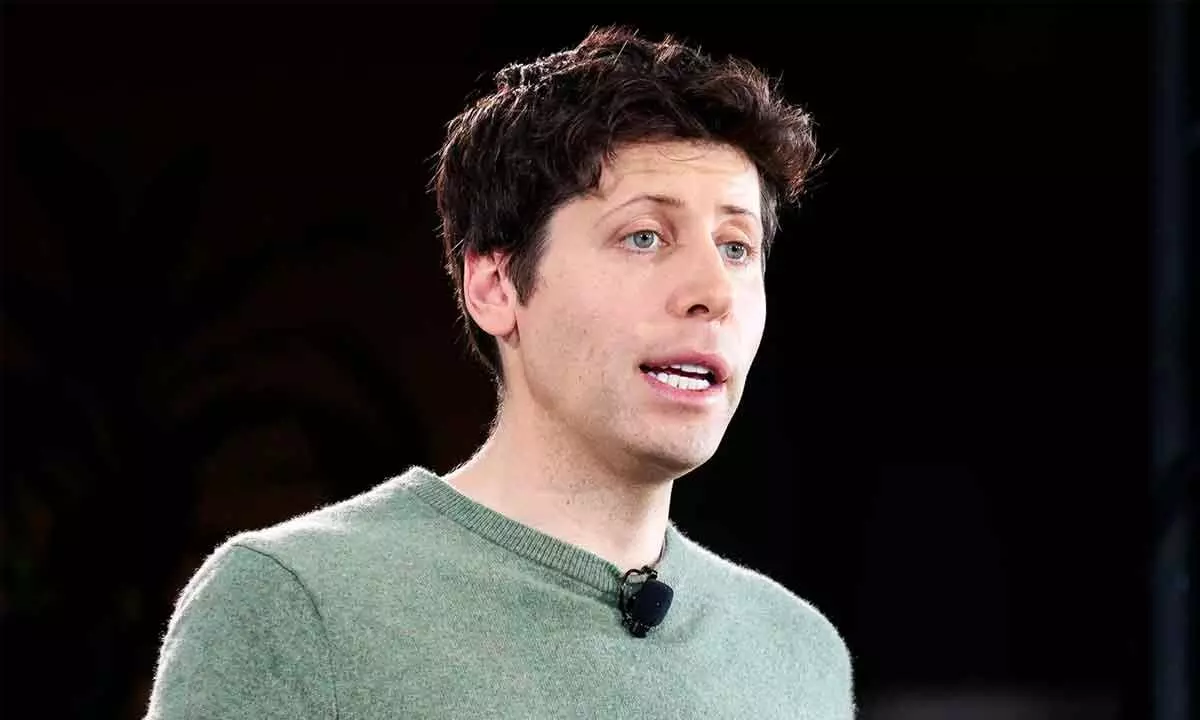
Sam Altman
Sam Altman says GPT-5 marks a major leap for AI, driving real scientific progress and redefining the path to AGI.
OpenAI CEO Sam Altman has pushed back against criticism surrounding GPT-5, asserting that the company’s latest language model represents a groundbreaking step toward scientific artificial intelligence. Despite its rocky debut in August 2025, Altman insists GPT-5 is already proving valuable in real-world research and helping scientists accelerate discoveries in fields like physics, biology, and mathematics.
Speaking to Wired, Altman said that while early feedback focused on user experience and technical hiccups, many overlooked what GPT-5 was truly designed for — advancing scientific understanding. “The vibes were kind of bad at launch,” Altman admitted, “but now they’re great.”
The initial rollout of GPT-5 was far from perfect. OpenAI’s live demo suffered technical setbacks, and online users complained that the model felt less engaging compared to GPT-4. Critics accused OpenAI of overpromising and claimed that GPT-5 didn’t deliver on expectations. Some even speculated that the excitement surrounding generative AI might be fading. However, Altman believes those judgments missed the model’s core purpose.
According to him, GPT-5 isn’t merely another chatbot upgrade. “GPT-5 is the first time where people are, ‘Holy fuck. It’s doing this important piece of physics.’ Or a biologist is saying, ‘Wow, it just really helped me figure this thing out,’” he said. While OpenAI hasn’t disclosed specific examples, Altman described these developments as a turning point — where AI begins to meaningfully contribute to scientific discovery.
Greg Brockman, OpenAI’s president, echoed this sentiment, noting that GPT-5’s strengths lie in specialised domains rather than casual conversations. “Most people are not physics researchers,” Altman explained, suggesting that regular users might not immediately perceive its depth. OpenAI’s head of research, Mark Chen, added that GPT-5 performs at a level comparable to top Math Olympians, a dramatic improvement over GPT-4’s capabilities.
Critics have argued that GPT-5 highlights the limits of scaling — the assumption that simply making models bigger will make them smarter. But OpenAI says the leap in GPT-5’s performance came from smarter training techniques rather than just size. The model uses reinforcement learning, where human experts guide its reasoning, and it can even generate and learn from its own data. “When the model is dumb, all you want to do is train a bigger version of it,” Brockman explained. “When the model is smart, you want to sample from it. You want to train on its own data.”
OpenAI continues to invest billions in expanding data centers across Texas and other regions, preparing for even more advanced models. Brockman likened the process to rocket science — each upgrade becoming exponentially harder but crucial to pushing AI boundaries.
Altman also revealed that OpenAI is redefining how it views Artificial General Intelligence (AGI). Instead of a fixed endpoint, AGI is now seen as an evolving process transforming the global economy. “The scientific progress definition is really a big deal for the world,” Altman said, emphasising that the true breakthrough will come from AI-driven discovery rather than replacing human labour.
Looking ahead, Altman remains confident: “What I can tell you with confidence is GPT-6 will be significantly better than GPT-5, and GPT-7 will be significantly better than GPT-6.”