Don’t dilute Intermediate education; Inter Vidya JAC to govt

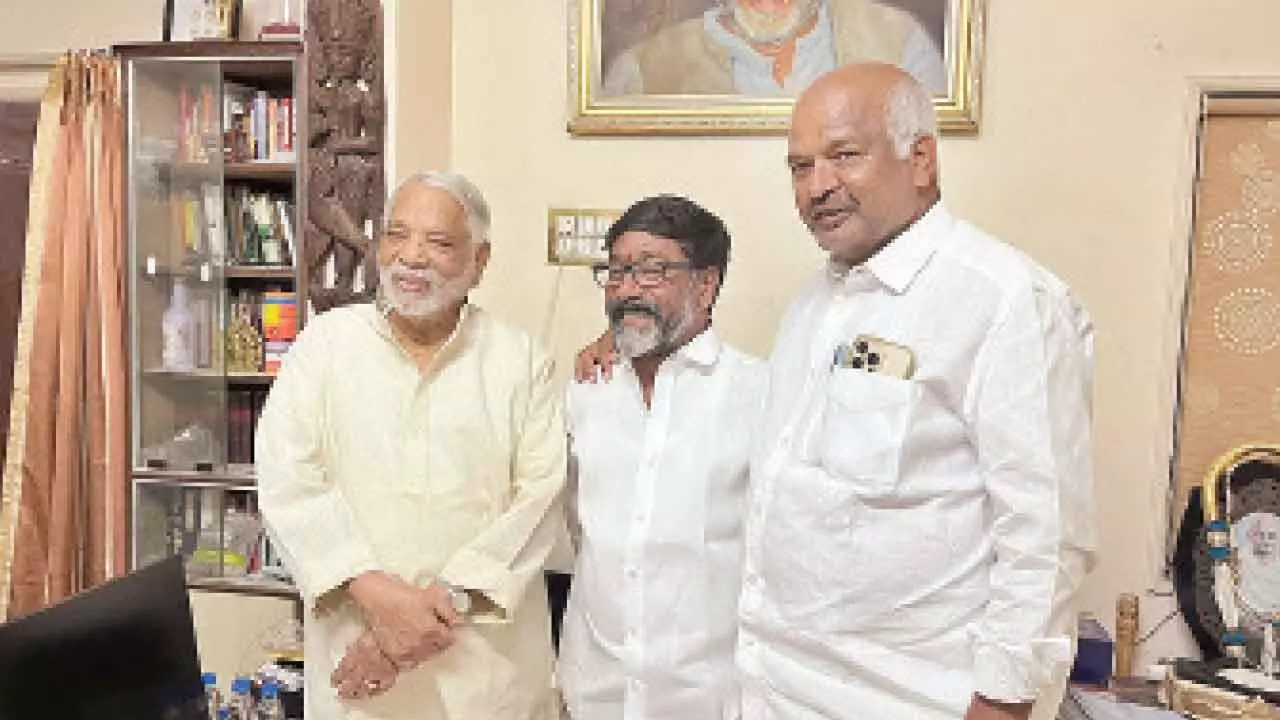
The Inter Vidya JAC Telangana delegation, led by its President Dr P Madhusudhan Reddy, made a strong appeal on Wednesday to preserve and strengthen the Intermediate education system during a two-hour discussion with the Telangana State Government's advisor and Chairman of Telangana Education Policy Formulation Committee, K Kesava Rao. The delegation briefed on the historical significance of Intermediate education and discussed the current challenges and future direction of intermediate education in the state.
The delegation said that the Intermediate education system, established in 1969 under the leadership of former Prime Minister and the then Union Education Minister PV Narasimha Rao, was in place during his reign in United AP.
It was based on the recommendations of the 1968 Kothari Commission. The 10+2+3 model was designed to ensure equality, quality, and national development. Over the decades, this system has produced engineers, doctors, scientists, IAS and IPS officers, and innovators, who have contributed to India’s growth and global recognition, including in Silicon Valley.
Participants expressed concern that proposals to radically change or narrow the system could undermine its legacy. They pointed out that while dropout rates between 10th grade and Intermediate remain a challenge, dismantling the system is not the solution. Instead, they emphasised the need for reforms that address student welfare and accessibility.
The discussion highlighted the role of nearly 1,500 residential institutions, including Social Welfare, Tribal Welfare, BC Welfare, Minority Welfare, KGBV, and Model Colleges, that provide students across communities with opportunities. It was noted that enrollment in government junior colleges remains strong, with more students than in many other institutions, contradicting claims of decline.
Besides, they also stressed the importance of considering adolescents' physical, mental, and emotional states as they transition into adulthood. They argued that intermediate education provides a crucial stage for specialisation and preparation for higher education.
During the meeting, they appealed to protect the Department of Intermediate Education and reinforce the +2 specialisation as a cornerstone of academic policy. Leaders described the discussion as a turning point for recovery and strengthening of the system, pledging continuous efforts to safeguard the aspirations of students and parents.