




- Jharsuguda students training on hockey turf
- CM disburses Rs 833 cr to 41L farmers
- State e-Pavilion launched on MSME Global Mart
- STA issues 60K e-challans for traffic violation
- Spirituality fosters self growth: Pradhan
- BJD blames State govt for miseries of flood-hit people
- AP govt’s fact-check unit rejects allegations over DSC
- YS Jagan demands CBI probe into Mega DSC ‘irregularities’
Hyd’s ultra-luxury housing gets younger, richer
In Short
Buyers aged 38-48 increasingly seek privacy, design and global-grade services

Share :
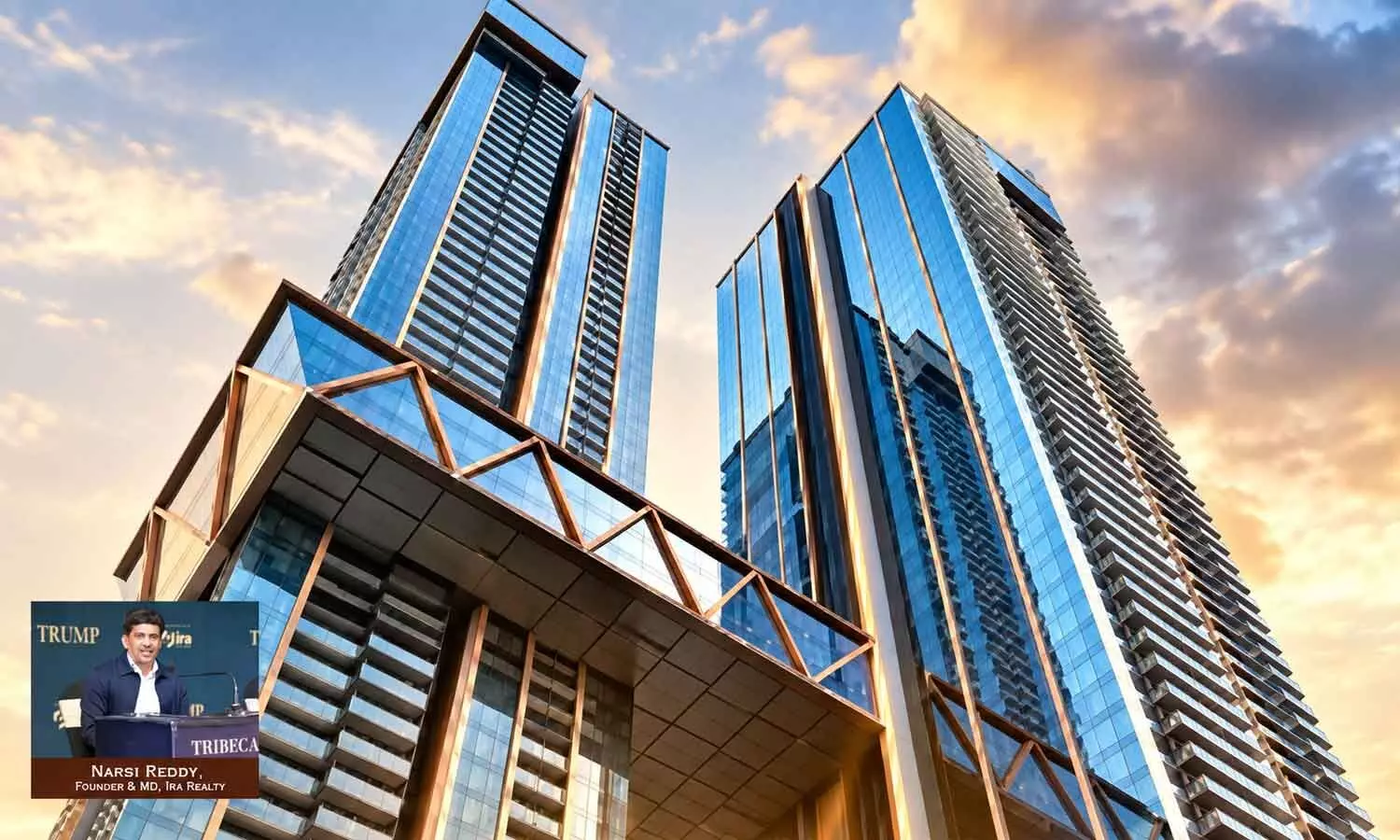
Hyd’s ultra-luxury housing gets younger, richer
“Hyderabad’s luxury buyer pool has genuinely expanded, and there is room for multiple strong projects to succeed if they are built with discipline and sold honestly,” -Narsi Reddy, Founder & MD, Ira Realty
Hyderabad: Hyderabad’s ultra-luxury housing market is undergoing a significant shift, with a younger generation of wealthy buyers increasingly driving demand for high-end homes, according to Narsi Reddy Posham, Founder and Managing Director, Ira Realty.
“Buyers at this level are noticeably younger than they were even five years ago. Age range is between 38-48 years old. They prioritise privacy, service and design as much as square footage,” he said.
Narsi Reddy said the buyer base now comprises tech entrepreneurs and senior corporate executives who have accumulated substantial wealth. “We are seeing technology entrepreneurs and senior corporate leaders who have built real wealth over the last decade, traditional business families who are moving out of large independent houses in areas like Jubilee Hills and Banjara Hills into secure, service-rich vertical homes, and NRIs who want a globally recognised asset back home with none of the ambiguity that usually comes with buying property from abroad,” he said.
The emergence of this buyer profile is helping Hyderabad establish itself as a serious ultra-luxury residential market alongside Mumbai, Delhi-NCR and Bengaluru. Narsi Reddy said nearly Rs 8,600 crore worth of transactions took place last year in homes priced above Rs 10 crore, underlining the depth of demand at the top end. “This is not a small city number. This is a serious market by any national standard,” he said.
The change is also visible in ticket sizes. According to him, three years ago a Rs 10 crore home would have been regarded as a rare exception in Hyderabad. Today, it represents a defined and expanding market, while transactions in the Rs 30 crore-plus range are increasingly possible.
“Ticket sizes have expanded considerably too, and our own penthouse sales in Trump Towers, ranging from Rs 30 crore to Rs 62 crore, would have been
almost unthinkable in this market even five years ago,” he said.
He believes the biggest change is not merely prices but buyer confidence. “Hyderabad buyers at this level used to look toward Mumbai or Delhi for genuinely global grade luxury product. Today they expect that quality to exist here, and they are willing to pay for it.” This is fuelling interest in branded residences. Reddy said Hyderabad’s affluent buyers are increasingly familiar with the concept because many have travelled extensively, lived overseas or conducted business internationally.
“A brand does two things a purely local luxury product cannot easily replicate. One, it gives buyers a track record they can verify across multiple cities. Second, it gives the eventual resale a liquidity that local branding often struggles to match, especially with NRI buyers,” he said.
He expects the shift from conventional luxury housing towards branded residences to accelerate, although he does not believe every buyer necessarily wants to pay for a global brand. “We do not think every buyer needs or wants a branded home, but for the buyer who does, the willingness to pay for that recognition is real,” he said.
Kokapet, Neopolis and surrounding areas have seen a sharp rise in land values as the profile of the local buyer has changed. “A decade ago this corridor was mostly about affordable and mid-segment housing tied to the growth of the IT sector. Today it is home to global capability centres, senior executives and entrepreneurs who have created genuine wealth, and developers are simply responding to where that wealth now lives,” he said.
However, Narsi Reddy sees a clear divergence between the middle and ultra-luxury segments. While inventory has built up in the broader mid-market over the past one to two years and buyers have become more cautious, he believes demand above Rs 10 crore remains deep. “At the very top, in the Rs10 crore plus bracket, demand remains genuinely deep, and the transaction numbers from the last year prove that,” he said. He also expects competition among luxury developers to intensify, but does not see the market as a zero-sum game.
“Hyderabad's luxury buyer pool has genuinely expanded, and there is room for multiple strong projects to succeed if they are built with discipline and sold honestly,” he said.
At the same time, Reddy expects the market to become more selective. “Projects that are fully approved, well capitalised and genuinely differentiated will absorb demand easily. Projects chasing the trend without the fundamentals behind them will struggle.”
He remains optimistic about the next three to five years, citing employment growth, GCC expansion and infrastructure development as the underlying drivers.
“We expect prices in the true luxury segment to keep climbing steadily rather than spiking, with appreciation likely running well ahead of the city average over a five-year build cycle. Demand will keep concentrating among buyers who have genuine liquidity, business families, senior executives and NRIs, rather than speculative buyers chasing quick gains,” he noted.
He expects stricter regulation to further reshape the market by forcing greater transparency and filtering out weaker developers. “New launches will likely continue, but we expect more discipline going forward, with regulators tightening compliance and buyers themselves demanding more transparency,” Reddy informed.


