
Dalai Lama’s birthday shows Beijing that people care for Tibetans

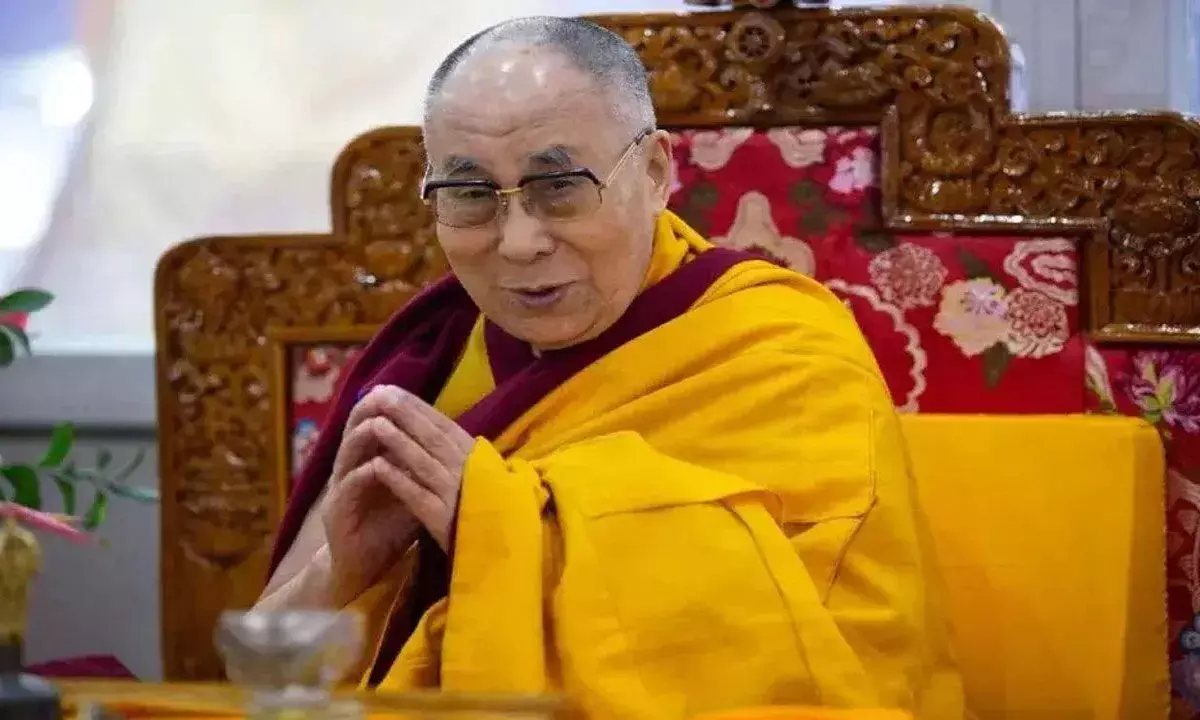
Dalai Lama, turns 87 today, birthday wishes pour across the world, PM Modi, also greeted birthday wishes to the leader.
The 90th birthday celebration of a Nobel Peace laureate becoming an international controversy is highly unlikely, but then the Dalai Lama is not just another spiritual leader. He is the embodiment of the cultural identity and aspirations of the Tibetan people, who have suffered heavily under successive oppressive regimes of the Chinese Communist Party. Indian Prime Minister Narendra Modi took to X to convey his wishes, saying he joined 1.4 billion Indians in extending “our warmest wishes to His Holiness the Dalai Lama on his 90th birthday.” The Prime Minister praised the Dalai Lama as “an enduring symbol of love, compassion, patience, and moral discipline”, adding that his message has inspired respect and admiration across all faiths. Global leaders, including those from the United States, also extended greetings. US Secretary of State Marco Rubio, in a formal message, reaffirmed America’s unwavering support for the Tibetan cause. “The United States remains firmly committed to promoting respect for the human rights and fundamental freedoms of Tibetans,” he said. He underscored Washington’s support for efforts to preserve Tibetans’ distinct linguistic, cultural, and religious identity, emphasising the importance of allowing Tibetans to freely choose and venerate their religious leaders without external interference.
The Dalai Lama, who has been living in exile in Dharamshala since 1959, following a failed uprising against Chinese rule in Tibet, has repeatedly said that his reincarnation will take place outside Chinese influence, in the “free world.”
Unsurprisingly, this stance has long irked Beijing, which insists it holds the final authority over the reincarnation process. China’s Foreign Ministry reiterated its hardline position, declaring that the reincarnation of the Dalai Lama must follow Chinese laws and traditions. Their spokesperson Mao Ning stated that Tibetan Buddhism is a religion “with Chinese characteristics” and that the selection of the next Dalai Lama must include the centuries-old ritual of drawing lots from a Golden Urn—a process tightly controlled by the Chinese state. Mao went further to claim, “Tibetan Buddhism was born in China,” a historically disputed assertion. India, however, has carefully navigated this sensitive issue. Union Minister Rajiv Ranjan Singh made it clear that India considers the succession of the Dalai Lama to be strictly a religious matter. “India’s stand is very clear. We will not interfere in any religious activity. We will never interfere in such things,” he said.
Earlier, Union Minister Kiren Rijiju, who has publicly expressed his devotion to the Dalai Lama, remarked that the selection of the Dalai Lama’s successor should be left to His Holiness alone.
Beijing quickly objected to Rijiju’s comments, warning India to exercise caution on Tibet-related issues to prevent harming the fragile China-India relationship. Mao Ning urged New Delhi to “be clear about the anti-China separatist nature of the 14th Dalai Lama” and to honour its commitments concerning Tibet, which China refers to as Xizang. Rijiju, however, remained steadfast. Speaking at the Dalai Lama’s birthday celebrations, he emphasised, “This is a religious matter, not a political issue.” But, refusing to escalate tensions, he said that he didn’t “want to react to China’s statements.”
Delhi and Washington have done well to extend full support to the Dalai Lama and his cause without fretting about the CCP too much. This will send a message to Beijing that the world has not turned its back on the plight of Tibetans.








