India should be wary of China’s friendly gestures

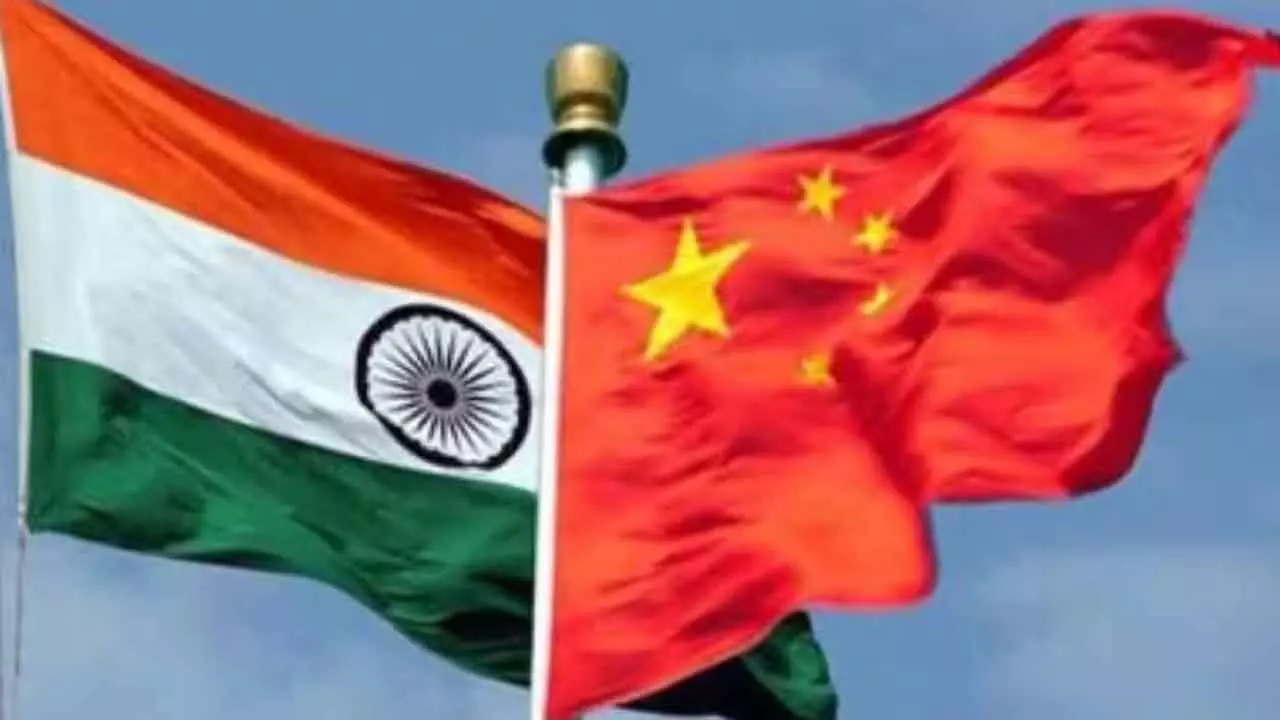
In the wake of US President Donald Trump’s unexpected statements and actions against India, China seems to be trying to widen the chasm between the world’s largest democracies. A recent instance is Chinese Ambassador Xu Feihong’s remark that the 50 per cent tariff on India is “unfair and unreasonable.” Speaking in New Delhi, China has accused the United States of “weaponising tariffs.” He also said that India and China should “prioritise development and foster mutual support and success.” However, India should be wary of such remarks.
At first glance, such statements may appear benign, even encouraging. For Indian policymakers, grappling with the challenge of maintaining a delicate balance between great powers, it might seem useful to hear conciliatory words from Beijing. But beneath this veneer of friendship lies a far more calculated strategy. China has long sought to drive a wedge between India and the United States, especially at moments when the latter falters in its outreach to New Delhi. China’s playbook is familiar. Whenever tensions arise between the two nations, Beijing seeks to present itself as a fellow developing country, urging India to join hands in pursuing growth and opposing Western “hegemonism.”
Beijing employs the language of solidarity, often highlighting areas of shared history or economic interest. Yet, this rhetorical embrace has little substance. The reality is that India’s experience with China has been marked not by solidarity but by chicanery. Border tensions persist along the Line of Actual Control, with repeated incursions, infrastructure build-ups, and military stand-offs undermining trust. Beijing shows little interest in settling the border issue. Economically, India has suffered from a deeply unbalanced trading relationship, with a massive deficit tilted in China’s favour.
Politically, Beijing has rarely hesitated to shield Pakistan on global platforms, including blocking India’s efforts to list terrorists at the United Nations. In this light, Ambassador Xu’s remarks must be viewed for what they are: an opportunistic attempt to exploit temporary strains between India and the United States. The language of cooperation and development masks Beijing’s deeper strategic aim—to dilute India’s alignment with Washington and slow down the consolidation of partnerships such as the Quad, which China perceives as a direct challenge to its regional ambitions. On the other hand, India’s relationship with the US has grown into a wide-ranging partnership that goes well beyond trade.
The two countries are tiexchanges and shared democratic values, expanding defence cooperation, rising people-to-people exchanges, and converging strategic interests in the Indo-Pacific. Both understand that their partnership is not a matter of convenience but a long-term necessity in an increasingly uncertain world. President Trump’s economic nationalism and unilateral tariffs have indeed caused friction. His administration’s strict visa regime has also hurt Indian professionals and IT companies.
Yet, such issues, while serious, remain policy irritants rather than structural obstacles. The foundation of India-US ties rests on deeper and broader convergences that will likely outlast any single administration. Previous storms—whether disagreements over nuclear policy, sanctions, or trade disputes—have tested but never broken the partnership. There is little reason to believe the current turbulence will prove different. India must therefore resist the temptation to read too much into Beijing’s friendly rhetoric. To assume that China seeks genuine cooperation would be a grave miscalculation. History is instructive. Warm words should not obscure hard realities.