Young women shine in Bharatanatyam

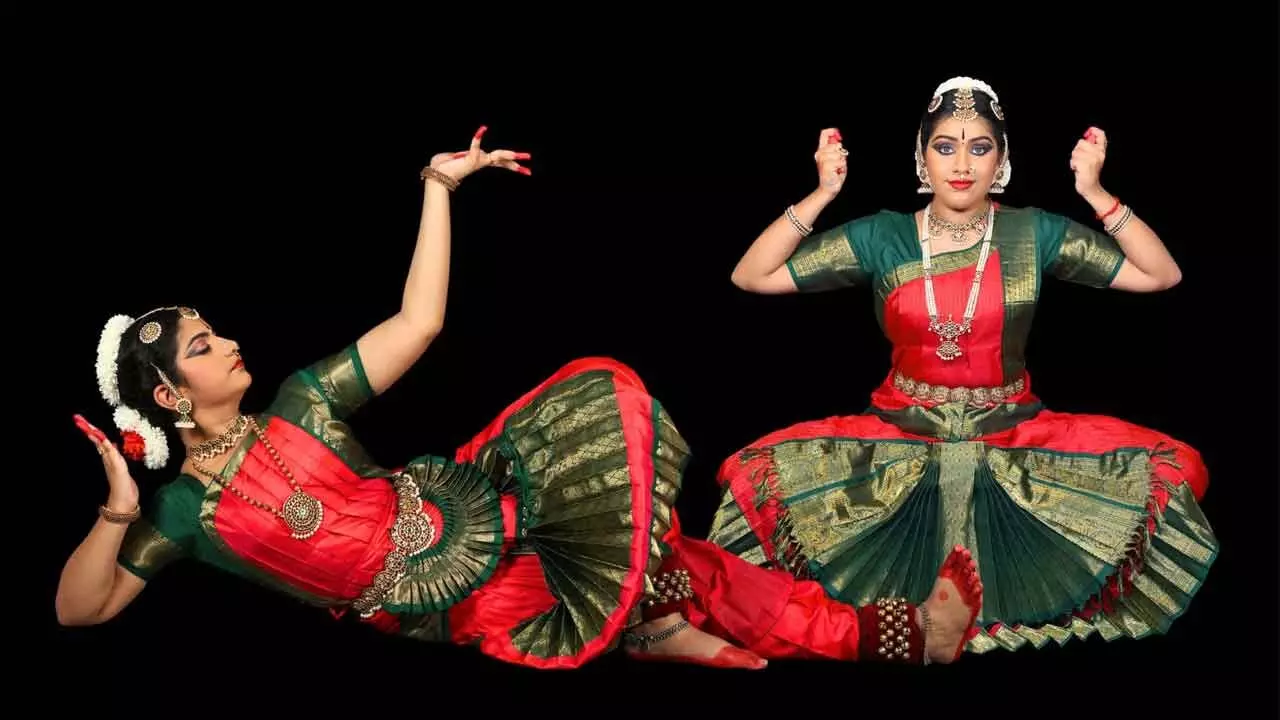
The three-day Kalasagaram Annual Youth Festival of Dance 2025, held last week at Meenakshi Sundaram Hall, Secunderabad, featured Bharatanatyam performances by students from Varna Arts Academy, under the guidance of Dr. Smitha Madhav and Smt. Bhargavi Parameswaran. Dr. Smitha Madhav composed, choreographed, and lent her voice for all the recorded songs presented during the event.
On Thursday, Meenakshi Bathula and Akshara Ramakrishnan began the recital with a ‘Pushpanjali’ dedicated to Lord Dakshinamurthy, followed by a captivating ‘Mayura Alarippu’ inspired by dancing peacocks. The unique gait of the birds and their striking fan of tail feathers were portrayed effectively. An overwhelming ‘Panchakam’ in praise of Jagadguru Chandrasekharendra Saraswathi followed.
The ‘Varnam’, ‘Chalamela’, brought to life the devotion, love, and angst of a devotee seeking to reach the lotus feet of Lord Vishnu, interwoven with intricate ‘nritta’ and ‘abhinaya’. Next was a scintillating ‘kriti’ on Devi Sharada of Sringeri, followed by the famous ‘Atma Shatakam’ by Adi Shankara, which was an appropriate dedication for Shankara Jayanti. The concluding piece, a ‘Dhanashree Thillana’, was magical, successfully bringing Lord Krishna’s grace and beauty onto the stage.
The entire presentation was avidly watched by the audience. After enjoying this soulful experience, all ‘rasikas’ were served dinner, graciously hosted by Kalasagaram.
Saturday’s highlight was the brilliant ninety-minute recital by Aditi A. It is noteworthy that there are hardly a handful of students in Hyderabad of her age and calibre capable of sustaining such a long performance with finesse and delicacy. Her gurus, Dr. Smitha and Smt. Bhargavi, must be commended for the fidelity of her style. As Kalasagaram adheres strictly to punctuality, the program started exactly on time.
Dressed in a russet and gold ‘aharya’, Aditi looked elegant. The ‘Margam’ began traditionally with a ‘Pushpanjali’ by Lalgudi Jayaraman. Two ‘shlokas’ from the ‘Daya Satakam’ of Vedanta Desika were delicately enunciated, holding special significance as they praise Sridevi and Bhudevi Nachiyar. The ‘Garuda Alarippu’ in the ‘Poorvangam’ was a treat. Utilizing ‘Sthanaka’ and ‘Mandala Bhedas’, it was thematically focused on the majestic Eagle Vahana of Lord Vishnu. The son of Vinata is hailed in the Venkateswara Suprabhatam.
The stylization into classical dance idiom of every characteristic of the predatory raptor was spectacular. The unfurling of the immense wings, the feather-preening beak movements, flashes of its farsighted keen eyes, razor-sharp talons on the feet—every stance of ‘Angika Abhinaya’ brought the bird to life on stage. The developing ‘Vahana’ pose was centered around the images found in temples where the Lord’s ‘Utsava Vigraha’ is carried during festivals.
The ‘Rudrashtakam’ of Tulsidas was performed as a ‘Kauthuvam’ in scintillating form. Aditi’s energy level was thrilling to watch as she depicted episodes from Lord Shiva’s life—destruction of Tripuras, burning of Kamadeva, and his interactions with beloved ‘bhaktas’. His body was described as of immense splendour: shining forehead, swaying earrings, blue-throated, and adorned with a skull garland.
‘Bhavayami Raghuramam’ of Maharaja Swati Tirunal was the main piece, bringing out the Ramayana in a series of cameos describing each ‘kandam’. Aditi seamlessly transitioned through the characters—lordly Rama, lovely Sita, wily Maricha, ugly Surpanaka, fierce Ravana, and devoted Hanuman—with ease. Each ‘jathi’ sequence concluded with a return to the pose of Lord Rama, superbly delineated with bow in hand, evoking applause as the ‘Teermanams’ were executed with lustre.
In a slower tempo, a melodious ‘Keerthanam’ in Behag praised Lord Muruga. The mesmerizing form of the Lord was elaborated intriguingly by describing him as a ‘Sanyasi’ who would bewitch even renunciates. A Tamil ‘Virutham’ preceded the piece.
The ‘Basant Bahar Thillana’ included a ‘Charanam’ in praise of the Kanchi Paramacharya. Pure ‘nritta’ was energetic and vibrant as Aditi covered the stage with brisk movements. A splendid ‘Ragamalika’ composition, ‘Agre Pashyami’ by Narayana Bhattadri, concluded the performance. It elucidated his devotional ecstasy at beholding the ‘Vishwaroopa’ of Guruvayoorappan, describing the Lord from head to toe. Aditi dazzled in this final piece and was met with resounding applause.
The ‘Margams’ of both days were thoughtfully curated, with a selection of diverse items showcasing the young performers’ talent in both expressive ‘Abhinaya’ sections and pure dance sequences, much to the audience’s appreciation.