Charisma’s double edge: The allure and perils of authoritarian leadership in democracy

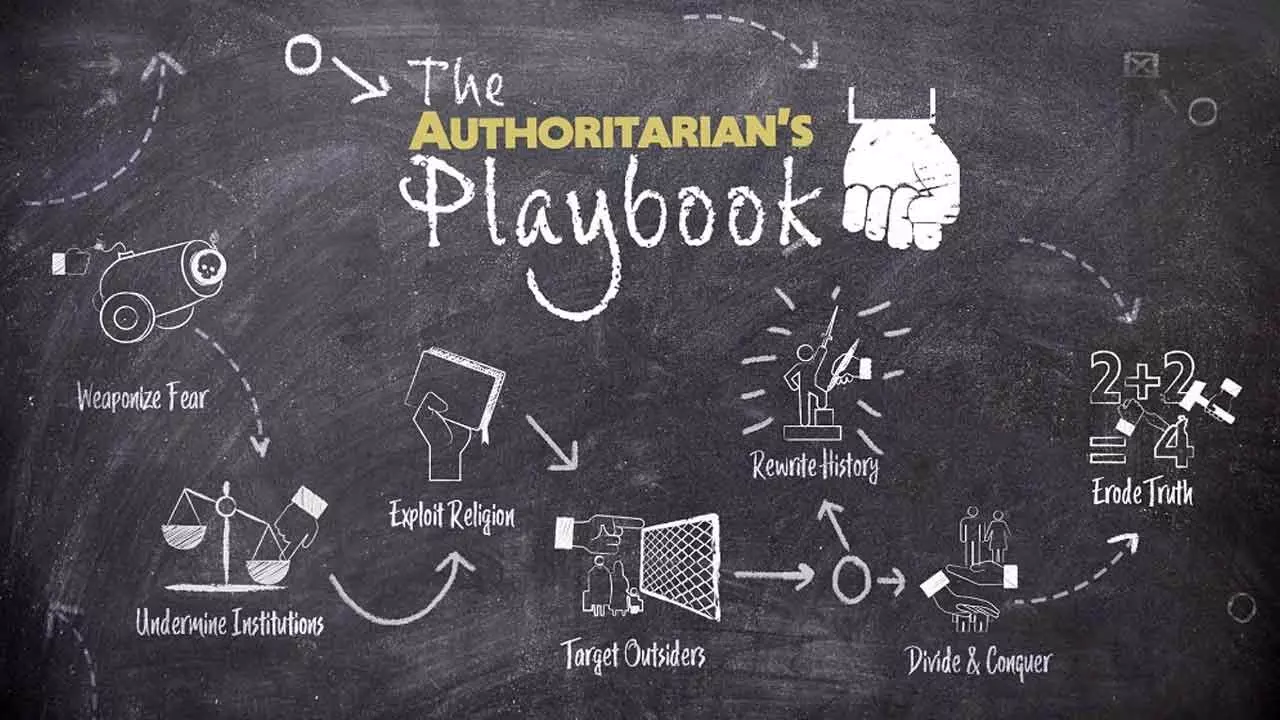
The interplay between charisma and authoritarianism remains a defining feature of political leadership, even in democratic societies. Charismatic leaders, with their ability to inspire and mobilise, often wield authority that borders on autocratic, challenging the very democratic principles that elevate them. Max Weber’s concept of charismatic authority—where legitimacy stems from a leader’s exceptional persona—offers a lens to understand this phenomenon. This editorial examines how charisma facilitates authoritarian tendencies within democracies, drawing on historical and contemporary Indian examples to highlight the implications for governance and the need for institutional safeguards.
In pre-democratic eras, rulers relied on absolute authority to maintain power, often amplified by personal charisma. Figures like Julius Caesar or Ashoka used their magnetic appeal to unify diverse populations and suppress dissent, framing their rule as divinely ordained or morally superior. Charisma transformed raw power into a narrative of inevitability, fostering loyalty that sustained regimes. This dynamic, often described as the “survival of the fittest” in governance, rewarded leaders who could project unassailable authority while captivating their subjects.
Democracy promised a break from autocracy by empowering citizens to choose their leaders. Yet, a paradox persists: democratic systems frequently reward charismatic individuals who exhibit authoritarian traits. These leaders bypass institutional checks through personal appeal, delivering results that resonate with voters but risk undermining democratic norms. The Varieties of Democracy (V-Dem) Institute’s 2023 report on democratic backsliding notes that charismatic populists often exploit electoral mandates to centralize power, weakening judiciaries and media freedoms.
Globally, this is evident in figures like Donald Trump, whose direct communication style and “America First” rhetoric built a loyal base in the United States. His presidency challenged democratic norms, notably during the January 6, 2021, Capitol riot, fueled by his narrative of electoral fraud. In parliamentary systems, the pattern is similar: charismatic leaders become the focal point of their parties, enforcing unity through personal loyalty rather than ideological coherence, a trend scholars term “competitive authoritarianism.”
India’s democratic landscape, particularly in its southern states, vividly illustrates this charisma-authoritarianism dynamic. The film industry, with its larger-than-life personas, has provided a fertile ground for political leadership, where screen charisma translates into electoral success.
Nandamuri Taraka Rama Rao (NTR), a Telugu cinema legend, epitomises this. Known for portraying gods and heroes in over 300 films, NTR founded the Telugu Desam Party (TDP) in 1982 to champion regional pride against the Congress party’s dominance. His “Chaitanya Ratham” campaign, evoking a heroic chariot, connected directly with Andhra Pradesh’s masses.
Elected Chief Minister in a landslide, NTR’s charisma bypassed traditional political structures. However, his governance was marked by authoritarianism: power was concentrated within a small circle, dissent stifled, and decisions unilateral. His welfare schemes, like subsidized rice, won public support, but his ouster in a 1984 coup attempt revealed the fragility of personalized rule. A 2019 Economic and Political Weekly analysis notes that NTR’s model influenced regional parties, prioritizing leader-centric governance over institutional depth.
In Tamil Nadu, M.G. Ramachandran (MGR) took this archetype to new heights. Known as “Puratchi Thalaivar” (Revolutionary Leader), MGR’s films portrayed him as a champion of the poor, forging an emotional bond with voters. Founding the AIADMK in 1972 from his fan clubs, he governed from 1977 to 1987 with absolute authority. His Midday Meal Scheme, now a national model, cemented his benevolent image. Yet, his regime curtailed press freedoms and sidelined rivals, creating a one-man rule. A 2022 Centre for Policy Research study highlights how MGR’s charisma masked governance lapses, sustaining his popularity through welfare paternalism.
J. Jayalalithaa, MGR’s successor, amplified this model. As “Amma,” she branded subsidies—from canteens to pharmacies—under her maternal persona, cultivating unwavering loyalty. Despite corruption convictions, she returned to power multiple times, demonstrating resilience born of charismatic hold.
Her cabinets were subservient, with ministers often prostrating before her—a stark symbol of authoritarian deference. After her 2016 death, the AIADMK’s fragmentation underscored its reliance on her persona. A 2024 Carnegie Endowment report links this to broader democratic erosion in India, where personality often trumps pluralism.
Prime Minister Narendra Modi extends this dynamic nationally, blending charisma with ideological conviction. Unlike cinematic predecessors, Modi’s appeal stems from a narrative of humble origins, anti-corruption zeal, and decisive leadership. The “Modi wave” in the 2014 and 2019 elections propelled the BJP to power, with his oratory and “Mann Ki Baat” broadcasts forging direct voter connections. By 2024, his third term—secured amid economic challenges—further centralized authority, as seen in policies like the Citizenship Amendment Act, often enacted with minimal parliamentary debate.
Supporters praise this as efficient governance, citing initiatives like Digital India and the COVID-19 vaccination drive. However, critics, including Amnesty International’s 2025 India report, highlight authoritarian drift: media crackdowns, opposition arrests, and a weakened federal structure. Modi’s Hindu nationalist vision positions him as a civilisational redeemer, echoing Indira Gandhi’s centralized rule but amplified by digital tools. A 2023 Pew Research survey found 80% of Indians view him favorably, illustrating how charisma sustains support despite controversies.
The charisma-authoritarianism nexus poses significant risks to democratic health. It fosters personality cults that weaken institutions, as seen globally with leaders like Turkey’s Erdogan or Brazil’s Bolsonaro. In India, regional leaders like Mamata Banerjee or Arvind Kejriwal have adopted similar styles, polarising politics further. To counter this, strengthening party democracies, fostering independent institutions, and promoting civic education are critical. Transparent electoral funding and robust media freedoms can also ensure that charisma serves, rather than subverts, democratic accountability.
While democracy has transformed access to power, the essence of effective rulership—decisiveness often tinged with authoritarianism—persists, legitimized by charisma. From NTR and MGR to Modi, Indian politics reveals the potency and perils of this model. As democracies evolve, vigilance is essential to ensure that charisma enhances, rather than erodes, the democratic spirit, preserving the balance between leadership and accountability.
(The writer is a senior Advocate)