




- ‘Seva aur Nishtha’; CRPF leads from the front
- MyVoice: Views of our readers 8th October 2026
- Rangareddy begins re-survey to end land boundary disputes
- Telangana High Court directs Peddamma temple to extend honours to all members of PJR family
- Chemistry Nobel goes to pair who solved mystery of 'mirror image' molecules
- Three killed in another building collapse in Delhi
- SC to revisit split verdict on CEC selection
- Home loan EMIs likely to get costlier
‘Seva aur Nishtha’; CRPF leads from the front
In Short
Every year, since 1969, on 1 October, the Force pays solemn tribute to Constable G D Govind Singh of the 62 Battalion in memory of his supreme sacrifice while fighting gallantly against Maoists during a critical anti-naxalite operation in Ramagundam
Share :
‘Seva aur Nishtha’; CRPF leads from the front
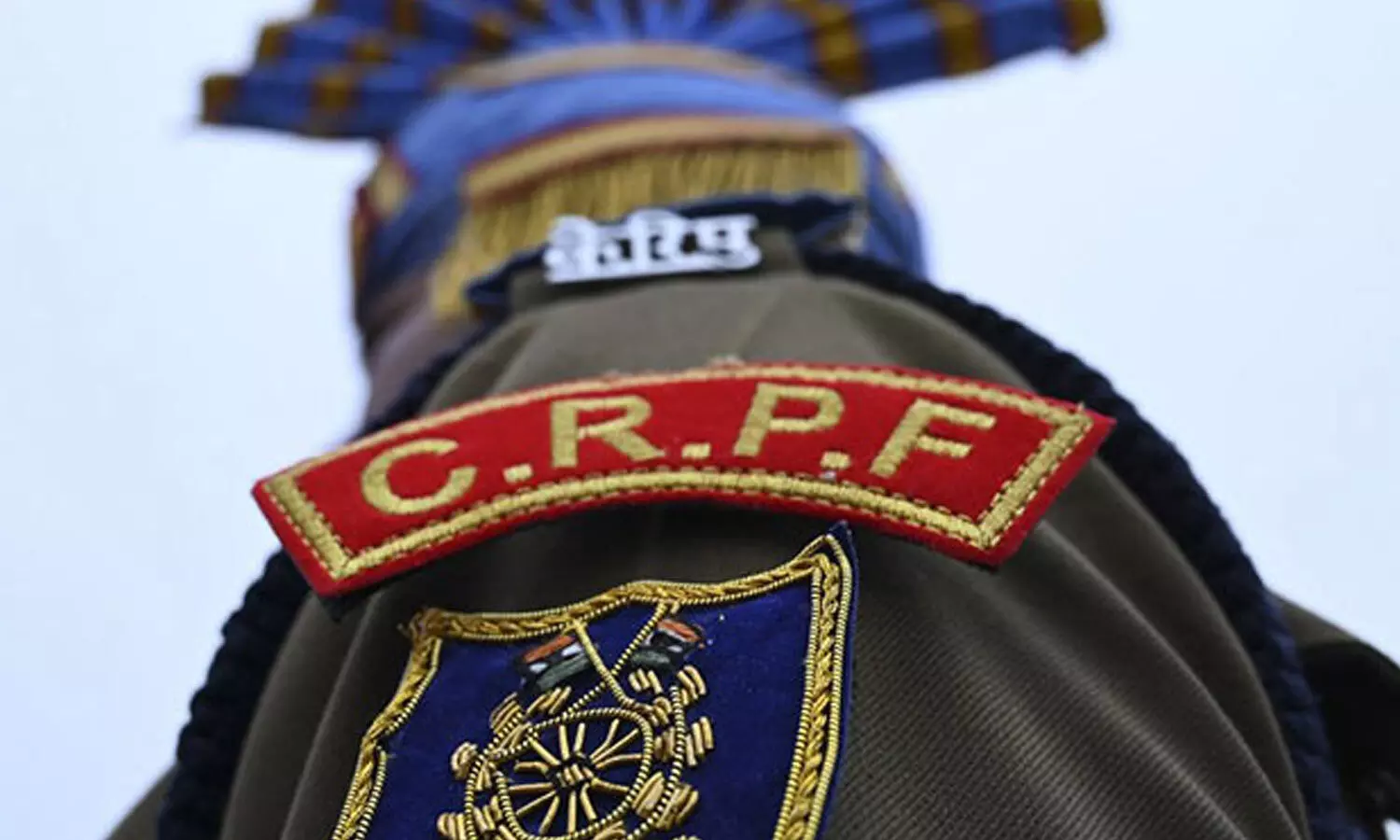
October1 marks historical milestones for the Central Reserve Police Force (CRPF), including operational sacrifices and administrative landmarks. Every year, since 1969, on 1 October, the Force pays solemn tribute to Constable G D Govind Singh of the 62 Battalion in memory of his supreme sacrifice while fighting gallantly against Maoists during a critical anti-naxalite operation in Ramagundam town in Telangana state. The same day also marks a day of mourning for the passing of retired IPS officer Dr Trinath Mishra, a highly respected former Director General of the Force who passed away on that day this year.
CRPF Raising Day is observed every 27 July to mark the establishment of the Force and to honour the courage, dedication, and sacrifices of CRPF personnel who serve the nation with dedication.
Established as the crown representative’s police on the cusp of the Second World War in 1939, the Force was later given its present name following India’s independence. Born in Neemuch, with the motto of ‘Service and Loyalty’, (‘Seva aur Nishtha), it is the largest Central Paramilitary Force.
The Force assists states in the maintenance of law and order, combating insurgencies and protecting national interests internally.
Strangely enough, I had occasion to interact closely with both the Indian Army, and the Central Paramilitary Forces, once in the very beginning of my IAS days and, again, after superannuation and towards the end of my career in public service.
In 1972, there was a prolonged and widespread public agitation demanding a separate Andhra state.
When things got out of hand at a point, the central government stepped in. The Chief Minister and council of ministers were asked to resign, and President’s rule was imposed. The Governor, along with advisers, took over the reins of the government. First the Indian Army and then CRPF were called in to bring a modicum of control over the uncontrollable law and order situation which was fast becoming uncontrollable.
Use of the army was confined to staging a few route marches to instil confidence in the public. The CRPF and BSF, took an active part in maintaining law and order even as the Telangana region remained peaceful.
The most impressive aspect of the presence of the central forces was that they were self-contained units and only needed some land where they could pitch their tents and get down to business.
On the 22nd of November 1972 the police in Ongole town had to resort to lathi-charge and tear-gas to disperse a crowd of agitators. When those measures failed, they opened fire killing four people. Curfew was imposed in the town and shoot-at-sight orders were enforced.
As the Sub Collector of Ongole at that time, I was then camping at Chirala, which was in my jurisdiction. The Collector of the district summoned me back to Ongole. As I was entering the town, I could see flames rising into the sky as several buildings had been set afire by the angry mob fleeing from the place of the incident. A group of agitating youth stopped me from entering the town as they felt that my presence would strengthen the hands of the official machinery. It was only after patiently persuading them that I would have a constructive role to play in restoring peace and order that I was allowed to enter. The Collector, the Superintendent of Police and I discussed in detail the measures to bring the situation under control.
Quite obviously the administration had lost connect with the people, who were upset and furious. None was willing to participate in any discussions. As several attempts to bring to the table prominent citizens who could assist in the process proved to be of no avail, it was clear to us that the situation called for out-of-the-box thinking.
The Superintendent of Police and I hit upon a bright idea. Karavadi Venkateswarulu was a well-known lawyer who enjoyed considerable goodwill with the citizens of the town. Known to be of socialistic persuasion, he was a person with whom I had cordial relations. Deliberately, as a ploy, we had taken him into custody and detained overnight, an action both legally permissible and possible to defend under the circumstances. The move outraged the city community with both the youth and elders expressing dismay at the turn of events. Sure enough, and as expected, several leading citizens sought a meeting with us the next morning. This gave us the opportunity we wanted to re-establish a rapport with the people.
As earlier planned, we retraced the step of detaining Venkateswarulu. But we had, in the process, managed to secure the cooperation of the leaders. We proceeded to form a Peace Committee to oversee the measures to restore normalcy and a sense of confidence and trust in the administration.
Soon thereafter, the situation improved and normalcy was gradually restored.
Everyone likes to study and understand the lineage and learn about their forefathers. I am afraid such an attempt, in my case, did not go too far. I stopped at the stage at which the branches of the ancestral tree showed my great grandfather as having served in the army of the Peshwa Indore. It is probably that streak in my personality that made me inherit an affinity towards people in uniform. Naturally, especially as almost everyone else on the civil side was on strike, I made close friends with the officers in charge of the units and often enjoyed hot pakodas and a couple of shots of rum in the evening with them.
An incident that stands out in my memory is one that happened one day in Chirala, a part of my subdivision. The Communist Party of India (CPI) decided that it should make known to the public its stand against the ongoing agitation and took out a procession, a dangerous and highly ill-advised move at that sensitive time when passions were riding high, and the slightest provocation was enough to cause an explosive situation. Things, however, cannot be stopped in a democracy and, by way of ensuring prevention of any disruption or violence, I led an impressive posse of the BSF from the front with the CPI contingent behind me. The local media, in fact, were to remark that my procession was larger than that of the CPI’s!
One danger everyone had to guard against in such situations those days was that of soda bottles, made of thick glass with marbles stuck in their necks; pressing downwards caused the soda to appear being filled with gramophone needles instead of soda water. When they were hurled as missiles, they would burst upon landing on the ground and spray the needles all around. A dangerous weapon indeed!
The somewhat orderly proceedings of the procession were violently interrupted when, suddenly, one such soda bottle landed in front of my vehicle and burst open, sprinkling sharp needles in all directions. Unharmed though we were, that was enough to create chaos among the members of the procession, who ran helter skelter. One of the BSF jawans charged at the miscreant who had thrown the bottle, lathi in hand. When I tried to stop him, he shouted at me saying “Sir, Meri Fauj ki izzat ki baat hai.”
The pride of the unit had been offended, and it took all the persuasive abilities at my command to prevent the situation from deteriorating further. Such are the qualities which make the central paramilitary forces so valuable in situations such as those.
And, again, it was during the early days of my tenure as a Member of the National Disaster Management Authority that I had another opportunity to study at close quarters the ability of the CPMF to rise to the occasion.
CRPF, together with its three counterparts-CISF, the BSF and the ITBF-were drafted into the newly formed National Disaster Response Force. Duly trained and equipped, it proved to be an invaluable instrument in the nation’s fight against the impact of natural disasters and the people and property, namely in rescue and relief operations.
I remember how in college days, as a cadet of the NCC, one got into the uniform and, rifle slung over the shoulder and basking in the winter sun of Delhi, marched all the way from Hindu College in the North Campus of Delhi University to India Gate. I must confess that the lure of the Rs 1.67 that awaited one at the end of the ordeal, as a reward that translated into a bread pakoda and a bottle of Coca-Cola, played a great role in keeping me going.
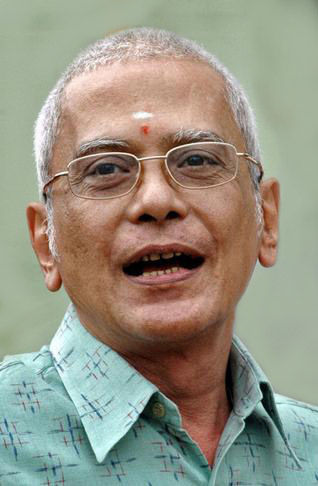
(The writer was formerly Chief Secretary, Government of Andhra Pradesh)
Talliki Vandanam expanded: The scheme now covers 68.06 lakh students
CM Naidu to meet Modi, seek approval of state projects
Gyanesh Kumar finds himself in a tight corner amid protests
Dasara dhamaka: Telangana Government to pay 2DAs on Nov 1
On the day marking his 25 years at the helm, PM Modi calls on LK Advani
Pixel Moments to Politics For Cong As BJP Celebrates Modi@25


